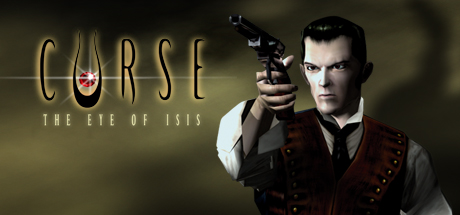
Curse: The Eye of Isis, developed by Asylum Entertainment and published by Microids, is a gothic survival horror game that captures the spirit of early 2000s horror design while setting itself apart with a unique blend of Victorian atmosphere and Egyptian mysticism. Set in 1890s London, the story begins inside the grand yet ominous halls of the British Museum, where an ancient artifact known as the Eye of Isis is stolen, unleashing a deadly curse that spreads through the building like a fog. The artifact reanimates the dead, turning curators, guards, and thieves into shambling horrors, and it’s up to Darien Dane, a young archaeologist, and his companion Victoria Sutton to uncover the mystery behind the artifact and end the curse before it consumes them both. The premise itself is wonderfully steeped in the macabre charm of late Victorian adventure tales, combining colonial-era fascination with Egyptology and the supernatural unease of classic gothic horror.
From the outset, Curse: The Eye of Isis wears its inspirations proudly. The influence of Resident Evil and Alone in the Dark is immediately recognizable, with fixed camera angles, slow and deliberate pacing, and an emphasis on exploration and limited resources. Every corridor and chamber is cloaked in shadow, and the camera positioning often amplifies tension by obscuring your view just enough to make you nervous about what might be lurking around the next corner. The British Museum, the game’s primary setting, is an inspired location—a labyrinth of antiquities and glass cases filled with relics from around the world, now transformed into a haunted maze of fog, corpses, and mystery. Later chapters expand to other locales, including steam-filled docks and the ancient tombs of Egypt, each offering distinct aesthetic tones that keep the adventure feeling fresh while maintaining the game’s consistent air of dread.
The game’s strongest quality is its atmosphere. Every environment feels thick with history and unease, blending the grandeur of the Victorian age with the claustrophobic tension of classic horror. The developers make clever use of lighting, shadow, and fog to craft environments that feel oppressive and mysterious, even within the technical limits of early 2000s hardware. The muted color palette—dominated by browns, grays, and the warm glow of lanterns—evokes the texture of old sepia photographs, which fits perfectly with the game’s setting. The sound design complements this mood beautifully. Creaking floorboards, the distant moan of wind through broken glass, and the eerie murmurs of the undead all build a persistent tension that rarely lets up. The orchestral score underscores the sense of adventure and fear, switching seamlessly from mournful melodies to sharp, percussive stings when danger approaches.
Gameplay follows the familiar survival horror structure, centered around exploration, puzzle-solving, and combat. Players navigate through fixed-camera environments, searching for keys, tools, and clues while managing health and ammunition. The puzzles, while occasionally obtuse, fit well within the context of the world—they often involve mechanical devices, historical artifacts, or environmental manipulation, giving them a tangible connection to the setting. Combat, however, is where the game shows both its ambition and its limitations. Weapons range from period-appropriate firearms to improvised melee tools, but the aiming system and slow character responsiveness make battles clunky and unpredictable. Enemies can attack from off-screen, and the stiff movement controls make dodging a constant struggle. Yet, for fans of classic survival horror, these frustrations can also feel nostalgic, reminiscent of an era when control limitations were part of the tension.
One of the more interesting mechanics in Curse: The Eye of Isis is the ability to switch between Darien and Victoria. Each character has distinct strengths—Darien is more combat-oriented, while Victoria’s agility allows her to access areas he cannot. This dual-character system adds variety to the gameplay and breaks up the pacing, though the execution can be uneven. The transitions between characters sometimes feel abrupt, and the level design doesn’t always capitalize on their differences as much as it could. Still, the feature injects a sense of partnership and narrative rhythm that helps sustain engagement through the game’s slower segments.
The narrative, while straightforward, is compelling in its execution. It combines the structure of a mystery adventure with the ominous tone of supernatural horror. The writing leans into the melodrama of its Victorian setting, with earnest dialogue and theatrical performances that fit perfectly within the story’s pulpy framework. The curse itself, tied to the Eye of Isis, serves as both a literal and symbolic force—an embodiment of humanity’s obsession with possession and control over the ancient and unknown. The deeper you delve into the mystery, the more the line blurs between rational investigation and irrational superstition. The result is a narrative that feels both classic and eerie, evoking the same thrill as reading an old gothic novel illuminated by candlelight.
Visually, the game captures a distinctive mood, though by modern standards it shows its age. Character models are stiff and animation is limited, but the environmental design compensates with a rich sense of detail and atmosphere. The interplay of light and shadow creates moments of genuine unease, particularly when wandering through smoke-filled corridors where visibility is limited and the groans of undead echoes from unseen corners. The game’s fixed camera angles, while occasionally cumbersome, lend a cinematic quality to the experience, allowing the developers to frame scenes with deliberate artistry. Some of these angles enhance tension masterfully, such as placing the camera behind a statue or through a cracked window to give the sense of being watched.
Despite its strengths in presentation and tone, Curse: The Eye of Isis struggles with technical roughness and pacing. The inventory system is awkward, often leading to confusion when managing key items, and saving progress requires finding specific locations or characters, which can be frustrating during longer sequences. Occasional bugs and inconsistent enemy AI can break immersion, and the combat system’s limitations become more noticeable as enemies grow faster and more aggressive. These flaws don’t ruin the experience but remind players that this was a mid-tier production from a studio working with limited resources. What redeems it is the developers’ commitment to atmosphere and concept—they aimed to create a horror experience grounded in mystery and historical texture rather than simple shock value, and that ambition shows throughout.
In the end, Curse: The Eye of Isis stands as a flawed but fascinating artifact of its time. It captures the essence of classic survival horror—its deliberate pacing, moody world-building, and mixture of fear and curiosity—while weaving it into a setting rarely explored in the genre. The fusion of Victorian London and Egyptian mythology creates a sense of freshness, even today, that keeps it worth revisiting for fans of atmospheric horror. While its controls and technical execution may test the patience of modern players, those who appreciate slow-burn tension and gothic storytelling will find a lot to admire. It’s a game that lingers in memory not because of polish, but because of the strange, haunting world it builds—a forgotten relic that, like the Eye of Isis itself, holds a quiet and enduring curse of its own.
Rating: 7/10