
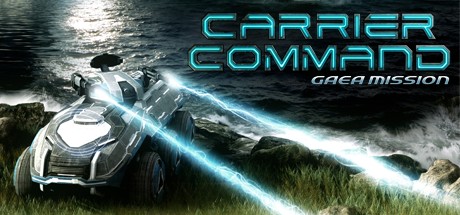
A next-gen re-imagination of a groundbreaking 80s classic. Carrier Command: Gaea Mission brings a breathtaking combination of action and strategy elements.
Modeled estimate, not a reported figure. How we estimate →
Prices
Each in the currency that store quoted — not converted: the gap between two rows is the publisher's pricing, not an exchange rate.
10 of 15 markets; the rest we haven't asked for this title, not markets where it is unavailable.
Discounts
Every price cut of more than 20% we have observed, in each market that quoted one, with this game's chart position on either side of it. These are episodes, not a model: a sale is one event, and one event cannot tell you what the next one will do.
Reviews, worldwide (the counter carries no country): 0.14/day in the week to Aug 27 → 0.14/day in the week after.
About
Genres
Engagement
Reviews
Themes across 47 recent reviews and how positive each mention is. A keyword signal, not full sentiment analysis.
Reviews
Super buggy. Crashing all the time. Couldn't ever finish the game because it would crash my entire machine every time. Pretty disappointed
Game breaking bugs like landmines everywhere, even tried compatibility modes but no luck. Also bad game design, even for its age, plus the on foot portions are like FPS from the 90s, painful. Avoid this one.
Carrier Command: Gaea Mission is an ambitious and unapologetically complex hybrid developed and published by Bohemia Interactive that attempts to fuse large-scale strategy, real-time tactics, and hands-on vehicle control into a single cohesive experience. Reimagining the classic Carrier Command concept for a modern audience, the game places players in command of a massive futuristic aircraft carrier and challenges them to conquer a sprawling archipelago through logistics, resource control, and coordinated military action. From the outset, it makes clear that this is not a streamlined or casual strategy game, but one that asks for patience, experimentation, and a willingness to wrestle with its systems. The campaign frames the experience within a sci-fi conflict over the resource-rich moon of Taurus, where control of water-producing islands determines the fate of Earth. Rather than focusing heavily on character-driven storytelling, the narrative serves primarily as a functional structure for introducing mechanics and objectives. Briefings contextualize missions, but the real story emerges through play itself: the slow expansion of your territory, the push and pull of supply lines, and the growing tension as enemy forces adapt to your advances. This understated approach suits the game’s systemic focus, even if it leaves the plot feeling secondary to the mechanics. At the strategic level, the heart of the game lies in island conquest and logistics management. Each island you capture can be assigned a specific role, such as production, defense, or resource extraction, and these roles feed into a broader supply network that keeps your carrier operational. Managing these networks requires careful planning, as losing a key island can cripple production or leave your forces undersupplied. This layer gives the game a strong old-school strategy feel, where foresight and redundancy matter as much as raw firepower, and success is often determined long before shots are fired. What distinguishes Gaea Mission from more traditional strategy titles is the constant interplay between high-level planning and low-level control. Players can issue commands from an overhead tactical map, but are also free to directly pilot vehicles in real time. Amphibious Walrus units and agile Manta aircraft form the backbone of your offensive capabilities, each with distinct strengths and vulnerabilities. Taking manual control allows for precision strikes, careful navigation, and improvisation during combat, creating moments where skill and awareness can turn the tide of an engagement that might otherwise be lost under AI control. This dual-layer design is both the game’s most compelling feature and its greatest source of frustration. In theory, delegating tasks to AI units while focusing on critical operations should feel empowering. In practice, the game’s AI and pathfinding are inconsistent, often forcing players to micromanage units that struggle with terrain, positioning, or basic orders. This can break immersion and turn large-scale strategic ambitions into a series of corrective interventions, shifting the experience from commanding an army to constantly babysitting it. The game also experiments with first-person segments, particularly early in the campaign, where players briefly control an infantry soldier. These moments aim to broaden the sense of scale and immersion, but they feel mechanically underdeveloped compared to the vehicle-based gameplay. Movement and combat in these sections are stiff and simplistic, and they rarely add meaningful tactical depth. Instead of enhancing the experience, they often feel like a distraction from the carrier-centric warfare that defines the rest of the game. Visually, Carrier Command: Gaea Mission succeeds in conveying scale and atmosphere. The carrier itself feels imposing, with detailed interiors and a functional bridge that reinforces the fantasy of command. The archipelago’s islands offer varied environments, from icy wastelands to volcanic landscapes, helping prevent visual monotony during long campaigns. While the graphics show their age, the art direction and environmental design still communicate the sense of a vast, contested world effectively. Sound design and music play a supporting role rather than a defining one. Audio cues provide functional feedback during combat and navigation, but the soundtrack rarely asserts itself as a memorable presence. This understated approach aligns with the game’s systemic focus, keeping attention on tactical decisions rather than emotional beats, though it also means the audio experience rarely elevates tense moments beyond what the gameplay itself provides. The pacing of the game is deliberately slow and methodical. Conquest is rarely quick, and setbacks can undo hours of careful planning if supply lines collapse or key units are lost. For some players, this creates a deeply satisfying sense of earned progress, where every captured island feels significant. For others, the same pacing can feel punishing, especially when compounded by AI missteps or unclear feedback about why a strategy failed. Replayability comes primarily from the sandbox nature of the archipelago and the freedom to approach conquest in different ways. Outside the story campaign, a strategy mode allows players to focus purely on territorial control without narrative interruptions. However, the lack of multiplayer limits long-term variety, especially for a game whose systems seem well suited to competitive or cooperative play. In the end, Carrier Command: Gaea Mission is a game defined by its ambition. It reaches for a rare blend of strategy and action that few titles attempt, and at its best, it delivers moments of genuine satisfaction when careful planning, effective logistics, and decisive manual control align. Its flaws—particularly in AI behavior and mechanical unevenness—are impossible to ignore, but they coexist with a depth and scale that reward dedicated players. For those willing to invest time and patience into mastering its systems, it offers a uniquely demanding and memorable experience that stands apart from more conventional strategy games. Rating: 5/10
Media
Related
Related
Price dynamics, follower growth, revenue and sales trajectories with interactive tooltips
This and every other Pro feature is free until October 20, 2026. A free account is all it takes.
Reviews, worldwide (the counter carries no country): 0.14/day in the week to Jul 26 → 0/day in the week after.
For scale, across Steam · Top Sellers · Brazil over the last 30 days: the 26 chart moves that followed a price cut of more than 20% went a median of 7 places towards #1, and the 2,400 moves with no price cut behind them went 2 away. One store, one chart, one country — it is the only place we have enough observations to say even that.
Prices outside the United States have been collected since 6 August 2026 and chart positions since 19 July 2026, so a cut older than that has no market to compare and a market that joined later has no history yet. Nothing here is converted between currencies.
Stats
All-time low is the lowest price we've recorded for this game since we started tracking it.
Languages: English*, German, French, Italian, Spanish - Spain, Russian, Polish*languages with full audio support
Hours played at review time, across 47 reviews with recorded playtime.
positive critical· bar length = how often the theme comes up
I really liked the game, but the battle with the crashes was constant. I almost couldn't continue a few times, but in the last mission the crashes won and i had to watch the ending on Youtube.
For $6.59 absolutely buy this game! I have had countless hours of fun.
A flawed yet addictive sandbox but with a broken campaign Rating: Recommended (With Major Caveats) I liked this game a lot—honestly, probably more than I should. I am an absolute sucker for the RTS/simulation hybrid genre, and this scratches an itch that little other games can. It is a super niche kind of gameplay that you just can't find anywhere else. I tried Carrier Command 2 but the super low poly graphics turn me off after a while and I keep reinstalling this one. The AI is an absolute joke. Don't think you can have it do more than get to a waypoint (with great difficulty) let alone fight the enemies for you. You have to manually take over and get ♥♥♥♥ done yourself. The AI is more so there to move your units into position before you jump in and use them. This game is also incredibly frustrating at time. it struggles with newer PCs, I had to make a lot of tweaks (cap fps, window 7 compatibility mode, set affinity to 1 core, etc) to have it running without constant crashes. If you plan on playing the story mode, be prepared: finishing the campaign is an absolute exercise in patience. It is littered with bugs, and crashes (game freezes) are constant, mostly when the game will load a cinematic, new island etc. Be sure to manually save before those if you don't want to lose hours of progress to a crash. The cinematics are laughably janky, and the narrative feels like it was written by a five-year-old. Worst of all, there is a very high likelihood that the campaign will glitch out and fail to unlock critical blueprints, spending the entire game locked out of key technologies because of a script error. My Recommendation: If you like this kind of niche gameplay, give it a try. Skip the campaign entirely. Instead, jump straight into the Strategy Mode and install the Deadly Islands Mod.
Absolutely love this game, played it on the Xbox 360 disc version and so happy to be able to play it again, minus the crashes here and there, I really hope/wish a Gaea Mission 2 turns up as would love to play more of this
My review rating is mixed As the name suggests, Carrier Command is a game that alternates between RTS and action phases, where you command a supercarrier capable of deploying various types of vehicles and tactical support. The campaign leads you to conquer various islands, some more heavily fortified than others which will require the use of different tactics based on wearing down defenses and typical hit-and-run tactics. The game isn’t bad, but it isn’t particularly engaging and gets boring very quickly. This version also suffers from frequent crashes, especially on mid-to-high-end GPUs.
Buggy as hell. Terrible tutorial. Offensively stupid backstory. Vehicle pathfinding is an unfunny joke, unless you enjoy seeing armor getting stuck on a tree or trying unsuccessfully to navigate their way around a pebble only to backtrack and start again over and over. Mediocre graphics, everything looks like a cheap knockoff generic sci fi toy set you get on Temu for 3$. And the cherry on top, the carrier teleports between islands. Not Bohemia's finest hour, if you really want to play a Carrier Command game pass this one and get CC2.
The game has stuter. I fell in a bugs under the map and died. and that was it.
Players by region
Where this game's players are, estimated from review languages.
Related
| Game | Estimated lifetime revenue | Reviews | Review score | Price |
|---|---|---|---|---|
| $5.6M | 4.7K | 87% | $39.99 | |
| $824.6K | 651 | 62% | $39.99 | |
| $29.1M | 27.3K | 84% | $29.99 | |
| $16.6M | 14.2K | 88% | $34.99 | |
| $7M | 12.5K | 64% | $24.99 | |
| $701.5K | 291 | 59% | $59.99 |
Related
| Game | Estimated lifetime revenue | Reviews | Review score | Price |
|---|---|---|---|---|
| $1.2M | 1.1K | 91% | $29.99 | |
| $1.2M | 5.2K | 88% | $11.99 | |
| $1.2M | 1.4K | 79% | $24.99 | |
| $1.2M | 2.5K | 88% | $19.99 | |
| $1.2M | 1.9K | 95% | $19.99 | |
| $1.2M | 2.8K | 97% | $14.99 |