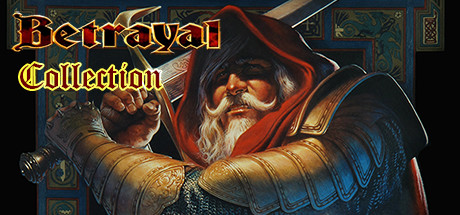
This Betrayal pack includes two games: Betrayal at Krondor and Betrayal in Antara.
Modeled estimate, not a reported figure. How we estimate →
Media
About
Genres
Stats
All-time low is the lowest price we've recorded for this game since we started tracking it.
Languages: English**languages with full audio support
Engagement
Reviews
Themes across 40 recent reviews and how positive each mention is. A keyword signal, not full sentiment analysis.
Reviews
[b]Betrayal Collection[/b], as you might already know, consists of two games that although share similar name, are of quite different quality. [b]Betrayal at Krondor[/b] is one of the best RPG games ever released, if you can get over the dated graphics, then you are up for a treat, the game still holds up even after 3 decades. The main reason for this is that the game plays like a book; being set in R.E.Feist's world of Midkemia and considered a canon, the lore is already well established and you just unravel new adventures in this intriguing world. On top of that, you get good combat, great leveling system, awesome puzzles and good music. On the other hand, [b]Betrayal in Antara[/b] is a disappointment. Apart from UI and combat, the game has little in common with its predecessor. Since Sierra lost its rights, the setting is completely new and extremely boring. This game should have been called 'The late 90s generic RPG' instead, because that is the overall feeling I am getting from it when playing. Simply put, the game is just bad - you are not missing out on anything by avoiding it. As a side note, M&M VI released a year after and its MILES ahead in everything. So I am recommending this game solely because of how good BaK is, I reckon they bundled BiA in because nobody sane would ever buy this game.
Related
Related
Trends
Modeled estimate over time, reconstructed from Steam's monthly review histogram.
Hours played at review time, across 40 reviews with recorded playtime.
positive critical· bar length = how often the theme comes up
IF YOU HAVE NEVER PLAYED A 90ies RPG READ BEFORE PLAYING -------------- I recently have played this game to recover something that I have missed in the past since my computer was not meeting the minimum requirements to run it. Betrayal at Krondor is a very old school RPG based in the fictional world created by Raymond E. Feist. The game is the classic transitional story where you will begin as a pseudo perfect nobody to become a hero. Story is good and the environment and the vastity of the world is nice, but to appreciate it you must keep in mind every single second you play in which year it has been developed. I will not speak about graphics or sound, since they were obviously limited by the technology available at that time and I will focus on gameplay and mechanics. In the 90ies most of RPG where transpositions of their pen & paper counterparts with few or no adaptations since there was not sufficent experience to understand that not everything that was working great with a human Dungeon Master was also working with a PC. Combats are turn based and rely heavily on dice throw. Forget about complex buffs and debuffs and stacking things on your stats. You can improve temporarly your skills but most of the results will come out from a good dice roll. In real life a good DM adjust this, in a PC game this does not happens. Be careful and choose wisely the fights you pick. Some puzzles are totally disconnected from the game lore. That was typical of pen & paper because a DM could contextualize it and, at the end of the day it was fun. Again alone against the PC it could sound a little fuzzy if you don't keep in mind in which year the game has been developed. On riddles : many riddles come from US or UK cultural environment. That was ok if we put ourselves in the shoes of the devs in the nineties where a game had a very slow diffusion and hitting the local market was already a success. If you do not master the language or that kind of culture it is more practical to download directly the solution since sometimes it is not obvious at all. Read the manual : in these old games manual was a part of the experience and often gave pieces of information that could not be obtained in game. CRPG in the nineties where played in hybrid mode, often with the world map opened on your knees. Keep a pen and paper or a note system under your hand. The game gives a lot of clues that you have to note down. At that time teams where very small and game design was done by the same people that were developing. There was much less attention to the choice of a localization for a good clue and softlocks where common in RPG. It is therefore fundamental that you record what you see and you find interesting since it could become complicated to get back and find it again. Keeping in mind these caveat, once you get in the mood you will find yourself immersed in a fantastic world and you will lose yourself into hours of explorations, dialogues and fights to become the hero that Midkemia need. Have fun!
Esse jogo é um amor antigo meu. Meu primeiro mundo aberto, la por 1997 ou 98 quando eu nem tinha muita noção de inglês, tanto que só zerei ele com uns 18 anos de idade. kkkkk Entre ele, GTA 1 e Age of empires 1 eu passava meus dias. Bom... Sobre o Jogo, ele é uma continuação de certa forma do Betrayal At Krondor mas não se passa no mesmo universo. A gameplay é divertida principalmente na parte das magias com um sistema bem diferenciado para a época, o mundo aberto é bem grandinho e a história não chega a ser ruim e é bem redondinha. Não sei se alguem do Brasil vai ler essa análise, mas, apesar de ser um joguinho antigo, é um jogo que me fez muito feliz! Naquela época a gente imaginava como seria o futuro dos jogos e essa me fazia imaginar o que um dia viria a ser Skyrim (devo ter umas mil horas em skyrim. Até comprei ele como agradecimento kkkkk) Assim como a fusão que imaginavamos entre Gta1 e Driver que só veio completa mesmo no Gta Sa que dava pra fazer praticamente tudo que vc quisesse!
I've noticed a few bugs in this version, but it's totally playable and hasn't crashed. (Krondor only; I haven't played Antara.) - Gamblers always act like I've already gambled with them, so they are unavailable. - Items dropped in bags disappear after a short time. They are supposed to persist indefinitely. This makes certain parts of the game really annoying, for example the Lyton armor quest. - Some unvisited locations act like they've already been visited. - I'm not sure but I think training books aren't quite behaving correctly. Still recommended!
This is one of the old classics.
Old school, aber immer noch spannend und sehr atmosphärisch. Das gilt für die ganze Collection.
Um dos melhores rpg já feitos
I absolutely love this game. Antara is one of the first RPG styled games I played 20+ years ago. I was heart broken when my old comp at that time upgraded and would no longer run the disc. I looked for an upgrade version for ears and my brother stumbled on this one on Steam. As soon as he told me about it I downloaded Steam specifically for Antara. Since then I have added many games to my library but this ne is the reason I got started with Steam.
This collection come with two games: Betrayal at Krondor and Betrayal at Antara. My review will just cover Betrayal at Krondor. Fantastic story with rich world building. The game is based on the Riftwar novels and is beautifully written. There's lots of interesting characters and twists that keep it interesting all the way through. Even as someone that hasn't read any of the books, I was still able to follow along and understand the characters’ motivations. There are a few things that alluded me due to not having read the books and probably not paying close enough attention at times which is my fault, but otherwise I was fully invested in this story and world by chapter 2. It got its hooks in me by then and did not let go until the end. This is possibly one of the best stories in any RPG that I’ve played. That's without having even read the books, which is more than I can say about some games based on books (cough Witcher cough). World exploration is really good for its time. The map is huge with many different cities, towns, some dungeons, traps, hidden chests, and interesting NPCs to meet. The environmental graphics may be a bit rough these days, but the design of the world is still good and it's one of those games where you have to use your imagination to really see what they were trying to create. The dungeons however look much nicer and when you enter a city or certain buildings you are treated with beautifully hand painted backgrounds that use a click based interface to explore. Also the NPCs are all real people in costumes as well as the cutscenes being FMVs with real actors. The production quality is pretty low and the cutscenes are very brief, not even close to the production quality of say, Dark Forces 2. They still manage to fit with the world nicely and give the game a bit of a campy sword and sorcery feel to it. The progression system utilizes a skill system that increases as you use those skills. Similar to Wizardry or Elder Scrolls. You have the option to tag certain skills and those skills will increase faster. I believe the way it works is the more skills tagged, the less the bonus is so it's better to have just one to three skills tagged at once. Similar to Fallout except you can tag and un-tag skills whenever you want throughout the game. I enjoy this style of progression and it fits well with this type of game. It immerses you more in the world and the characters and makes their gradual increase in skill through the game feel more realistic. There is also health, stamina, speed, and strength. Health and stamina increases every 30 in game days and is very important to manage. Speed doesn’t change and is set for each character. Strength increases either after killing enough enemies or surviving enough enemy encounters, not entirely sure. I believe it’s the former. Strength determines how much damage you do with melee weapons. The progression is pretty simple and easy to understand. It’s not based on any complex rule-set and fits well with the game. The combat is simple but still tactical and fun. It is turn based and viewed at a slightly angled top down view. Not quite isometric but it's unique and works. Melee fighters have a swing attack and a slash attack. You can swing for less damage but higher percentage to hit or slash for the opposite effect. There's ranged attacks with crossbows and various bolt types. Then you have the spellcasters(or mages) which cast spells using their stamina and health. When they take damage or when mages cast spells it uses stamina first and when their stamina drains, it uses health. As your character’s health drains, their skills get worse. So this can be a real problem as your fighters will barely be able to hit anything and your mages won't be able to cast any spells. Managing health and stamina is very important in this game. Combat in general feels pretty balanced, aside from a few encounters. The main enemy types to worry about are mages because they can immobilize or kill your party pretty quickly if you're not careful. One more thing to note about the combat is that if an enemy is next to your mage, they can’t cast any spells. This does work both ways but it can lead to a lot of frustration. Often what happens is enemies surround my mage before they get a chance to cast anything and it's almost impossible to run away from enemies because they will just follow you until you or they are dead. So you're forced to just have your mage defend until the combat is over or nearly over and they never get a chance to do anything. This can make many combat encounters way harder than they need to be because you're basically down to one or two fighters and no mage to help you. I wish there was a way to roll a concentration check each turn to give you a chance to still cast a spell like in D&D but unfortunately that's not an option. You just have to sit there and defend the whole time. A minor complaint but doesn’t ruin the game. In the end, Betrayal at Krondor is a fantastic RPG that is pretty easy to get into compared to it's contemporaries. The progression is easy to understand, UI is easy to use and has descriptions for all of the buttons and items in game, and the writing is top notch. Unfortunately Betrayal at Krondor never got a proper sequel. Instead what we got was a successor without the world or characters of the original, Betrayal at Antaria. This game was not nearly as loved or as well received as Krondor. There was another Krondor game made, however, called Return to Krondor, and was developed by 7th level and was published by Sierra later in development when Sierra bought the rights to Krondor back. While very different from the first game, it is generally well received so I plan on taking a chance on Return to Krondor in the future.
Betrayal at Krondor is over 30 years old but it still holds up. Fun story and fun gameplay.
Momentum
Pace estimated from the game's recent review growth (our daily snapshots) at its own sales-per-review ratio — a momentum signal, not booked sales.
Audience
Estimated from the language of this game's reviews — a proxy for where players are, not official Steam demographics.
Related
| Black Myth: Wukong | $794.9M | 1.2M | 97% | $59.99 |
| ELDEN RING | $680.4M | 1.1M | 93% | $59.99 |
| DARK SOULS™ III | $467M | 437.9K | 94% | $59.99 |
| 7 Days to Die | $425.3M | 403.5K | 87% | $44.99 |
| Hogwarts Legacy | $323.6M | 369.9K | 90% | $59.99 |
| Mount & Blade II: Bannerlord | $309.8M | 293.9K | 88% | $49.99 |
Related
| Dave.EXE | $18.5K | 65 | 95% | $14.99 |
| Jin Ping Mei | $18.5K | 67 | 73% | $7.99 |
| Eigengrau | $18.5K | 95 | 100% | $9.99 |
| Locomotive 115 | $18.5K | 135 | 93% | $5.99 |
| The Dream Office | $18.5K | 60 | 88% | $7.99 |
| helionaut | $18.5K | 200 | 94% | $1.49 |