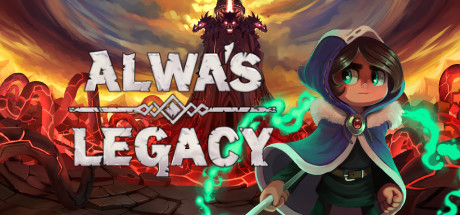
Alwa’s Legacy is a modern retro game full of dangerous dungeons, mystic items and ancient secrets. Upgrade your magic and choose your own path in this non-linear adventure game brimming with exploration.
Modeled estimate, not a reported figure. How we estimate →
About


Stats
All-time low is the lowest price we've recorded for this game since we started tracking it.
Languages: English, Swedish, French, German, Spanish - Spain, Spanish - Latin America, Japanese, Korean, Simplified Chinese, Traditional Chinese
Engagement
Hours played at review time, across 42 reviews with recorded playtime.
Reviews
Themes across 42 recent reviews and how positive each mention is. A keyword signal, not full sentiment analysis.
positive critical· bar length = how often the theme comes up
Reviews
[i]Alwa's Legacy[/i] is the sort-of sequel/remake of [i]Alwa's Awakening[/i], didn't like the previous one that much, but this time the developers managed to improve on it in every possible way. For starters, exploration feels much more satisfying thanks to better pacing, faster walking speed, better button inputs, faster spell recharge, improved fast travel system and less punishing room design, while still keeping some environmental puzzles. There are more kinds of collectibles that this time serve a purpose, and finally looking for the orbs is worth it, since they can be used as a resource to upgrade the three basic spells; experimenting with them also makes combat and exploration more interesting, causing a positive loop where you use the abilities to find more orbs that can then be used to explore the more hidden areas on the map. As for the map, it's still fairly basic, but this time it keeps track of the secrets you've missed, giving more incentive to keep on exploring if you're a completionist. There are also passive abilities beside the spells this time around, one is kind of useless but the others (slowing down time, phasing through walls and temporary invulnerability to spikes) are good and let you tackle the room puzzles and challenges in different ways, instead of forcing you to do things in a certain way for arbitrary reasons. The graphics are much more pleasant to the eyes, with some gorgeous pixelated backgrounds and cute character portraits; the NPC finally have some personality, making the world feel a bit more "alive" and not just a diorama of sorts. Plot is still nothing to write home about, but the way it's structured makes it akin to a fairytale, being divided in chapters and featuring book pages every time you defeat a major boss. All in all, it's a simple but very enjoyable puzzle platformer, which shows that the team took their time to fix their mistakes and deliver a competent experience, while still being faithful to their mission of making new-retro titles balanced with more modern gaming design.
The SNES-inspired visuals are absolutely beautiful, and the actual platforming and gameplay feel really solid. It’s clearly a well-made tribute to the era. However, it’s almost too faithful to the old-school formula for its own good. The constant backtracking and rigid design make the experience feel tedious after a while. While I appreciate the aesthetic, the loop just didn't hold up for me so I bailed after a few hours. If you’re a retro purist this is perfect. Runs well on the Steamdeck. 3/5
Alwa's Legacy offers an extremely similar experience to its predecessor, feeling more like a second attempt at making Alwa's Awakening than any kind of sequel. It's given up a lot of its identity to make things more streamlined, and I can't help but feel Legacy suffers for doing away with what made it unique. All the old NES charm is abandoned, replaced with a more modern retro throwback look that's a dime a dozen in the indie game space. Any challenge the game had followed the 8-bit graphics out the door. Awakening had a BRUTAL difficulty spike in the final dungeon, challenging you to either master all four of Zoe's simple abilities or trip at the finish line. I was eager to see more puzzle-platforming evilness in the sequel but was instead handed an upgrade tree filled with options to trivialize the game's difficulty.
Bardzo fajnie się gra, jednak to typowa stara szkoła gier - trudna, bardzo czasochłonna, więc wole pograć w coś innego. Punkty zapisu są ok, gra jest czytelna, a gracz czasem jest robiony w konia przez swój odruch, co jest nawet zabawne. Lubię metroidvanie, ale lekkie, z możliwością podszlifowania postaci, tutaj tego nie uświadczymy. Łapka, w górę, ale bez oceny w skali, bo za krótko grałem.
La suite de ''Alwa's Awakening'', qui était un sympathique jeu indé de plateformes 2D type Metroidvania dans un style rétro 8-bit. Ici, il évolue en passant tout dans un style plus 16 bit, décors & musiques donc plus joli & travaillés même si moins accrocheur & percutant. Le gameplay reste similaire mais si rajoute un système d'améliorations passives qui complexifie encore plus l'exploration. Dans l'absolu, il suit un peu la même ligne directrice avec 4 boss à tuer dans des donjons bien distincts pour pouvoir affronté le dernier... Il est un peu plus ouvert dans sa construction que le 1er avec des passages bloquant en fonction de l'upgrade des 3 pouvoirs qu'on choisi (bulle infini, bloc qui flotte ou explosif....) déblocable avec des collectibles cette fois-ci. On peut heureusement modifier les choix des 3 pouvoirs, pour tenter une autre approche. Avec les améliorations passives qu'on ramasse par endroits en plus (pouvoir retenir son souffle sous l'eau, casser les murs de pierre, dash, lumière, etc...) ça rajoute encore plus de back-tracking dans tous les sens que dans le 1er... voir à la limite du soft-lock par endroit...le Temple Sylvestre par exemple... Et c'est sans compter certaines mécaniques pas expliquée du tout comme le changement de couleur qui ne sert que pour des énigmes annexes. De même, les points de sauvegarde devront eux aussi être convertis en télé-porteur via des collectibles... La carte manquant pas mal d'infos aussi... mais avec beaucoup moins de passages secrets invisibles. Je conseillerai donc d'abord de faire le 1er, celui étant un peu plus ennuyeux & frustrant au départ tant qu'on a pas débloqué certains pouvoirs ou en avoir améliorer un autre à la place...la recherche de collectables étant indispensable... P.S. : Sous Steam Deck, il faudra forcer la compatibilité sous Proton 9.0-4 pour que Steam Cloud fonctionne pour les saves...
Much better than Alwa's Awakening. I turned the respawn in room on death pretty early on and it saved a lot of frustration over time. The game flows better than the first and the last dungeon isn't a super meat boy level on every room. The bosses were fine though a bit on the easier side. The graphics, musics and sound effect are charming. A good recommend.
A nice metroidvania with interesting achievements that makes you play the game in interesting ways. I don't really like having to choose which checkpoints to make teleporters and some of the achievements while interesting are just not as fun as in the first game. The previous game clearly led into this one but does it give you a satisfaction in story and world building as a reward for having played both? Not really.
Alwa's Legacy is a retro-styled action-adventure platformer developed and published by Elden Pixels that builds upon the foundation established by its predecessor while expanding the scale, depth, and flexibility of the gameplay. Designed as both a continuation of Zoe’s story and a refinement of the mechanics introduced in the original title, the game blends classic 16-bit aesthetics with thoughtful puzzle design and open exploration. The result is a carefully crafted metroidvania experience that manages to capture the spirit of classic console adventures while introducing modern design improvements that make exploration smoother and more dynamic. The story follows Zoe, the young heroine who previously saved the land of Alwa from darkness. After the events of her earlier journey, Zoe attempts to return to her normal life, but fate quickly pulls her back into the magical world she once helped protect. When new threats begin to emerge across the kingdom, Zoe once again becomes the central figure in a struggle to restore balance. Although the narrative remains relatively simple and intentionally understated, it provides enough context to motivate the adventure while allowing the gameplay and exploration to take center stage. The charm of the story lies more in the atmosphere and characters encountered throughout the journey rather than in complex plot developments. The gameplay revolves around exploring a large interconnected world filled with puzzles, hidden areas, and environmental challenges. Like many games within the metroidvania genre, progress is tied to the gradual acquisition of new abilities that allow players to reach previously inaccessible areas. Early sections of the game introduce basic movement and combat mechanics, while later regions demand a deeper understanding of Zoe’s magical abilities in order to overcome obstacles. This design encourages players to constantly revisit earlier locations, where new powers reveal secrets that were impossible to reach during the first visit. Zoe’s magical abilities form the core of the gameplay experience. While she begins the game with a magical staff used for simple attacks, the real depth of the mechanics emerges as players unlock additional spells that interact with the environment. Zoe can create magical blocks that serve as platforms or activate switches, summon floating bubbles that allow her to reach higher locations, and unleash lightning spells that illuminate dark areas or damage enemies. These abilities are not only useful for combat but also serve as tools for solving environmental puzzles, creating a satisfying blend of platforming and problem-solving. The level design in Alwa’s Legacy is particularly impressive because it encourages creative use of these powers. Many puzzles require players to combine several abilities in clever ways, turning simple platforming challenges into complex sequences that test both timing and strategy. Some obstacles may require placing blocks in precise positions, bouncing off magical bubbles to reach distant platforms, or carefully timing lightning attacks to activate mechanisms. This emphasis on environmental interaction gives the game a unique identity compared to many combat-focused metroidvania titles. Exploration is heavily rewarded throughout the game. Hidden rooms, collectible upgrades, and optional challenges are scattered across the world, providing incentives for players who thoroughly investigate every corner of the map. Discovering these secrets often leads to valuable rewards that improve Zoe’s abilities or provide new ways to interact with the environment. This sense of discovery gives the world of Alwa a lively and interconnected feel, making exploration consistently engaging. Combat, while present, is intentionally simple and serves primarily as a complement to the exploration and puzzle mechanics. Enemies appear throughout the world, each with their own attack patterns and behaviors. Zoe’s staff allows her to defend herself, but the real challenge often lies in navigating environments where enemies are placed in ways that complicate platforming sections. Boss encounters provide more dramatic moments of combat, requiring players to recognize attack patterns and use their abilities strategically to survive. One of the most noticeable improvements compared to the first game in the series is the visual presentation. While the original title intentionally imitated the strict limitations of 8-bit hardware, Alwa’s Legacy adopts a more detailed 16-bit aesthetic reminiscent of classic Super Nintendo era adventures. The pixel art environments are colorful and vibrant, filled with animated elements that bring the world to life. Forests glow with magical energy, ancient ruins shimmer with mysterious light, and distant landscapes move subtly in the background, creating a sense of depth rarely seen in smaller indie titles. The soundtrack plays a crucial role in reinforcing the game’s atmosphere. Composed in a style that blends classic chiptune influences with richer melodic arrangements, the music enhances each area of the game world. Calm exploration themes accompany quieter moments of puzzle solving, while more energetic tracks appear during challenging sections or boss battles. The music’s nostalgic tone fits perfectly with the retro visual style, creating an experience that feels both familiar and fresh. Another strength of Alwa’s Legacy lies in its pacing. The developers refined many aspects of the gameplay structure based on feedback from the first game. Movement feels smoother, exploration flows more naturally, and the balance between puzzle solving and platforming has been carefully adjusted. This results in a more fluid adventure where progress rarely feels frustrating, even when the challenges become more complex. Despite its many strengths, the game does have a few limitations. The story, while charming, remains relatively lightweight compared to narrative-driven adventure games. Players seeking deep character development or complex storytelling may find the narrative somewhat simple. Additionally, while the puzzle design is excellent, the combat system is intentionally minimal, which may leave players who prefer action-heavy gameplay wanting more. Even so, these design choices reflect the game’s focus on exploration and puzzle mechanics rather than combat intensity. By prioritizing creative level design and environmental interaction, Alwa’s Legacy offers a refreshing take on the metroidvania formula that emphasizes thoughtful gameplay rather than pure combat skill. Ultimately, Alwa’s Legacy stands as a polished and engaging adventure that successfully captures the magic of classic exploration-based platformers. Its vibrant pixel art, clever puzzle design, and satisfying sense of discovery create an experience that feels both nostalgic and modern. For players who enjoy methodical exploration and creative problem-solving within beautifully crafted worlds, the journey through Alwa offers a deeply rewarding adventure. Rating: 9/10
Fun game, a bit hard and frustrating at times, but fun. It was a pain on my side to make my controllers work but once I did I went through the game and it was good.
アートワークは非常に素晴らしい。 しかしアクション面が今一つ…。 頻繁に要求される魔法を介するアクションが非常に煩わしい。 魔法は一度使用すると時間による回復を待たないとならないため、一層テンポが悪い。 敵との戦闘アクションも広がりがないのが辛い。 上記にある仕様のために、魔法も敵との戦闘で使いづらい。 また他のレビューにもあるように、探索の導線が弱い。 どこにでも行けるけれど、進める箇所は決まっており、後回しの探索が必要になる。 さらに魔法強化が探索ギミックにかかわってくるものもあり、ポイント降り直しできるとは言え、要不要がわからず、進めなかったら魔法強化ポイントまで引き返さなければいけないのも、煩わしい。 パズルギミック自体は本当によくできているんだけれど、細かいストレスが頻繁に積み重なり、私はギブアップした。
Related
Related
Trends
Modeled estimate over time, reconstructed from Steam's monthly review histogram.
Audience
Estimated from the language of this game's reviews — a proxy for where players are, not official Steam demographics.
Related
| Astrobuilder | $203K | 351 | 90% | $14.99 |
| Kelipot | $202.8K | 824 | 85% | $13.99 |
| Gedonia 2 | $202.8K | 950 | 83% | $14.99 |
| Captain Bones : A Pirate's Journey | $203K | 379 | 82% | $10.49 |
| Greyhill Incident | $203.1K | 696 | 42% | $19.99 |
| Choice of Life: Middle Ages 2 | $202.7K | 992 | 94% | $6.99 |