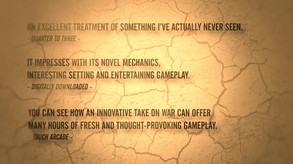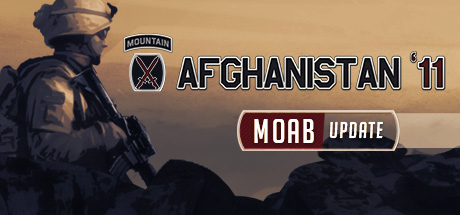
Afghanistan '11 is the sequel to the highly praised and innovative Vietnam '65. It enhances and builds on it: Afghanistan '11 changes the paradigm of wargaming and manages to bring Counter-Insurgency and guerrilla warfare to your screen, properly represented thanks to a revolutionary gameplay formula!
Modeled estimate, not a reported figure. How we estimate →
About
Stats
All-time low is the lowest price we've recorded for this game since we started tracking it.
Languages: English**languages with full audio support
Engagement
Reviews
Themes across 41 recent reviews and how positive each mention is. A keyword signal, not full sentiment analysis.
Reviews
Es un sistema de juego interesante. Muy similar al de Vietnam. Recomendable.
It's an amazing game but it's incredibly frustrating . I love it and at the same time I could freak out when IEDs spawn for the umpteenth time in areas that are overwatched by SF or trucks in a guarded convoy get destroyed numerous times in a row.
Неинтересно и сложно.
Media

Related
Related
Price dynamics, follower growth, revenue and sales trajectories with interactive tooltips
This and every other Pro feature is free until October 20, 2026. A free account is all it takes.
Hours played at review time, across 41 reviews with recorded playtime.
positive critical· bar length = how often the theme comes up
best game in its category, hands down.
Nice game if you want to test your strategy skills
Симулятор установки мин у тебя за спиной 10/10
Afghanistan ’11, developed by Every Single Soldier and Retro Epic and published by Slitherine Ltd., is a strategy game that deliberately avoids the conventional fantasy of military dominance and instead explores the far more complicated reality of modern counterinsurgency. It places the player in the role of a coalition commander operating in Afghanistan, but rather than rewarding brute force or territorial conquest, it demands a careful balance between military action, infrastructure development, and political sensitivity. This shift in focus gives the game a distinctive identity, one that feels less like a traditional war game and more like a simulation of long-term stabilization efforts under constant pressure. The foundation of the experience is a turn-based system played out on a hex-based map, where every decision carries weight and consequences are rarely immediate. Units must be moved with purpose, whether to secure regions, escort convoys, or respond to insurgent threats that emerge unpredictably across the map. Combat is present, but it is not the central solution; insurgent forces are persistent and difficult to eliminate entirely, meaning that victories on the battlefield are often temporary. Instead, success depends on maintaining a favorable “Hearts and Minds” balance, which reflects the support of the local population and acts as the true measure of progress. This mechanic fundamentally changes how the game is approached, forcing players to think beyond tactical engagements and consider the broader impact of their actions. A significant portion of gameplay revolves around logistics and infrastructure, which are treated as essential rather than optional systems. Players must build and maintain supply lines, repair roads, construct facilities, and ensure that villages receive the resources they need. These activities directly influence stability and public perception, creating a constant tension between expanding operations and maintaining what has already been established. Neglecting infrastructure can quickly undo progress, while overextending forces can leave key areas vulnerable. The game excels at illustrating how fragile control can be, and how easily it can slip away if not actively managed. The variety of units reinforces this layered approach to strategy. Infantry units gather intelligence and engage insurgents, engineers focus on construction and repairs, and specialized vehicles handle tasks such as clearing improvised explosive devices or transporting supplies. Air units provide mobility and rapid response capabilities, but they must be used carefully to avoid unintended consequences. Each unit type serves a distinct role, and effective play requires coordinating them as part of a larger system rather than relying on any single element. This emphasis on coordination over raw power adds depth and encourages thoughtful planning. One of the most compelling aspects of Afghanistan ’11 is its long-term structure, particularly the gradual transition from coalition control to local Afghan forces. As the campaign progresses, players are required to train and rely on local units, eventually reducing their own presence and handing over responsibility. This creates a natural arc that mirrors real-world objectives, culminating in a phase where the stability you have built is tested without your direct control. It adds a sense of weight to earlier decisions, as the effectiveness of local forces depends heavily on how well they have been prepared. The game also introduces a range of dynamic events that reflect the unpredictability of the region. Political developments, civilian incidents, and shifting priorities can alter the situation in ways that are often beyond the player’s control. These events add realism and tension, but they also contribute to a learning curve that can feel steep. Understanding how different systems interact—and why certain outcomes occur—takes time, and the game does not always communicate this information clearly. As a result, early sessions may feel opaque or even frustrating until the underlying mechanics become more familiar. Visually, Afghanistan ’11 is understated, focusing on clarity rather than spectacle. The map is clean and functional, making it easy to read terrain and track units, while the interface provides access to a wide range of information without becoming overly cluttered. However, the presentation does feel somewhat dated, and navigating menus or managing multiple units can occasionally feel cumbersome. The pacing is similarly deliberate, with missions unfolding over many turns and requiring sustained attention, which may not appeal to players looking for faster or more immediately rewarding gameplay. Despite these challenges, the game’s strengths lie in its commitment to a complex and often underrepresented perspective on warfare. It does not offer easy victories or clear-cut solutions, instead presenting a system where progress is incremental and setbacks are inevitable. This makes each success feel meaningful, as it is the result of careful planning and sustained effort rather than momentary triumph. The experience can be demanding, but it is also deeply engaging for those willing to invest the time to understand its systems. In the end, Afghanistan ’11 stands out as a thoughtful and ambitious strategy title that prioritizes realism and depth over accessibility. It may lack the polish and immediacy of more mainstream games, but it compensates with a unique approach that challenges players to think differently about conflict and control. For those interested in methodical, systems-driven strategy with a strong thematic focus, it offers a rewarding and memorable experience that lingers long after the final turn. Rating: 7/10
Molto realistico ed approfondito,veramente ben fatto,Slhyterine come al solito una garanzia
excelente jogo!!!!
Game is a lot of fun, though even at the lowest difficulty its quite hard.
Selling now
See how fast this game is selling right now — estimated copies and revenue per day from recent review growth.
Players by region
Where this game's players are, estimated from review languages.
Related
| Game | Estimated lifetime revenue | Reviews | Review score | Price |
|---|---|---|---|---|
| $671.1K | 1.8K | 77% | $11.99 | |
| $575K | 849 | 84% | $29.99 | |
| $348K | 471 | 65% | $29.99 | |
| $242.5K | 454 | 76% | $14.99 | |
| $104.8K | 387 | 62% | $11.99 | |
| $51K | 177 | 49% | $11.99 |
Related
| Game | Estimated lifetime revenue | Reviews | Review score | Price |
|---|---|---|---|---|
| $300K | 1.2K | 88% | $9.99 | |
| $299.8K | 426 | 70% | $39.99 | |
| $300.2K | 843 | 76% | $14.99 | |
| $300.2K | 2.6K | 88% | $4.99 | |
| $299.6K | 4K | 88% | $4.79 | |
| $299.6K | 380 | 92% | $29.99 |