I finished *A Hand With Many Fingers* in 7.9 hours, and I have somewhat mixed feelings about it.
The game started out quite confusingly. I basically began by looking for boxes based on the first card I found in one of the drawers, without really understanding what the game expected me to do. It took me a while to realize that the drawers themselves could be browsed, rather than simply being containers for whatever card happened to be visible. It also took me almost the entire game to discover that left-clicking functions as a kind of zoom mode, making it much easier to inspect the boards and read documents. Those are small things, but they made the beginning considerably more frustrating than it needed to be.
Once I understood the system, the game became more coherent. You find a name, date and location, use those to locate a card in the archive, retrieve the corresponding box from the basement, go through its documents, and use what you discover to find another box. At first this still felt like a chore. There is a *lot* of going downstairs, finding a box, carrying it upstairs, reading through it, and then doing it all over again. I can imagine this being a great pleasure for someone who wants an archivist simulator, although the game is actually too short to be one in any meaningful sense. There are only thirteen main boxes.
For me, the game really started working once the connections began multiplying. I knew nothing about the real-world story beforehand, which turned out to be a huge advantage. I couldn't anticipate where the investigation was going, so watching the names and organizations recur across documents gradually revealed the larger picture to me. People who initially seemed unrelated started appearing in the same contexts, and suddenly the archive wasn't just a collection of documents anymore. There was a mystery emerging from it. That was the point where I stopped thinking so much about the box-fetching and started wanting to know what the hell was going on.
Visually, I liked it. The minimalistic presentation works very well, and the low-poly aesthetic fits the strange, sterile atmosphere of the office and archive. The game also uses small environmental details effectively: footsteps, conversations coming from elsewhere in the building, the occasional taxi passing outside the window, and the particular light that flashes downstairs when you're on the right track. These touches make an otherwise extremely static environment feel alive. There are also scripted events, such as a phone suddenly ringing while you're heading downstairs, which make you rush back to the office to answer it. Unfortunately, these moments don't really have any gameplay significance; they're mostly there to create atmosphere.
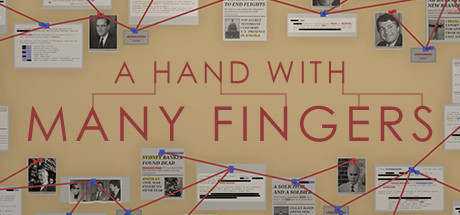
One thing I found particularly interesting is that the game essentially expects you to keep your own investigation notes. The boards in the office look like they might be a central puzzle mechanic, with documents pinned up and red wires connecting them, but they're actually just organizational tools. Connecting things with the wires doesn't affect the game at all. You can use them to help yourself understand the investigation, but they aren't actually part of the puzzle system.
In practice, I found my own notes much more important. I was keeping track of every box I'd opened, where the cards were, and all the names, dates, locations and connections I'd discovered. At one point I lost all of those notes because of a bug on my BOOX device, and I suddenly felt completely blind. I could still play the game, but I no longer had a reliable memory of what I'd already investigated. When I eventually managed to recover the notes from the device's cache - while the game had been running in the background - I effectively added another hour to my playtime just trying to reconstruct where I was. That experience made me realize how much of the game's actual puzzle structure exists outside the game itself.
Eventually, after going through all the boxes and documents, you reach the final box. It contains a key, which takes you into a deeper part of the basement, where there is one last box. Inside is a document instructing you to destroy the file. You return upstairs and discover that someone has crashed a car directly into the office, breaking through the wall. It's a striking image, but I found the ending rather abrupt. The game never really explains who did it, why they did it, or exactly how the event relates to everything you've been investigating. And, more importantly, there is no real resolution to the mystery itself.
You don't actually find out what happened to most of the people who appeared during the investigation, or how the events ultimately played out. If you play by the game's own rules and don't leave it to consult Wikipedia, you don't really know how the real-world story ended. You have spent hours following names, dates, locations, boxes, cards and documents, gradually reconstructing a network of people and events - and in the end, you're essentially told to destroy the information you've found. Someone knows what happened. You don't.
This is the biggest drawback of the game for me. If the investigation had ultimately led to a complete solution - even a fictional one, had the developers chosen to invent the underlying story - it would have made the entire card-box-document-card loop feel much more satisfying and justified. Instead, the investigation remains open. It feels almost as if you have done all this work for someone else, and someone else gets to know the answer while you are left holding the fragments. As a plot arc, I don't find that satisfying.
At the beginning, I really suffered through that loop. Somewhere around the middle, it started to become interesting because I became invested in what the documents were actually telling me. By the end, I respected the game considerably more than I enjoyed playing it.
I'm glad I finished it. I'm glad I gave it the time and attention it demanded, and I'm glad I knew nothing about the real story going in. But after 7.9 hours of playing an archivist who spends most of his time carrying boxes from a basement, I'm also quite happy to close the archive for good.
Playtime: 7.9h
Verdict: I respect this game, found the investigation genuinely interesting once it clicked, and I think it's worth experiencing despite its flaws.