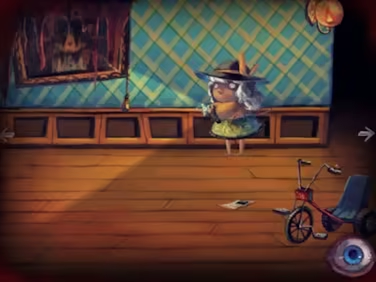
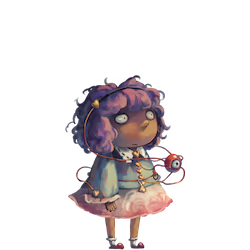
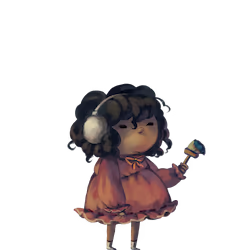
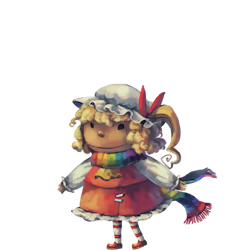
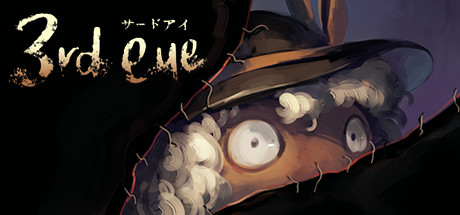
A 2D exploration/horror game starring the Touhou Project's Koishi Komeiji. Use her Third Eye to explore a mental world entirely unlike reality.
Modeled estimate, not a reported figure. How we estimate →
Media

About


Genres
Stats
All-time low is the lowest price we've recorded for this game since we started tracking it.
Languages: English, Simplified Chinese, Traditional Chinese, Japanese
Engagement
Hours played at review time, across 40 reviews with recorded playtime.
Reviews
Themes across 40 recent reviews and how positive each mention is. A keyword signal, not full sentiment analysis.
positive critical· bar length = how often the theme comes up
Reviews
2.5hNE 沒有作出選擇 徘徊在幻想與現實之間.. 引導不是很好 遊戲還是好遊戲, 玩法容易上手, 小石頭的能力結合的很好 bgm不錯! 美術風格輕微獵奇 雖然和touhou沒什麼太大關係, 不過這些配角, 秦心, 河童等角色都設計的不錯 地圖設計也不錯, 迷途竹林很容易迷路 可以說是非常有趣的遊戲(笑
这个游戏是支持手柄的
Ending Bugged, couldnt finish it :(
i dont remember who was this game about
Pleasure to see you, invisible friend! You think you can see Me? It's only pretend! It's funny, 'cause no One is keen to my kind So maybe the truth is You're losing your mind~ Pleasure to be here, impossible friend! So long as you see me I'll stay till the end I'm meeting myself, too, with every day Promise to make sure You don't look away~ Who are you? (Who am I?) What are you? (What am I?) Look at me (Are you blind?) Look again (Never mind.) Are you there? (Stay away.) There you are (Stay away.) Here I am (Stay away.) Come with me (Take it away...) Tell me your secrets In case you forget! And I'll be your back-up Your faithfullest pet! As cute as a kitten, as smart as a crow Got nothing to hide here And nothing to show Turn off your worries And leave it to chance! We'll turn up the white Noise and go for a dance! Your favorite tune? It's my favorite too! You follow my lead I'm following you! Give in to nonsense! There's nothing to fight I step with my left foot And turn to the right! So what's coming next? That's a total surprise Join into the game now Look straight in my FACE! Who are you? (Who am I?) What are you? (What am I?) Look at me (Are you blind?) Look again (Never mind.) Are you there? (Stay away.) There you are (Stay away.) Here I am (Stay away.) Here I go (No, I mean, stay...) We may never know each Other all that clearly Really, will it matter When we drift apart? For as long as we can feign Another moment loving dearly I don't think I'll ever need To see into your heart Memories are burning to a fading ember Fragments of the feelings That were up to me I'm sick of feeling sorry Sick of trying to remember; Cut my heavy conscience I am ready to be free I'm a little figment of imagination!! Nothing but the sort-of Person no one knows For a face to be forgotten Is the fate of every face Then every pretty smile Withers over like a rose Then again, with wide and Happy eyes, you see me Play with me again upon another day... And believing you believe In me is making me believe That maybe I'm a thing that Doesn't have to fade away... Pleasure to see you! I waited a while You look like a grown up But still like a child! Don't worry about me. I Think I've been fine I remember your face You remember mine? What's with the mood now? You're frozen in fear Like you’ve seen a stranger Inside of a mirror This isn't at all like The face that you showed The first time we met On the side of the road Sooner or later was anyone's guess So maybe a new start Would be for the best! You look in my eyes, yet You're looking too far "Pleasure to see you"... Whoever you are
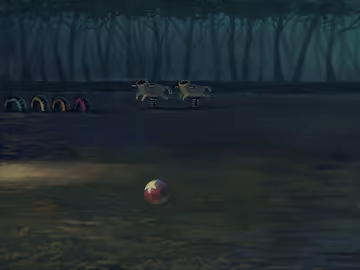
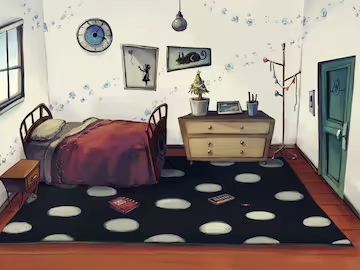
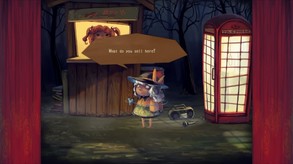
3rd eye is a psychological horror adventure that relies far more on emotional unease and surreal atmosphere than traditional horror mechanics. Developed by 3rd eye project and connected to the Touhou universe, the game follows Koishi Komeiji, a girl possessing a mysterious Third Eye that allows her to perceive hidden truths and read the minds of others. After awakening in a strange and unfamiliar place, Koishi begins wandering through bizarre locations filled with unsettling imagery, fragmented memories, and emotionally damaged individuals. The game slowly unravels its story through symbolism and psychological themes, creating an experience that feels dreamlike, melancholic, and increasingly disturbing as it progresses. What immediately makes the game stand out is its atmosphere. From the beginning, the world feels detached from reality in subtle but effective ways. Ordinary locations are twisted into surreal environments filled with strange visual details and cryptic dialogue that constantly create uncertainty. Players travel through abandoned spaces, eerie forests, quiet villages, and distorted dreamlike areas that seem to reflect fragments of Koishi’s emotional state. The game rarely explains its mysteries directly, instead encouraging players to interpret events through observation and symbolism. This ambiguity becomes one of its greatest strengths because it keeps the entire experience emotionally unpredictable. The Third Eye mechanic is central to both gameplay and storytelling. Koishi can activate her eye to reveal hidden objects, invisible pathways, and secrets concealed within the environment. Exploration and puzzle solving depend heavily on this ability, making players constantly search for clues hidden beneath the surface of the world. However, using the Third Eye excessively comes with consequences. The eye gradually becomes strained and bloodshot, eventually forcing Koishi to rest or use eyedrops to recover. This mechanic creates tension during exploration because curiosity must be balanced carefully against survival and resource management. Rather than relying heavily on direct combat or constant enemy encounters, the game builds horror through discomfort and psychological pressure. Many scenes are unsettling simply because of their presentation and emotional context. Characters often behave strangely, conversations shift unpredictably between innocence and despair, and environments slowly become more distorted as the narrative progresses. The horror feels deeply personal instead of purely external, with many frightening moments emerging from emotional vulnerability rather than physical danger. The visual design contributes significantly to this unsettling tone. Character artwork appears cute and colorful at first glance, but the contrast between the adorable anime-inspired style and the game’s darker themes creates a uniquely uncomfortable atmosphere. Koishi herself often appears emotionally detached despite her cheerful appearance, reinforcing the loneliness that defines much of the story. Backgrounds shift constantly between peaceful scenery and disturbing imagery, creating environments that feel simultaneously beautiful and threatening. Sound design is another major strength. The soundtrack alternates between soft melancholy, eerie ambient music, and distorted audio tracks that intensify the psychological tension. Silence is used just as effectively as music, allowing quiet moments to feel unnervingly empty. Certain scenes become deeply unsettling largely because of how the audio supports the surreal visual presentation. The game understands how to create emotional discomfort without relying on excessive noise or predictable jump scares. The narrative itself is intentionally abstract. Instead of presenting a straightforward horror story, the game explores themes involving loneliness, memory, repression, emotional trauma, and identity. Koishi’s ability to read minds becomes symbolic of emotional exposure and isolation, as she constantly experiences the hidden thoughts and suffering of others. Many scenes appear designed more to communicate emotional states than literal events, giving the game a dreamlike structure that rewards interpretation rather than simple explanation. Supporting characters further strengthen the emotional atmosphere. Encounters with figures connected to Koishi’s past often feel fragmented and unstable, as though players are exploring damaged memories rather than objective reality. Some conversations are humorous or strangely comforting, while others become deeply uncomfortable with little warning. The unpredictability of these interactions contributes heavily to the game’s psychological tension because players are never fully certain how scenes will evolve emotionally. The branching narrative and multiple endings also add replay value. Choices made throughout the game subtly shape the direction of the story and influence how Koishi’s journey concludes. Different endings reveal alternate interpretations of the game’s themes and emotional conflicts, encouraging players to revisit earlier scenes with new understanding. Some conclusions are particularly bleak, reinforcing the game’s focus on psychological suffering and emotional isolation. Despite its originality and strong atmosphere, the game does have some flaws. The pacing can occasionally feel slow, especially during sections where players wander through surreal environments with minimal direction. Some puzzles are intentionally obscure, which may frustrate players unsure how to properly use the Third Eye mechanic. The abstract storytelling style also means that certain plot points remain difficult to fully understand, even after completing the game. The localization can sometimes feel inconsistent as well. Certain lines of dialogue appear awkwardly translated, slightly weakening the emotional impact of important scenes. Technical issues and occasional performance problems have also been noted by some players. While these flaws do not ruin the experience, they can interrupt immersion during key moments. Even with those issues, 3rd eye succeeds because of how committed it is to its atmosphere and emotional storytelling. The game feels deeply personal and intentionally uncomfortable in ways that many horror titles never attempt. It is less concerned with creating immediate fear and more focused on exploring emotional fragility, repression, and psychological instability through surreal imagery and symbolic narrative design. What makes the experience memorable is how effectively it blends quiet emotional sadness with unsettling horror. The game constantly leaves players uncertain about what is real, what is symbolic, and what exists only within Koishi’s fractured emotional perception. This ambiguity gives the story a lingering impact that remains effective even after the credits roll. 3rd eye is not designed for players seeking fast-paced horror or constant action. Instead, it offers a slow and emotionally heavy psychological journey built around atmosphere, symbolism, and interpretation. Its surreal environments, haunting soundtrack, and emotionally vulnerable storytelling create an experience that feels unique among indie horror games. For players who appreciate narrative-driven psychological horror with strong thematic depth, it delivers an unforgettable and deeply unsettling adventure. Rating: 8/10
Ну типа смысл есть, а вроде и не понял. Рисовка потрясная, остальное мало что понял честно говоря... Мне больше нечего добавить
再来三只眼睛。 话说还有没有类似的纯剧情向东方同人游戏,求推荐
Berigoo!
Buy it on sale its worth a playthrough or two. >3rd Eye sequel never
Related
Related
Trends
Modeled estimate over time, reconstructed from Steam's monthly review histogram.
Momentum
Pace estimated from the game's recent review growth (our daily snapshots) at its own sales-per-review ratio — a momentum signal, not booked sales.
Audience
Estimated from the language of this game's reviews — a proxy for where players are, not official Steam demographics.
Related
| Forklift Simulator | $76.6K | 118 | 58% | $19.99 |
| Sound of Horses | $76.6K | 286 | 95% | $14.99 |
| Decline's Drops | $76.7K | 222 | 95% | $14.99 |
| Idle Deepcore | $76.6K | 284 | 85% | $6.99 |
| 机退怪兽 | $76.6K | 290 | 64% | $10.99 |
| Butterfly's Poison; Blood Chains | $76.7K | 106 | 94% | $44.99 |