Zarya-1: Mystery on the Moon takes a minimalist approach to science-fiction horror, building its experience almost entirely around communication, uncertainty, and the consequences of giving orders from a safe distance. Developed and published by Your Story Interactive, it casts the player as a mission-control operator overseeing a four-person expedition sent to investigate a mysterious signal originating from the far side of the Moon. Instead of walking across the lunar surface personally, the player communicates with the expedition and decides how its members should respond to increasingly strange discoveries. This indirect perspective gives the story much of its tension because every dangerous situation must be handled without seeing the complete picture.
The central mystery begins simply enough, but the expedition gradually becomes more unsettling as the astronauts approach the source of the signal. The Moon is an excellent setting for this type of narrative because its isolation makes even ordinary complications potentially deadly. The crew cannot simply call for immediate rescue when something goes wrong, while the player can offer instructions but cannot physically assist them. That distance creates an interesting relationship between authority and helplessness. You are responsible for making important decisions while depending almost entirely on information supplied by people who may themselves be frightened, confused, or uncertain.
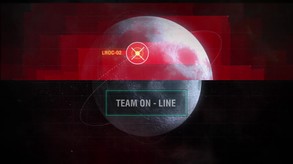
Gameplay primarily revolves around reading conversations and selecting instructions or responses. This makes Zarya-1 closer to interactive fiction than a conventional adventure game, but the format suits the premise surprisingly well. Communications are presented like messages arriving from an actual expedition, helping establish the feeling that events are unfolding somewhere beyond the player's direct reach. Crew members occasionally send photographs from the mission, providing visual evidence of locations and discoveries while still leaving enough unseen for the imagination to create its own sense of danger.
Decision-making provides the game's main source of interaction. The expedition frequently encounters circumstances where several approaches seem reasonable, yet the eventual consequences may differ dramatically. A seemingly cautious instruction can create an unexpected problem, while a riskier option may reveal valuable information or open a different narrative path. The possibility of making disastrous choices keeps conversations engaging because the player is not merely advancing dialogue. Decisions can influence what happens to individual characters and ultimately determine how the mission concludes.
Multiple endings significantly improve replayability. Reaching an unfortunate conclusion naturally creates curiosity about what would have happened if earlier decisions had been different. The game also provides a rewind mechanic that allows players to return to previous points and reconsider important choices. This makes experimentation less frustrating, especially when the consequences of a decision could not reasonably have been predicted beforehand. Although rewinding slightly reduces the permanence of failure, it works well for a branching narrative designed to encourage exploration of alternative outcomes.
The four-person crew is important to the experience because the story would lose much of its impact if the astronauts felt like anonymous pieces on a board. Their conversations introduce personality and occasional humor alongside the darker material. These lighter exchanges help make the characters feel more human before circumstances become increasingly threatening. As the mission develops, sending someone into a potentially dangerous situation carries greater emotional weight because the player has spent time communicating with the group.
Atmosphere remains one of the strongest aspects of the game. Rather than depending on constant visual scares, it creates suspense through incomplete information and anticipation. Knowing that something unusual exists on the far side of the Moon is disturbing precisely because neither the player nor the expedition initially understands what it is. The text-driven presentation allows descriptions, messages, pauses, photographs, and unexpected developments to build tension gradually. Players who appreciate mysterious science-fiction stories may find this restrained approach more effective than a more conventional collection of jump scares.
Its greatest strength can also become its biggest limitation. There is little traditional gameplay beyond conversations and choices, so anyone expecting direct lunar exploration, combat, resource management, puzzles, or complex survival mechanics may find the experience overly passive. The enjoyment largely depends on becoming invested in the narrative and accepting that imagination is responsible for portraying much of the action. The adventure is also relatively focused in scope, meaning its replay value depends heavily on the player's desire to investigate different choices and endings.
Visually, the presentation is functional rather than extravagant. The interface appropriately supports the communication-centered concept, while photographs provide occasional windows into the expedition itself. Sound and presentation contribute to the mysterious tone without overwhelming the writing. This simplicity also keeps attention concentrated on incoming information and the decisions that follow. The result feels more like managing a dangerous remote expedition than controlling characters in a traditional game.
Steam Deck compatibility is Playable rather than fully Verified. The game can operate on Steam Deck and its relatively lightweight design is naturally suitable for portable play. Text readability and general performance are appropriate for the handheld, although some interaction may require using the touchscreen or adjusting the controller configuration because not every function is ideally handled by the default gamepad controls. These are manageable inconveniences for a game based mainly around reading and selecting responses, so Steam Deck owners should still be able to experience the complete adventure.
Zarya-1: Mystery on the Moon ultimately succeeds because it turns a simple messaging concept into an engaging exercise in responsibility and uncertainty. Its isolated lunar setting, mysterious signal, branching decisions, multiple endings, crew interactions, photographs, and rewind system create a compelling interactive science-fiction story without requiring complicated mechanics. It is best recommended to players who enjoy narrative experimentation, psychological tension, and choice-driven adventures rather than those seeking action-heavy gameplay. Within its intentionally modest format, it delivers an intriguing journey where the most important weapon is not a firearm but the ability to make the right decision with dangerously incomplete information.
Rating: 8/10