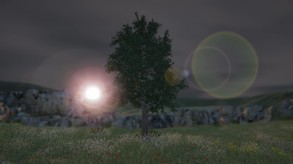
Wood you like marginally improved graphics? Do you like leafing it all behind and taking root in some random field? If so, you are a tree, be the best tree you can be. Prepare for a deeper and more detailed understanding of what it is to be a tree. A true work of art.
Modeled estimate, not a reported figure. How we estimate →
Media

About
Genres
Stats
All-time low is the lowest price we've recorded for this game since we started tracking it.
Languages: English**languages with full audio support
Engagement
Hours played at review time, across 40 reviews with recorded playtime.
Reviews
Themes across 40 recent reviews and how positive each mention is. A keyword signal, not full sentiment analysis.
positive critical· bar length = how often the theme comes up
Reviews
별 내용이 없지만 명상을 하는 느낌 정도?
Hello was geht
入定了
dimi tree
Liminal Lane is a surreal psychological horror experience that focuses almost entirely on atmosphere, emotional discomfort, and dreamlike exploration rather than traditional horror mechanics. Instead of relying on combat, monsters, or constant jump scares, the game builds fear through empty spaces, distorted nostalgia, and the unsettling sensation of wandering through environments that feel strangely familiar yet deeply wrong. The result is a short but surprisingly effective walking simulator that captures the emotional unease associated with liminal spaces and forgotten memories remarkably well. The game takes players through a series of strange interconnected environments inspired by abandoned suburban locations, empty entertainment centers, silent office buildings, dim hallways, and fragmented childhood memories. Each location feels disconnected from reality in subtle ways. The spaces are recognizable enough to trigger nostalgia, but the absence of people, unnatural silence, and distorted environmental design create a constant sense of psychological tension. The game understands that liminal horror works best when it transforms ordinary places into something emotionally unsettling without needing direct threats. Atmosphere is easily the strongest aspect of the experience. Liminal Lane excels at creating environments that feel emotionally hollow and strangely isolated. Endless corridors, oversized rooms, flickering lights, and silent recreational spaces all contribute to the feeling that the player has entered a forgotten place existing outside normal reality. The game rarely tries to frighten players through sudden scares. Instead, it slowly builds discomfort through pacing, emptiness, and the growing realization that something about the world feels fundamentally unnatural. The visual presentation plays a major role in establishing this tone. The game combines retro-inspired low-poly graphics with modern lighting effects and surreal environmental design, creating an aesthetic that resembles distorted memories of late 1990s and early 2000s spaces. Certain locations feel reminiscent of old shopping malls, arcade centers, schools, or suburban buildings remembered through dreams rather than reality. The simplistic visuals actually strengthen the atmosphere because they leave room for imagination while reinforcing the nostalgic qualities of the environments. One of the most interesting aspects of Liminal Lane is how it constantly balances comfort and unease. Some areas initially feel peaceful or oddly calming because of their nostalgic familiarity, only for subtle environmental details or sound changes to gradually make them feel disturbing. The game rarely explains its symbolism directly, allowing players to project their own emotions and memories onto the environments. This ambiguity gives the experience much of its emotional power. Sound design is another major strength. Ambient noises, distant echoes, static interference, muffled voices, alarms, and distorted environmental audio constantly create tension during exploration. The game often uses silence just as effectively as sound, making certain sequences feel oppressive despite almost nothing happening visually. Audio shifts are carefully used to create psychological instability, reinforcing the sensation that reality itself is beginning to break apart around the player. The inclusion of vintage cartoons, old media clips, and nostalgic imagery adds another unusual layer to the experience. These moments create an unsettling contrast between childhood comfort and emotional isolation. Familiar media fragments appear disconnected and uncanny when placed inside the game’s surreal environments, helping strengthen the dreamlike atmosphere. The combination of nostalgia and psychological horror becomes one of the game’s defining qualities. Gameplay itself remains intentionally minimalistic. Most of the experience involves walking through environments, observing details, and occasionally interacting with light puzzle elements or progression triggers. There are no combat systems, complex survival mechanics, or difficult gameplay challenges. The game clearly prioritizes emotional immersion and atmosphere above interactivity. Players expecting traditional horror gameplay may find the mechanics extremely limited, but the simplicity allows the environments and sound design to remain the central focus. The short runtime is one of the game’s most divisive aspects. The entire experience can generally be completed in under an hour, making it feel more like an experimental interactive art piece than a full-length horror title. Some players may feel disappointed by the limited amount of content, especially because the atmosphere and ideas become increasingly intriguing as the experience progresses. However, the short duration also helps prevent the concept from becoming repetitive or losing emotional impact. Technical roughness is noticeable throughout the experience as well. Certain environments appear visually inconsistent, occasionally mixing strong lighting and atmosphere with simplistic textures or awkward environmental assets. Transitions between sequences can sometimes feel abrupt, and some visual elements lack polish. Community discussion has also mentioned concerns regarding the use of AI-generated imagery within parts of the presentation, which may affect how some players view the overall artistic direction. Despite these shortcomings, Liminal Lane succeeds because of how effectively it captures the emotional core of liminal horror. The game understands that fear can emerge from emptiness, nostalgia, and psychological isolation rather than direct violence or constant danger. Many of its most memorable moments come simply from existing inside environments that feel emotionally familiar yet deeply unnatural. What ultimately makes the game stand out is its ability to recreate the strange emotional sensation of wandering through forgotten memories or abandoned dream spaces. Empty hallways, silent rooms, old media fragments, and distorted architecture combine to create an experience that feels both strangely comforting and deeply unsettling at the same time. For players who enjoy atmospheric horror, surreal walking simulators, and psychologically driven exploration games, Liminal Lane offers a memorable and emotionally strange experience despite its limited scope. Its minimalist gameplay and short runtime may not satisfy players looking for traditional horror mechanics, but its oppressive atmosphere, nostalgic unease, and dreamlike presentation make it an intriguing entry within the growing liminal horror genre. Rating: 8/10
Why does this cost anything? It should be free.......
10/10
原来做棵树是这样的吗,那我只能说是太酷啦
树,嗯,树
игра хорошая но мало отличий с 2020 года
Related
Related
Trends
Concurrent players on Steam, sampled daily since tracking started.
Audience
Estimated from the language of this game's reviews — a proxy for where players are, not official Steam demographics.
Related
| Fight Party | $11.7K | 148 | 79% | $4.99 |
| Lair of Torment | $11.7K | 203 | 71% | $2.19 |
| PowerSimulator | $11.7K | 210 | 42% | $1.99 |
| A Little Golf Journey | $11.7K | 153 | 84% | $3.89 |
| Tumbleweed Express | $11.7K | 129 | 90% | $3.99 |
| The Last Time | $11.7K | 172 | 95% | $3.99 |