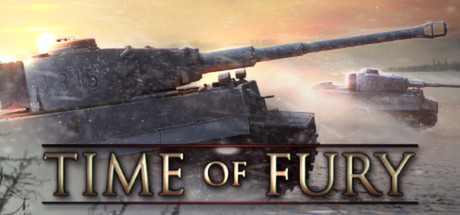
Time of Fury is a dense, old-school grand strategy experience that aims to simulate the full scope of the Second World War in Europe through an uncompromising focus on scale, systems, and historical structure. Developed and published by Conglomerate 5, the game places players not in the role of a battlefield commander, but as a national-level decision maker responsible for guiding an entire country through the political, economic, and military pressures of global conflict. It is a title that clearly prioritizes strategic depth and historical modeling over accessibility or visual spectacle, making it a deliberate throwback to classic wargames rather than a modernized strategy hybrid.
From the outset, Time of Fury establishes its ambition through sheer scope. The massive hex-based map of Europe spans tens of thousands of tiles, representing cities, terrain, supply routes, and front lines across the entire continent. Players control armies, air forces, and naval units at a high level, moving formations across regions rather than issuing orders to individual soldiers. The sense of scale is constant, with multiple fronts often active simultaneously, forcing players to think in terms of theaters of war rather than isolated engagements. This macro-level perspective is central to the game’s identity and defines nearly every decision the player makes.
Strategic planning extends far beyond troop movement. Logistics and supply lines play a critical role, with offensives grinding to a halt if infrastructure is neglected or overextended. Research systems allow nations to invest in new technologies, weapons, and strategic projects, encouraging long-term planning that can take years of in-game time to pay off. Diplomacy adds another layer, letting players influence neutral countries, manage alliances, and manipulate geopolitical conditions through political points rather than brute force alone. These interconnected systems reinforce the idea that wars are won as much through preparation and policy as they are through combat.
Historical structure is deeply embedded in the experience. Key events, treaties, and turning points shape the flow of the campaign, creating a framework that mirrors real-world developments while still allowing room for divergence. Players can attempt alternative strategies, delay or accelerate conflicts, or pursue different diplomatic outcomes, but they do so within a historical scaffolding that keeps the war recognizable. This balance gives the game a strong sense of authenticity, though it can also make campaigns feel somewhat rigid, especially for players seeking more emergent or sandbox-style outcomes.
Combat itself is largely abstracted, resolved through unit strength, positioning, terrain modifiers, and logistical support rather than direct player control. Battles unfold automatically once forces engage, shifting the emphasis toward preparation and deployment rather than tactical micromanagement. This approach reinforces the game’s strategic focus but may feel distant to players who prefer hands-on battlefield decision-making. Success often depends more on months of careful buildup than on any single engagement, which can be deeply satisfying for methodical planners and frustrating for those seeking immediate feedback.
Presentation reflects the game’s priorities. The interface is dense and information-heavy, with an emphasis on data clarity rather than visual flair. Unit icons, maps, and menus are functional but utilitarian, clearly designed for players willing to spend time learning systems rather than those looking for cinematic immersion. Sound and music are understated, serving primarily as background accompaniment to long planning sessions. While this presentation can feel dated, it aligns with the expectations of traditional wargame enthusiasts.
The learning curve is steep, and Time of Fury makes few concessions to newcomers. Tutorials are limited, and understanding how the many systems interact often requires experimentation and patience. For some players, this complexity is the game’s greatest strength, offering a deep sandbox where mastery feels earned. For others, it becomes a barrier, making the experience feel slow or opaque during the early hours. This divide is reflected in its mixed reception, which largely mirrors the split between hardcore strategy fans and more casual players.
Ultimately, Time of Fury is a game that knows its audience and caters to it unapologetically. It is not a streamlined or modernized take on World War II strategy, but a comprehensive simulation that rewards long-term thinking, historical interest, and tolerance for complexity. For players who enjoy managing nations rather than units, shaping history through policy and preparation, and engaging with grand strategy at a deliberate pace, it offers a demanding but richly layered experience.
Rating: 5/10