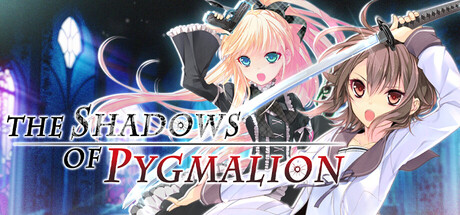
For as long as anyone knows, beings called “Puppets” have operated in service of a force unknown, quietly manipulating the course of history. One day, Hajiro Mina has a chance encounter with one of these Puppets, ultimately changing her life forever.
Modeled estimate, not a reported figure. How we estimate →
Media

About
Stats
All-time low is the lowest price we've recorded for this game since we started tracking it.
Languages: English
Engagement
Hours played at review time, across 40 reviews with recorded playtime.
Reviews
Themes across 40 recent reviews and how positive each mention is. A keyword signal, not full sentiment analysis.
positive critical· bar length = how often the theme comes up
Reviews
「别哭,光奈......」 「人的寿命长短,各有不同……」 「也有那种活了很久,却连重要的某个人都遇不到,就这样结束一生的人......」 「我啊,已经把一生份的兴奋和喜悦都用完了......」 「真的,很开心......」
This visual novel has some problems with pacing and an overly contrived plot, but the strong character writing and good presentation make it a good experience overall. It even has some yuri - and I consider it a yuri visual novel - though it's far from the focus of the VN.
前面剧情挺烂的,不过到了中后段好了很多,总体来说还不错。{这算剧透吗?} 汉化链接奉上,有需要拿去吧: [spoiler]/s/1FxAJ1A68PMQC3P1pMlVz1A[/spoiler] [spoiler]9fnj[/spoiler]
Big congrats to [i]Hajiro Mina[/i] for officially making my ♥♥♥♥♥♥♥♥ of the most insufferable female characters ever. I haven’t reached the ending yet, but the FMC has been completely baffling from start to finish. Watching her is honestly triggering my allergy to stupidity. If anyone in the main party had a single functioning brain cell, they would’ve slapped her across the face and told her to cut the crap and stop spazzing out. Her fate as a Divine Messenger is already set in stone, yet she’s still being melodramatic and whiny about it. It’s that typical Japanese YA "angst for the sake of angst." Do Japanese writers just not know how to write a logical human being? The whole character feels completely schizophrenic. One second she’s slaughtering countless villains, and the next she’s acting like some innocent saint. She loses someone important and then immediately snaps back to her daily routine like nothing happened. Her moral compass is basically nonexistent, and there's zero logical consistency. Honestly, sometimes it feels like [i]we[/i] are the actual villains. On top of that, the pacing is way too rushed. The prologue explains nothing, so as soon as you hit the main story, you just get hit with massive lore dumps. The wording is also super weird—it makes me seriously question the professionalism of the English localization team. They keep shoehorning in fancy vocabulary for simple stuff. It’s like they’re screaming: "[b]LOOK AT ME! I don't have a Green Card but I passed my C1 exam! I am the heir to Shakespeare! Plz accept me as a real American![/b]" Here’s hoping I have better luck finding a Japanese scenario writer with a functioning brain next time. [hr][/hr] [h3]Reviews: 3/10[/h3]
This game makes no sense at all. I tried so hard to keep reading it, hoping that maybe the plot would eventually make some sense, but nope. I did not enjoy any of the 16 hours I spent reading this. The plot is just so nonsensical. It jumps around so much in tone, it felt like they got one person to write 30 minutes worth of the story and then just handed the manuscript to a different author and told them to continue and then repeated that. The tone and plot drastically changes constantly, and none of it is good. This game is one of the worst visual novels I've ever read.
The Shadows of Pygmalion is a dark, emotionally driven visual novel that places its emphasis firmly on atmosphere, character psychology, and a steadily unfolding supernatural mystery. Developed by propeller and published internationally by MangaGamer, the game presents a story that feels deliberate and carefully structured, aiming less to overwhelm the player with branching choices and more to guide them through a tightly written narrative experience. It is a title that rewards patience and attention, gradually revealing its themes and conflicts rather than relying on immediate spectacle. The story follows Mina Hajiro, an ordinary high school student whose life changes after an encounter with a strange doll gallery and the unsettling beings connected to it. These beings, known as Puppets, exist alongside humanity while manipulating events from behind the scenes, and Mina’s unexpected ability to perceive them draws her into a hidden conflict. What begins as a seemingly isolated incident expands into a broader confrontation involving secret organizations, moral ambiguity, and the unsettling question of what truly separates humans from the artificial entities hiding among them. The narrative steadily escalates, layering tension and uncertainty while keeping its focus firmly on Mina’s evolving perspective. One of the game’s greatest strengths lies in its writing and tone. Rather than presenting a straightforward battle between good and evil, The Shadows of Pygmalion explores themes of identity, autonomy, and emotional authenticity. Characters are rarely defined by simple motivations, and the story often challenges the player to empathize with viewpoints that feel uncomfortable or morally complex. Psychological tension plays a significant role, with moments of introspection and quiet dread carrying as much weight as overt conflict. This approach gives the story a lingering emotional impact that extends beyond individual scenes. The visual novel structure is mostly linear, with limited but meaningful choices that determine which ending the player reaches. While this may seem restrictive to players accustomed to heavily branching narratives, it serves the story well by maintaining tight pacing and thematic coherence. Multiple endings encourage replay, and completing them unlocks a true conclusion that provides additional context and emotional resolution. Supplemental chapters further expand on side characters, adding depth to the world and reinforcing the sense that every figure in the story has a role beyond surface-level appearances. Visually, the game adopts a refined anime-inspired art style that emphasizes expressive character sprites and carefully composed CG illustrations. While the presentation does not rely on cutting-edge resolution or flashy effects, it effectively conveys mood through composition, lighting, and facial expression. The artwork supports the narrative rather than distracting from it, reinforcing emotional beats and moments of tension with subtle visual cues. This restrained approach helps maintain immersion, especially during the more psychologically intense portions of the story. Sound design and voice acting significantly elevate the experience. The soundtrack shifts smoothly between ominous, suspenseful themes and softer, reflective pieces that underscore character moments. Full voice acting for major characters adds emotional weight and nuance, making conversations feel more immediate and personal. Performances are generally strong, capturing both vulnerability and resolve in ways that deepen attachment to the cast and heighten the impact of dramatic scenes. Despite being labeled as an all-ages release, the game does not shy away from mature subject matter. Violence, emotional trauma, and existential fear are explored in a serious, often somber manner. Yuri elements are woven naturally into the narrative, enhancing character relationships without reducing them to gimmicks or overshadowing the central plot. These relationships contribute to the emotional core of the story, grounding the supernatural elements in personal stakes and human connection. The main limitation of The Shadows of Pygmalion lies in its interactivity. Players looking for frequent decision-making or gameplay systems beyond reading and occasional choices may find the experience passive. However, this design choice aligns with the game’s narrative priorities, ensuring that pacing and thematic focus remain consistent throughout. For those who value storytelling over mechanics, this restraint is more likely to feel intentional than lacking. Overall, The Shadows of Pygmalion stands as a thoughtful and atmospheric visual novel that prioritizes narrative depth, emotional resonance, and psychological tension. Its carefully paced story, strong character writing, and effective use of audiovisual elements make it particularly appealing to players who appreciate serious, introspective storytelling. While it may not cater to those seeking high interactivity or lighthearted themes, it offers a compelling and memorable experience for fans of darker, story-driven visual novels. Rating: 7/10
这款游戏简单说就是:百合部分、声优和美术都是一流的,剧情需要玩家有一定的心理承受能力,对于剧情上缺乏些严谨性,但它仍是一部瑕不掩瑜的作品 游戏讲的是普通女高中生光奈,偶然闯进一家诡异人偶馆,从此被强行绑定契约,能看见隐藏在人群里的“人偶”,还被迫加入战斗。整个世界观很宏大,大概讲几方势力互相厮杀,胜者决定人类未来,最后还要内部自相残杀,能够接受这个剧情需要玩家有一定的心理承受能力 部分角色剧情蛮惨:想拥有灵魂的人偶伊碧丝,到头来只是被利用的工具;官方CP璃子,从一开始就注定赢不了;女主最好的朋友真琴,更是被虐得让人心疼。整体氛围有点像《魔法少女小圆》那种,看着很甜,实则一路发刀,而且很多地方有点为虐而虐,情绪转得特别突然。 这游戏最值得夸的,就是画面和声优。 画风很有辨识度,立绘好看,CG又多又精致,战斗场面也很有张力。声优阵容简直豪华到离谱:花泽香菜、能登麻美子、福圆美里、小仓唯……全是大牌,配得又非常到位,声控直接狂喜。音乐也不拉胯,主题曲燃,BGM氛围感足,视听体验是真的顶。 再加上有质量很高的民间中文补丁,玩起来很舒服,这几点已经足够让它在百合GAL里很有竞争力。 但缺点也比较明显 首先,世界观说得云里雾里,对话像天书,很多坑挖了不填,看到最后都不一定完全搞懂。其次,剧情逻辑不太严谨,节奏也怪。明明打着百合旗号,糖却少得可怜,甚至发了刀子,大部分时间都在讲设定,显得很空洞。女主的心态转变比较突兀 还有一些小毛病:剧情塞得太满,短短一个月发生这么多事,看得很累;偶尔会突然冒出来一些很突兀的擦边球情节,和整体氛围不搭 总的来说,这游戏做不到神作,但算不错的佳作。如果你喜欢百合、悲剧剧情、声优党、画质党,能接受剧情有些不严谨和虐心,那这款会很对你胃口。如果你只想轻松看贴贴、受不了逻辑混乱、讨厌强行发刀,那玩之前真的要做好心理准备 [quote]关注「 [url=https://store.steampowered.com/curator/42276832//]鸿源鉴游组」 [/url] [/quote] [u][b] 会当逢佳游,始可见鸿源。 [/b][/u]
A shounen style scenario, but with a girl as the protagonist, adult themes and scenes, and a few touches of yuri on top of that. Usually, mixing genres lead to a disgusting soup but this one tastes good. It has a few lengthy scenes but it also has well made emotional ones as well. Overall, it's a good reading, not too long, with excellent voice acting and English translation. The Jump to unread function (when it doesn't crashes) makes it even faster than the standard Skip to unlock the true route, after reading the first 3 endings.
While I appreciate (and love) infodumps myself, I still don't like it when the [i]entire[/i] story is just one infodump after another. The plot just jumps from one point/reveal to another without fully exploring anything at all. Not only that, there is [i]barely[/i] any satisfactory action from what is supposedly an action/chuuni VN. Basically, get Tokyo Babel or Ayakashibito (from the same VN studio) and play those instead. They're way better after all.
I DEEPLY regret buying this so-called "game". There is ONE choice in the ENTIRE Visual Novel. That makes this a book, NOT a game. If I wanted to read a book, I'd buy one on Kindle. If I wanted to watch an anime, I'd watch an effing anime! If I go on a gaming platform like Steam, I expect to play a GAME. And a game have choices that affect the outcome. A good amount of choices even. This is NOT a game. And no amount of story depth can make up for that fact. So I cannot recommend this game. It is not worth the price. It's not even worth having it for free, unless it comes on Kindle. Perhaps the game warns there is no choices, but I don't remember seeing such a warning. Personally I feel a bit cheated.
Related
Related
Trends
Concurrent players on Steam, sampled daily since tracking started.
Audience
Estimated from the language of this game's reviews — a proxy for where players are, not official Steam demographics.
Related
| Northmark: Hour of the Wolf | $90.1K | 357 | 82% | $9.99 |
| Chronoquartz | $90.1K | 505 | 98% | $9.99 |
| Mahjong World Contest (麻将) | $90.1K | 217 | 87% | $14.99 |
| Of Orcs And Men | $90.1K | 2.2K | 74% | $1.49 |
| Living with my Little Sister | $90.1K | 421 | 70% | $5.99 |
| Isla Sinaloa | $90.2K | 145 | 68% | $19.99 |