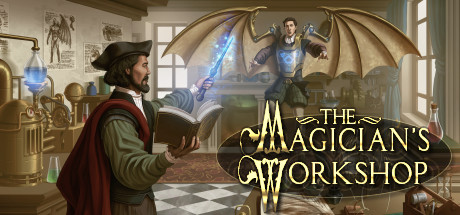
When your master is murdered, you must uncover the magical secrets of Renaissance Italy, before your rival apprentices expose them first!
Modeled estimate, not a reported figure. How we estimate →
Media

About
Stats
All-time low is the lowest price we've recorded for this game since we started tracking it.
Languages: English
Reviews
I don't want to give a negative review, but this experience started well and then executed sloppily in my opinion. First of all, there seem to be too many stats to track, and many choices require a specific combination of those stats. Instead of giving you more freedom by giving you more builds, you feel constrained because you're not dancing to the specific tune the writer envisioned. I also don't like how the multiple plots resolve, I feel like the writer had a grand idea for how these intricate plot threads would coalesce, but in reality they fell flat for me. I wouldn't be so bothered, but I genuinely can't see the choices I missed on the road to get the outcome I need. Here are some examples. I kept no secrets from my rivals, and told them off the bat I believed in a triumvurate. Despite this, one of them felt like I was out to stab them in the back (I don't think I made one choice that involved lying, but ok). I tried to empathise with the apprentices in the workshop, and let them democratically choose their teams, but they preferred the other two to me. I led and completed three commissions, two of which were good enough to earn a tip, but that didn't factor in at all to the choice of next master. In conclusion, high ambitions but faltering execution.
This one is a mixed bag for me. The writting is good, the plot interesting, and there's the proverbial unexpected / unwanted monkey's wrench thrown in to make things more ominous. That said I wasnt happy with my first play through, and I almost always go with that in deciding whether Id recommend the story/game or not. In this play through i was successful in completing three tasks that were needed, and i got the backing of the people working for me, and still that wasnt enough to ensure my success. I was charming and kind and always looking out for the best for everyone. Almost all the skill challenges that I was presented with called on skills I didnt choose to persue. Furthermore I was unable to get any other characters disposition above 60 percent and only one of them went as low as 45 percent. It was like no body cared one way another, whether I had their back or not. Well except for the one who betrayed me (the 45er) and even before that betrayal id had forgiven them acting out and did my best to work with them at every given turn. My fear is that this is another one of those games where you only get the Good ending by being a selfserving hateful jerk, though for now that will just remain an assumption as im dissapointed enough with my first play through that Im not interested in trying to play it again any time soon. So hesitant thumbs up, with a simple warning: Avoid being nice, and dont bother with the mind reading magic. Almost all the game checks require skill in the other two options.
The Magician's Workshop is a really interesting game with a few really glaring flaws. The writing is enjoyable, I like how the addition of magic doesn't change much about Renaissance-era Italy, and it ends up being a fun setting to play around in. The main path through the game is fairly linear, but a LOT of the side stories, descriptions and dialog changes significantly based on who you've befriended, what projects you work on, what magic you specialize in. I've done a few playthroughs and I get the sense there's a lot I still haven't seen. That, however, leads to the big negative. There are so many stats and reputations to try to keep track of that even playthroughs where you you focus on a handful of stats, you'll still be presented with several choices that your character seems woefully unprepared for. I'm more or less fine with this (it's realistic after all), but I feel like the execution in the gameplay is a little clumsy. This is especially evident in the romance options, where if you misread or fail checks at the beginning of the game, you lock yourself out of them entirely. Either way, it feels like a bit of a struggle/slog to build a character that's better than OK at more than a couple of skills. Pros: + Fun setting + Well written story + Really fun to see how many different combinations of skills/reputations/projects create unique scenes and dialog Cons: - Huge array of skills and reputation bars can be a bit much to manage and feel somewhat arbitrary - Epilogues don't really stick the landing Overall: This is a really interesting concept with a lot of fun minor and major variations to scenes based on your choices. That said, it lacks a bit of focus and is a min/max nightmare.
An okay game, but extremely buggy towards the end; it forgot my romance, replacing the other apprentice with someone else, neglected when I chose to attempt to run the shop with her (it started acting as though I had, and then suddenly incongruous pages seemed to indicate that I had attempted to run it alone), and kind of fell apart. Not a bad game, but I find myself wishing I could leave a neutral review, as it is hampered by some strange bugs I more normally associate with the beta testing for Hosted Games.
Reviewing (mostly) every game (or DLC) in my library, part 528: ⭐️⭐️⭐️⭐️⭐️☆☆☆☆☆ (5/10) Oh, Kate Heartfield. How I wanted to love [i]The Magician’s Workshop[/i]—and not because we have the same first name! I loved her last work, [i]The Road to Canterbury,[/i] and though there were a couple glaring flaws, I could excuse those. First project issues, and besides, the writing was lyrical enough to cover up any holes. However, [i]The Magician’s Workshop[/i] has the same issues as Heartfield’s first work—and doesn’t include any significant improvement. Her writing, premise, and setting are fantastic as ever, but there are major problems with the ROs, ending, and surprisingly, stat system. As always, thank you to the staff for giving me a free copy. [b][h2]Pros:[/h2][/b] ✅ [b]The setting[/b] is one of my favorites: Florence ruled by the Medici in the sixteenth century. Doesn’t everyone have one random time period they fixated on in middle school? The Medici family, with all their cunning, wealth, and politicking, were mine. (Caveat: this interest was helped by the Netflix show.) Heartfield captures my impression of Florence expertly: she lingers on the feeling on walking down cobbled streets as vendors peddle their wares; the careful process of selecting materials and planning how to paint a fresco; the way clothing signals status and respectability; and how survival and success hinge on who funds you. As a result, Florence itself takes on a cinematic quality—dreamy, sun-warmed, and beautiful, yet always shadowed by the anxiety of patronage and precarity. It’s the Florence of movies, where artistry and desperation exist side by side. ✅ [b]Excellent use of historical figures.[/b] I delighted in the cast, specifically Giovanni de Medici, Lucrezia de Medici, Alfonsina Orsini, Henrique of Kongo, Judah Leon Abravanel, Girolamo Savonarola, and of course, our dear uncle figure Niccolò Machiavelli. Ironically, these figures are more alive than the actual ROs (more on that later). These are real people, but they’re rendered with a sharpness and clarity that stands out. Giovanni is charming, politically agile, and acutely aware of how power moves through art, religion, and money. Machiavelli is just what you imagine him to be—a practical, observant mind fond of the Socratic method. However, Heartfield gentles him by portraying him as a close family friend, one who will smuggle you out of trouble. Lucrezia and Alfonsina are literal #girlbosses, women who act as political actors, who understand the limits placed on them and the leverage still available within those constraints. ✅ [b]Fun and clear magic system. [/b]Usually, magic systems are hand-waved off as plot devices. I hate when this happens. Gimmie rules and systems to center the narrative. Thankfully, Heartfield goes into much detail. Soothsaying, alchemy, and animation are not treated as flashy powers, but as disciplines rooted in Renaissance beliefs about the natural world. Soothsaying feels less like predicting the future and more like interpreting signs—patterns, omens, probabilities. It’s cautious and indirect, avoiding the deus ex machina. Alchemy is similarly grounded, as it ironically follows the Law of Conservation of Matter. It isn’t about conjuring something from nothing, but about transformation and finding proper materials. Animation, when it appears, is framed as delicate and limited—an extension of intent rather than brute force. Objects respond imperfectly. Control is never absolute. [b][h2]Cons:[/h2][/b] 🟥 [b]Too many stats[/b]. I never have this problem, but in [i]The Magician’s Workshop,[/i] I was actively checking the stats screen every page. First, you have three main magic stats, six skills, six traits, a whopping thirteen relationships, and four Reputation/Respect bars. Second, you have a resource management subplot. You’ll have to manage health, workshop morale, workshop resources, and money. Third, each choice requires a specific combination of stats. Instead of giving you more freedom, you feel constrained because you haven’t chosen the exact stats the author wanted. For a small, easy example, there are three choices to convince your stubborn donkey to keep walking. Let’s say the choices are (1) an Animation/Stubbornness check, (2) a Charming/Confidence check, and (3) a Dexterity/Strength check. Well, I failed all of these! I focused on Soothsaying, Caution, Reasoning, and Artistry. My problem isn’t with failing—but that I didn’t even have the chance to succeed. This issue comes up many times, and it made me feel like I built the “wrong” character or that the game couldn’t be bothered to take into account my build and choices. 🟥[b] Too many plotlines to juggle.[/b] This is the big one. The game asks you to manage [i]five[/i] major projects [i]plus[/i] a fresco[i] plus[/i] some mysterious machine. You can only choose three projects, along with the fresco. You also are forced to choose how you manage your time. In addition, there’s a political subplot (support democracy or the Medici), another political subplot (if you want to be the next Master), family drama subplot, a criminal subplot, and a mysterious stranger subplot (that went nowhere, in my game). Heartsfield had a grand idea for how these intricate plot threads would coalesce but doesn’t give you the space to engage with any of it meaningfully. You’re constantly switching focus, checking stats, and wondering which of the ten competing pressures is actually going to matter in the next choice. You end up feeling constrained and spread too thin as the narrative rushes ahead without focusing on each topic. 🟥 [b]Flat ROs.[/b] I kid you not, the third choice involving your co-magicians are “how do you feel about them?” Ah, drat, that blasted choice. I could excuse this once, but it happened again. Your first interaction with an RO that is your childhood friend again asks, “What is your backstory with them? How do you feel?” AND THEN, when you approach a daring thief RO, you are once again—you guessed it—how you feel about them. The ROs, in general, are paper thin. There are no dating scenes at all. There’s one or two flirt options, but that’s about it. There are five ROs but not enough time to actually talk to any of them; I managed maybe three meaningful exchanges with two of the five. At the end of the game, you get to ask someone to accompany you if you decide to leave the city. I focused on one (1) RO and still got turned down. At this point, I did not care what happened to me. [hr] If you enjoyed this review, please check out my curator page to find more: [url=https://store.steampowered.com/curator/45814768-Verdict-Play-or-Pass/]Verdict: Play or Pass. [/url] Also, please leave a like and visit [url=https://steamcommunity.com/groups/Indie_Gems]IndieGems[/url] and our YouTube channel for more reviews like this one. [/hr]
so far looks interesting
Joguei para testar. É interessante o gênero de jogo, mas talvez fosse melhor se tivesse imagens dos acontecimentos.
This game is honestly one of my favorites so far, I especially like the time and effort the creator put into making the choices you have are complex and thought out. One of my favorite things about the game, even though it seems small, is the effort to allow the choice to change genders throughout the story, little things like including the ability to be genderfluid in a game means a lot to me, and it's awesome. Otherwise all the the stats and the personality traits are really fun to play with as well as the different types of magics and the projects you can accomplish with different combinations, as well as ways to make each project your own instead of the cut and dry pick it and it'll be done however it's done.
Kinda cute, ngl
Yet another fun COG game on steam that lets you make cool seeming choices that seems to have an effect. . . But like most of the COG games I recently bought on sale this is (better than some) only 60% of the story. This story has A LOT of variables intimating many possible long term consequences and stories but it ultimately is built around a single week, yes, thats right, a single WEEK of time. I can understand a story that is heavily focused on the 1st week about who is the most prevalent leader, but past that there is so much story that could still be told but this game/story just ends. i recommend because that week is a good choice of games example but it isn't finished in my opinion
Related
Related
Trends
Modeled estimate over time, reconstructed from Steam's monthly review histogram.
Momentum
Pace estimated from the game's recent review growth (our daily snapshots) at its own sales-per-review ratio — a momentum signal, not booked sales.
Related
| Cats in the Ancient City of Gu Su | $1.5K | 97 | 94% | $0.99 |
| Street of the Cats | $1.5K | 96 | 100% | $0.99 |
| I Touched Tips with a Femboy | $1.5K | 96 | 86% | $0.99 |
| Hero Barrier | $1.5K | 74 | 62% | $0.99 |
| Tacopocalypse | $1.5K | 74 | 88% | $0.99 |
| Let's BUG Dumplings | $1.5K | 68 | 88% | $0.99 |