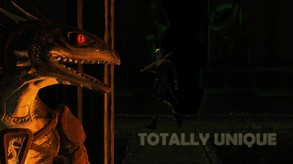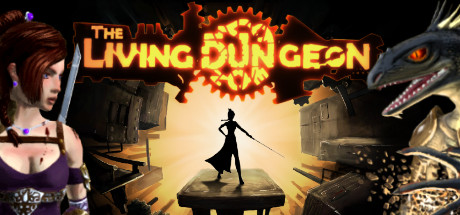
5 actions. 2 minutes. Impossible odds, and many, many ways to die. There really is nothing quite like The Living Dungeon. Up to 9 players can take part in a battle of wits, luck and skulduggery, Or delve into a 30 hour story campaign and try to guide our hero's to freedom.
Modeled estimate, not a reported figure. How we estimate →
Media

About
Genres
Stats
All-time low is the lowest price we've recorded for this game since we started tracking it.
Languages: English**languages with full audio support
Engagement
Hours played at review time, across 40 reviews with recorded playtime.
Reviews
Themes across 40 recent reviews and how positive each mention is. A keyword signal, not full sentiment analysis.
positive critical· bar length = how often the theme comes up
Reviews
-
The Living Dungeon is an unusual and ambitious indie title that deliberately blurs the line between video game and tabletop experience, offering a dungeon crawler that feels less like a traditional RPG and more like a living board game brought to life on screen. Developed and published by RadiationBurn, the game’s central idea is immediately distinctive: the dungeon itself is not a static environment but a mutable entity, constantly shifting through tile rotations, random events, and player-driven manipulation. Rather than presenting a tightly scripted adventure, the game emphasizes improvisation, spatial awareness, and adaptability, challenging players to think several steps ahead while also accepting that luck will always play a significant role. The premise is built around a city overshadowed by a sentient, ever-changing dungeon whose influence threatens the world above. Adventurers descend into this labyrinth to confront its dangers, but the narrative remains deliberately light, functioning more as thematic flavor than as a driving force. Story elements exist to justify the mechanics and atmosphere rather than to deliver character-driven drama or elaborate plot twists. This choice places the focus squarely on systems and emergent gameplay, making The Living Dungeon feel closer to a tabletop session where the story is created through play rather than dictated by cutscenes or scripted dialogue. Gameplay unfolds in a turn-based structure heavily inspired by board games, with dice at the center of nearly every action. Each turn grants a limited set of dice that determine how far you can move, how effectively you can attack, and whether you can manipulate the dungeon itself. Different dice colors correspond to different actions, forcing players to make meaningful choices about how to allocate their limited resources. One of the game’s most striking mechanics allows players to rotate or flip dungeon tiles, potentially opening new paths, cutting off enemies, or inadvertently creating fresh dangers. This constant reshaping of the environment gives the game its identity, transforming navigation into a puzzle that evolves every turn. However, this heavy reliance on dice-driven outcomes defines both the game’s greatest strength and its most polarizing weakness. On one hand, the unpredictability creates memorable moments and forces players to adapt creatively when plans fall apart. On the other, it can lead to frustration when poor rolls undo careful positioning or strategy, especially during longer scenarios where failure may require restarting significant portions of a level. Success often feels like a balance between tactical thinking and perseverance through randomness, which will strongly appeal to players who enjoy chance-based systems but may alienate those seeking consistent, skill-driven progression. Visually, The Living Dungeon reinforces its tabletop identity through a presentation that resembles a physical board laid out on a table. Players can choose between different visual modes, including one that frames the dungeon as a literal game board surrounded by tavern props, dice, and cards. This aesthetic choice helps distinguish the game from more conventional dungeon crawlers, though it also highlights its indie roots. Character models, animations, and cutscenes are functional rather than polished, serving their purpose without drawing attention to themselves. The sound design and voice work contribute atmosphere but are uneven, occasionally breaking immersion with abrupt transitions or limited variation. Where the game truly comes into its own is in its local multiplayer functionality. Supporting a surprisingly large number of players, The Living Dungeon is clearly designed with social play in mind. Competitive and cooperative modes allow players to share the chaos, negotiate strategies, and react collectively to unexpected dice results. In some modes, one player can even take on a dungeon-master-like role, manipulating the environment to challenge others, which reinforces the tabletop feel and makes sessions resemble an actual board game night more than a typical multiplayer video game. This social aspect significantly softens the frustration of randomness, as shared laughter and discussion turn setbacks into part of the experience rather than isolated annoyances. Ultimately, The Living Dungeon is a bold experiment that prioritizes concept and mechanics over polish and narrative depth. It is not a game that seeks to please everyone, nor does it attempt to smooth out the rough edges inherent in its design. Instead, it offers a distinctive blend of strategy, chance, and spatial manipulation that rewards patience, adaptability, and a willingness to embrace uncertainty. For players who enjoy tabletop-inspired systems, dice-driven decision-making, and local multiplayer experiences that thrive on shared unpredictability, it stands as a memorable and unconventional journey. For others, its reliance on luck and modest production values may limit its appeal, but even then, it remains a fascinating example of how digital games can reinterpret the spirit of classic board gaming. Rating: 6/10
A really Good Game and the Devs are Real Nice Guys :) 10/10
good game
Original puzzle game featuring twenty odd (relatively) linear campaign levels with limited solutions however an offline multiplayer feature that uses good ol' fashioned coded A.I. players if you don't have anyone real to play local. There are a good handful of game types and variable to keep skirmishes fresh. Of course online MP is here as well but good luck finding anyone playing online. My only gripe is the lack of polish: Vocals are cheesy but too quietly spoken to be heard anyway and menus are lackluster giving off that 'Baby's First' vibe. Overall, well worth the humble asking price and one of the better amateur games on Steam.
Excellent game. Good fun both solo and with friends. Reminds me a lot of old school DnD boardgames.
que dire jeu avec un fort pottentiel multijoueur , des idées de gameplay ingenieuse et un soupcon de puzzle game dans la campagne solo. Le jeu est un jeu de plateau à la sauce jeu video. Les dev son à l'ecoute des joueurs et font tous leurs possible pour essayer de faire vivre le jeu, qui malheureusement et noyer dans la masse de jeu steam. Si vous avais des ami(e)s fan de jeu de plateau faites vous plaisir!! en plus un joueur peut controllée le donjon est ce battre contre les autres joueur qui eux tente de fuire.Des moment de rigolade entre pote a coup sur
Jogo legalzin pra passa o tempo
An entertaining digital board game with a heavy emphasis on strategy. The single player is a cleverly designed puzzle-esque campaign where you need to carefully think through every move as a bad move early may affect your later turn. As a beginner it's a little hard to grasp at first but once you're accustomed to how the game works figuring out how to complete each level brings an immense sense of satisfaction. The multiplayer is 9 local players which involves lots of mind-games trying to psyche out your friends and turn them against eachother while you secretly go for the win.
Nice game, I would defenitely recommend it! would be nice if you leave me a steam comment if i could help you! Thanks!
Related
Related
Trends
Modeled estimate over time, reconstructed from Steam's monthly review histogram.
Momentum
Pace estimated from the game's recent review growth (our daily snapshots) at its own sales-per-review ratio — a momentum signal, not booked sales.
Audience
Estimated from the language of this game's reviews — a proxy for where players are, not official Steam demographics.
Related
| Tsugunohi -The Chamber of Phantom Name- | $9.8K | 92 | 77% | $4.99 |
| Winged Sakura: Mindy's Arc | $9.8K | 149 | 80% | $2.49 |
| This Is Not A Jumping Game | $9.8K | 122 | 96% | $3.99 |
| Katagiri-san is relying on me | $9.8K | 69 | 99% | $5.99 |
| Cosmic Collapse | $9.8K | 135 | 99% | $4.99 |
| On the Dragon Wings - Birth of a Hero | $9.8K | 85 | 87% | $2.99 |