Modeled estimate, not a reported figure. How we estimate →
Media

About
Genres
Stats
All-time low is the lowest price we've recorded for this game since we started tracking it.
Languages: English**languages with full audio support
Engagement
Reviews
Themes across 40 recent reviews and how positive each mention is. A keyword signal, not full sentiment analysis.
Reviews
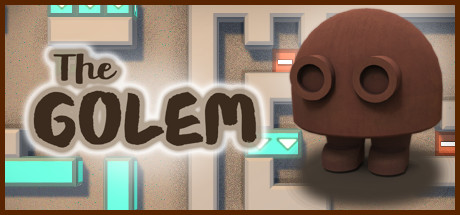
[h1]《The Golem》[/h1] [h1]——困难的艺术[/h1] [h1]游戏简介[/h1] 《The Golem》(如果你硬要知道这是什么意思,它是“魔像”的意思)是和《A Monster's Expedition》几乎同天发售的一款解谜游戏。与已经在Steam上发布了多款解谜游戏的设计师Draknek(Alan Hazelden)与他制作精良、设计精巧的新作相比,本作不怎么被人问津,而且外表略显简陋。 简陋的外表下,隐藏的是一款对机制和谜题设计有独到见解的,非常困难的解谜游戏。 作为又一款“类推箱子”解谜游戏,我们自然关注它和传统的推箱子有什么区别。事实证明,虽然我们把这些游戏都叫做“类推箱子”,可出色的该类游戏最终还是跟传统的推箱子差别巨大。 本作中的“箱子”已经不是一个方格一个方格的了,而是以方格为基础连接形成的各种各样形状的块,这个决策本身就极大地扩张了“命题”的可能性,已经能够造出一些非常复杂的“谜题”了。不过在我看来,一个优秀的解谜游戏,光设计出“能过”的谜题是绝对不够的,设计出解题思路和过程也足够“优雅”的谜题才应该是所有谜题设计师的终极目标。这在之后讨论本作的谜题设计时,是我的一个重要的评判标准。 除开“箱子”形状的区别,本作的目标也和传统的推箱子不一样。本作的目标和它的机制设计紧密联系起来,所以先说说本作的机制设计。 在本作的第一个关卡中,介绍了本作中最基础的一种东西:上面写着+号的绿色地块。只要某一个块靠近这个地块,它就会变成一个新的方格,并且“长”在这个靠近的块上。因此本作不仅有了奇形怪状的“箱子”,还有了构造想要形状的块的基本方法,这就奠定了本作的基调:这是一个注重分析、构造形状的解谜游戏。 之后当然有别的特殊地块和“箱子”,拥有与众不同的机制,不过这里就不细说了。 啊对,刚才说到了目标。本作的目标并非传统推箱子里“把箱子送到指定位置”这么简单,相反,它利用了本作机制中的根基——带有+号的地块(以后简称+块)的设计,设计出了一个别样的目标:使用完所有+块(严谨来说不止,还会包括之后一些特殊的地块,在这里就不细说了)。乍一看好像比“把箱子送到指定位置”更宽松了,其实不然。且不说一些+块的位置非常刁钻,必须构造某种特定的形状,或者某几个特定形状连接而成的“装置”才能够到(这还算是“目标清晰”的了),就说说那些看上去很容易够到的+块,为了能最后够到那些刁钻的+块,你需要绞尽脑汁,思考使用这些+块的位置、时间和顺序,而且最后往往也只有寥寥几种,甚至唯一的方法是正确的。 说到此处,你已经知道了本作大概是什么样的一款游戏,也知道了它可能难在哪,接下来终于可以进入我这次真正想讨论的内容: [h1]“困难的艺术”——谜题设计与难度[/h1] 显然,用上面这些机制,做出来一个轻松愉快,又有意思的休闲解谜游戏也不是不可以。可是本作拒绝这么做,相反地,它从第一关开始就有难度,并且在之后,谜题的难度居高不下,高开高走。你可以看看本作的商店页面,本作谜题的截图当时给我的感觉只有一个:大得让人窒息。这个“大”既说的是解谜“场地”的大小,又说的是那些奇形怪状的块的大小。除此之外,各种颜色的,花花绿绿的不知道是啥的地块,看起来也让人头晕目眩。 然而我也在之前写过的数篇评测多次提到类似的看法,那就是一个解谜游戏难与否,和我刚刚说的我个人对解谜游戏最重要的评判标准:“解谜思路和过程是否优雅”,并没有必然的相关性。简单且不优雅的游戏你可以自己去找例子;简单且优雅的游戏我推荐一个《Spring Falls》,当然如果你有别的推荐,欢迎在评论区里留言;难且不优雅的游戏,就是那些庞大,但又只能通过最基本的试错(Trial & Error)来“解谜”的游戏,类似一个巨大且只有一条通向出口的路的迷宫;难且优雅的游戏,啊又来了,《Stephen's Sausage Roll》和《Baba Is You》等知名作品基本都可以被归到这一类。 前面已经说了本作难,那么本作优不优雅呢?这个结论就需要我们通过对本作谜题设计的分析得到。 英文区的一些评测说得很好。Julien这位网友写道:“本作的很多谜题都是在你刚打开时,感觉很大,很复杂,无从下手,但这些谜题实际上都设计得非常精巧,以至于当你意识到关卡的核心难点,例如‘这块和这里对应不上’或者‘如果我进到那里,我就出不来了’时,你突然就意识到这关各个部分设计的意义了。”我的游玩经历确实如此。这主要是在说,虽然谜题很大,但里面所有的东西基本都是有更深层的意义的,并没有“干扰项”。解谜的关键就在于,领会谜题背后,设计师极力想要通过谜题中各种东西的布置暗示的意义。 siduri这位网友说本作“每一关都呈现给玩家一个棘手的问题,但总会给横向思考的玩家以奖励”。意思就是说,每个问题的核心思路都是前所未见的。好吧,说“前所未见”可能不准确,我会这么说:每个关卡要么就是强迫你学会新的“知识”,要么就是强迫你有创意地使用你学到过的所有“知识”。你如果不能像刚才说的那样,领会这个谜题的意义到底是什么,那你的游玩过程就会非常艰难了。毕竟,就算排除法也是需要列出所有的可能性的,而本作的难点恰恰不是“排除”,而是找到隐藏在谜题设计中的“可能性”。 上面说的什么“领会意义”和“找到可能性”什么的,感觉和我们正在讨论的标准还是有点距离,那是因为这些仍然是“目的”,而不是“过程”。这时我就得说说我游玩的过程是怎么样的了。没错,一定量的试错是必须的,但很多时候,通过观察关卡的布局,你能获得很多有用的结论,就和上面Julien说的一样。联系起这些逻辑上的结论后,试错的范围就大大缩小,你就会发现一个庞大的谜题,就不知不觉地被分解为了若干个小谜题。本关的核心难点,可能就是前面发现结论的过程,或者在某一个或某几个小谜题中。一个个破解这些小谜题后,整个大谜题也就解决了。因此,我认为本作的解谜过程,绝对可以说得上是“优雅”的。 “难”且“优雅”,这就是我称本作为“困难的艺术”的原因。 [h1]总结[/h1] 总而言之,由于不能剧透,所以要更加深刻地体会我刚才所说的这些,就请自己去体验游戏吧! 当然就像我之前所说的,这是一款非常困难的解谜游戏。我个人并没有完成这款游戏的所有谜题,本作的53道谜题中,我解决了42道。不过我已经很满足了,因为我已经感受到了本作的美。 在本作商店页面中,作者对玩家说: Not everyone will overcome all the puzzles, and that's OK. No matter how great or small your accomplishments, to take time to think about a difficult problem is a beautiful thing. “不是所有人都能解开所有谜题,这是可以接受的;无论你的成果是大是小,花时间去思考一个困难的问题本身就是一件美妙的事情。” 看到这两句话,我的内心有些感慨。每个游戏都要有一个设计目的,那就是希望让玩家体会到什么样的感觉:掌控感,成就感,等等。而解谜游戏的目的,就是让玩家体会到思考的美妙。可能这种“美妙”,就是我一直以来玩解谜游戏所追求的东西吧。 因此,我希望能有更多的人体会到这种美妙。倒不必用这个游戏起步,也不用去玩最纯粹的推箱子,甚至都不需要去玩解谜游戏。要体会思考的美妙,有很多种方式,而在这很多种方式中,解谜游戏可能是最有趣,也没啥后果的一种。不过谁知道呢,对每个人来说可能都不一样。 结论:[b]强烈推荐[/b]。
Related
Related
Trends
Modeled estimate over time, reconstructed from Steam's monthly review histogram.
Hours played at review time, across 40 reviews with recorded playtime.
positive critical· bar length = how often the theme comes up
高難度に特化したパズルゲーム。2020年発売のゲームの中ではダントツで難しかった。 ブロックを押すことしか出来ない典型的な倉庫番操作のみで、並の思考ではたどり着かないエレガントなメカニズムの設計が必要になる。すごい。無理だと思い込んでいるのは自分の脳だけで、設問はいつでもフェア。(一部、最初の1歩目すら不明なレベルもあるが……) ゼリーのパズル や Stephen's Sausage Roll が好きなハードコアパズラー向け。
I was lured in by promises of difficult puzzles. And The Golem delivers on that, but this is some of the most unfun puzzle design I've ever seen. There are no simple puzzles, which might seem like skipping to the "good" part of a puzzle game, but it means there's no room to explore the interesting consequences of the mechanics. Puzzles have way too many steps, which means that if you think you've figured out one step, you can't validate that solution until you've simultaneously figured out 5 other steps. Executing a step is also unnecessarily laborious, meaning you have to execute a long sequence of moves every time you reset. And while the solutions are very particular, they lack insight, and aren't memorable. I like challenging puzzle games, but I don't need to put up with this pain just to prove myself. I quit.
This game deserves more attention!! Having cleared the first two zones, and having played approximately 25 hours at the time of this review, I can confidently recommend this game to fellow puzzle game fanatics. I knew this would be the case early on in the game, but I decided to wait until I at least completed the first two zones, in full, before writing a review. Although I purchased this thinking that I would probably enjoy it, it turns out I’m enjoying it even more than I expected. It doesn’t really look like anything fancy or new, but I liked the fact that others commented on how hard it is, and it seemed like the basic mechanics could get interesting. Although it may look like just another variation on block-pusher puzzles, what makes this game stand out is that the shapes and sizes of the pieces change depending on where you move them, and that is a main part of solving the puzzles. Basically, you are given a starting position with a set number of pieces or varying size and shape to push around. The goal is to successfully make all of the “plus” or “minus” markers disappear in each level. With the green “plus” markers, anytime on of your pieces is adjacent (not counting diagonally) to one of the green spaces, a square is added to the existing piece, right where the green block was. With the red “minus” squares, a square of the shape you are pushing is deleted when a section of the block you are pushing actually touches the red deletion marker. In the first two zones, only the addition and deletion boxes are in each level, and while this continues in subsequent zones, new mechanics are added, such as “falling” pieces, pieces which have momentum in any direction pushed, as well as levels with special zones which can’t be walked over by the golem, but which have can have blocks pushed over and through them. But the main goal remains the same (as far as I can tell, at least): rid the map of all addition and deletion markers by strategically pushing the given blocks around the map; having to consider both the shape and size of the pieces that need to be formed in order to do so. As others have noted, this gets very hard, very quickly. I have often been surprised at how sometimes there will only be two, three, or four blocks (and perhaps as few addition or deletion markers), yet the solution can still be very hard to discover. It's not because it’s convoluted or obscure—it's usually very elegant and beautiful—it's just extremely clever. As a good, pure puzzle game should be (in my opinion), every element in a level has its purpose. There are no unnecessary items to distract you. You could argue that every element in each level is actually a clue, in itself. When playing, you can safely question why each element in the puzzle exists—they all have a purpose in the solution. Most of the levels are not that large, but you will likely spend a good amount of time analyzing your moves. You simply cannot brute force the solutions. You will sometimes need to do a bit of experimentation just to see what something looks like, or just to give you a quick idea of what conclusions you can rule in or rule out, but again, you can’t just “doodle” into the solution, or it would be extremely unlikely, at least. This game is highly recommended for those who like challenging “push (Sokoban)” puzzles. There is nothing incredibly fancy on the surface, but there is some pure puzzle goodness inside. If you enjoyed Fish Fillets 2, Stephen’s Sausage Roll, or other similar games, I’m pretty sure you will enjoy this game as well. And it’s probably just as challenging as those games are. I hope to see some DLC for this game sometime soon, though it may be a while until I even finish the basic game.
The Golem is an extremely challenging Sokoban-like puzzle game. It does not introduce any flashy gimmic (no portals, no recursion, no time travel, …) with most of its complexity coming from its core mechanic of pushing objects that change shape when touching + or - blocks. The artstyle and sound design are quite basic, a bit sterile even. If a charming audio-visual experience is important to you, or if you are looking for something relaxing, you may want to give this one a pass. What you would be missing, however, is impeccable puzzle design. Even though I consider myself a veteran puzzle gamer, I found none of the puzzles easy. Most are quite hard. Some extremely so. Miraculously, the difficulty does not primarily lie in finding intricate sequences of finicky block manipulations. Instead, most puzzles have an elegant solution that requires a unique high-level insight. Whenever you are stuck, and you often will be, you may rest assured that the solution does not involve any unexpected mechanics, that it resonates with the level title and subtitle, and that every aspect of the level has its role to play. This allows thinking about a given puzzle in ways that are much more satisfying than tedious trial-and-error you might otherwise be tempted to go through. I needed a hint for the very last puzzle and am rather proud that it was the only one. I tip my hat to anyone who solves everything on their own.
I love this game. It's an ACTUAL exploration of the possibilities of Sokoban, without worrying about the burden of players finding the game too difficult. "Can't beat level 3? Skill issue, we're not jeopardising any of the ideas we want to flesh out in this level, no matter how complex". This feels like the definitive Sokoban game, at least for me, since every mechanic in the game doesn't deviate from the idea of pushing blocks whatsoever. I haven't fully beaten the game yet, and some puzzle's solutions take quite a while to execute, but this is an excellent game and I recommend it to anyone looking for a simple expert puzzle game
Not had a lot of experience with sokoban type puzzles and The Golem was not a very engaging introduction to them sadly. Maybe this is intended for those already well familiar with the premise of sokoban but it doesn't ease you into it. I got stuck pretty quickly despite only having 2 pieces to move around on the 2nd or 3rd puzzle. Could be skill issue on my part but it doesn't feel very intuitive. The game also lacks a lot of polish. Puzzles are presented with zero set dressing, the titular golem is given zero fanfare or personality, pieces move on a grid but you don't. It's minor gripes but it leaves the game without much charisma and since the puzzles don't feel very accessible either the whole experience feels cold. From what I've read of other reviews there are a large number of steps to each puzzle solution which would explain why I felt tedium even with the few puzzles I did solve. Disappointed to be disappointed.
I'm constantly in awe of the puzzle design in this game. It's built around ostensibly simple mechanics (oh look, ice physics and gravity!) but takes them to a level of creativity I don't think I've ever seen before. Almost every solution leaves me in awe. I can totally understand the difficulty being off-putting but it's a shame because this deserves so much more attention. It's just about everything I want in a puzzle game.
[h1] Élégance d'ingénierie vidéoludique [/h1] Au cours des dernières années, j’ai exploré une multitude de jeux de puzzle sur Steam (des bons, des moins bons, des excellents, et tout ce qui se trouve entre les deux). Certains titres brillants jouissent déjà d’une solide réputation parmi les amateurs du genre. Mais parfois, et c’est là que j’interviens, surgissent des perles rares, grandement dignes d'intérêt, qui demeurent pourtant dans l’ombre. J’ai d’ailleurs pris le temps de rédiger des évaluations pour quelques-uns de ces trésors méconnus, comme [i] Bean and Nothingness [/i], [i] Magicube [/i] ou encore [i] Yugo Puzzle [/i]. Et aujourd’hui, alors que le mois de juin 2025 touche à sa fin, je tiens à évoquer [i] The Golem [/i], un jeu qui, malgré ses qualités indéniables, ne compte que 45 évaluations sur Steam; un indice éloquent de sa discrétion commerciale. [h3] Présentation [/h3] [i] The Golem [/i] est un sokoban revisité aromatisé à la sauce Tetris. Il s'agit d'un casse-tête à la fois classique et audacieux, qui s’impose sans conteste parmi les meilleurs jeux de puzzle auxquels j’ai joué ces dernières années. Je dirais même qu'il figure dans mon top 20 personnel des dernières années. Je ne rédige pas d’évaluations pour tous les jeux que j’apprécie, mais ici, l’écart flagrant entre la qualité du jeu et sa notoriété m’incite à prendre la plume pour corriger cette injustice. [h3] Structure du jeu [/h3] Ce jeu est une véritable merveille d’ingénierie ludique. Il se déploie en six chapitres, chacun introduisant de nouvelles mécaniques. Ce qui frappe, c’est la manière dont les éléments s’entrelacent : un tableau du chapitre 4 peut très bien intégrer des concepts introduits dans les chapitres précédents, créant ainsi une progression organique et stimulante. Le principe est simple en apparence : déplacer des tétriminos (on dit aussi "tétromino" ou "tétramino") pour activer tous les symboles au sol. Un “+” allonge la pièce à l’endroit du contact, un “–” en supprime une partie, un “X” bloque le passage du protagoniste. Certains tétriminos possèdent un "Momentum" (nom d'un des chapitres) : ces pièces, une fois poussées, poursuivent leur course jusqu’à heurter un mur. Cette mécanique servira d'ailleurs d'outil à la résolution de certains tableaux. D’autres subtilités viennent enrichir le gameplay, mais je préfère vous laisser le plaisir de les découvrir par vous-mêmes. [h3] Un défi de taille [/h3] [i] The Golem [/i] est un jeu exigeant et j’insiste sur ce point. Si vous êtes doués, chaque tableau vous prendra probablement en moyenne une trentaine de minutes, parfois bien plus. Pour les plus lents (comme moi), ne soyez pas surpris de passer une bonne heure sur chaque tableau. Tous les tableaux n'ont pas le même niveau de difficulté et chacun complètera certains types de tableaux plus rapidement que d'autres, mais il n'y a pas vraiment de tableaux "gratuits" ou "faciles" (pas de remplissage autrement dit). Pour les joueurs patients, c’est un défi gratifiant ; pour les autres, un test de persévérance. Ce qui impressionne dans ce jeu, c’est la rigueur du design. Chaque élément semble avoir été pensé avec une précision chirurgicale. Rien n’est superflu, tout a une fonction. On sent que chaque tableau a été conçu avec un soin méticuleux, comme une énigme taillée sur mesure. [h3] Conclusion [/h3] Malgré sa difficulté globale, le jeu nous propose parfois certains tableaux légèrement moins exigeants, mais toujours brillants. Chaque nouveau chapitre comprend des niveaux plus accessibles que d'autres, comme si la courbe de difficulté était réinitialisée, avant de grimper à nouveau vers des sommets plus ardus. Donc je crois que, théoriquement, il peut y avoir des tableaux aussi difficiles dans le chapitre 1 que dans le chapitre 6 (cette affirmation est subjective bien entendu). Mais un élément viendra nuancer l'énoncé précédent ; comme le chapitre 6 par exemple, pour ne nommer que lui au hasard, comprendra plus de mécaniques différentes que le chapitre 1, on pourrait juger qu'il sera plus ardu à compléter que les premiers tableaux. Donc oui, probablement que plus on avance dans le jeu, plus c'est difficile en général, même si en réalité, je me rappelle avoir plus longtemps buté sur des tableaux des chapitres 1 ou 2 que sur certains tableaux des chapitres 5 par exemple. À ce sujet, vous devrez toujours avoir complété un certains nombre de puzzles pour débloquer le chapitre suivant. Le tout est indiqué clairement dans ce que j'appelle le salon d'accueil (là où vous choisissez le chapitre que vous voulez lancer). En ce sens, la progression est assez classique. J'émets l'hypothèse que vous en aurez pour, au bas mot, quarante heures de plaisir cérébral sur cette petite merveille. Si on veut pinailler sur les points négatifs, on pourrait dire que la musique est bien, mais répétitive et que la conception sonore est de base, mais ça serait vraiment juste pour me forcer à trouver une critique. Je l’ajoute donc, sans hésiter, à ma liste des jeux de puzzle extraordinaires qui mériteraient d’être bien plus connus. [-------[]--]Originalité [[]---------]Histoire [---[]------]Graphiques [----[]-----]Effets sonores et musique [---------[]]Valeur pour votre argent [---------[]]Qualité des puzzles [--------[]-]Niveau de difficulté
Este juego es muy recomendable para quienes les gusta desafiar los rompecabezas de "empujar" ("sokoban"). No hay nada increíblemente elegante en la superficie, cada elemento está por algún motivo y no hay nada de más, y al mismo tiempo, está cuidada la estética. No van a encontrar niveles realmente fáciles.
Momentum
Pace estimated from the game's recent review growth (our daily snapshots) at its own sales-per-review ratio — a momentum signal, not booked sales.
Audience
Estimated from the language of this game's reviews — a proxy for where players are, not official Steam demographics.
Related
| Jay and Silent Bob: Mall Brawl | $6.7K | 86 | 78% | $4.94 |
| Trailer Shop Simulator | $6.7K | 286 | 74% | $0.99 |
| Travellin Cats in Georgia | $6.7K | 939 | 93% | $0.49 |
| Girls, I just want to get paid! | $6.7K | 175 | 83% | $2.39 |
| Mage of the Olekta Desert | $6.7K | 50 | 88% | $6.49 |
| Silent Nights | $6.7K | 217 | 73% | $1.19 |
Related
| 7 Days to Die | $425.3M | 403.5K | 87% | $44.99 |
| Euro Truck Simulator 2 | $421.6M | 932.1K | 97% | $19.99 |
| Mount & Blade II: Bannerlord | $309.8M | 293.9K | 88% | $49.99 |
| Palworld | $279.6M | 445.8K | 94% | $20.99 |
| Clair Obscur: Expedition 33 | $263.7M | 178K | 95% | $47.99 |
| The Forest | $254.8M | 678.5K | 96% | $19.99 |