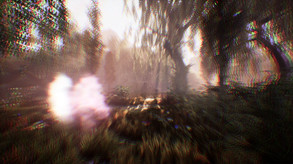
The Dead Tree of Ranchiuna makes us question how unfair society can be both in a direct and realistic manner and with the power of fantasy elements.
Modeled estimate, not a reported figure. How we estimate →
About
Genres
Stats
All-time low is the lowest price we've recorded for this game since we started tracking it.
Languages: English**languages with full audio support
Add-ons
Each DLC is estimated with the same model as a game, then summed — a modeled figure, not reported DLC sales.
Engagement
Reviews
Themes across 47 recent reviews and how positive each mention is. A keyword signal, not full sentiment analysis.
Reviews
Some parts of the environment are pretty, but aside from that I can't say much. The few-and-far-between spoken segments mostly seemed like semi-incoherent rambling. The voice acting sounded like it was being read; the tone almost never fit what was being said.
I know it's been awhile since I've played other games in the series, most of which I've given glowing reviews, but this one just did not do it for me. The music and visuals were great as always. I sort of understand the story, but I just don't feel like the motives for the characters add up; I just don't buy it. Maybe the story is completely fair and the voice acting just didn't sell it for me, I'm not sure. Don't even get me started on the lock picking mechanic at the very end. It looks a lot like you are tensioning with the pick and picking with the tensioner, not to mention that having the entire mechanic be solely based on mouse movements feels very weird and illogical. Personal quip because I have tried my hand at lock picking. This is on top of at least one puzzle that I'm not sure how it was supposed to be solved but somehow it worked out and multiple times I managed to get turned around. I enjoyed parts of it, but it just wasn't worth it in the end.
Media

Related
Related
Price dynamics, follower growth, revenue and sales trajectories with interactive tooltips
This and every other Pro feature is free until October 20, 2026. A free account is all it takes.
Hours played at review time, across 47 reviews with recorded playtime.
positive critical· bar length = how often the theme comes up
[h1] Im Sale OK, sonst eher Meh. [/h1] Optik und Sound: So viel vorweg - Wie üblich ein optisch super ansprechendes Spiel. Die Landschaft und die Musik greifen die Atmosphäre des Spiels hervorragend auf. Zu Beginn ist die Landschaft (zumindest kurz) märchenhaft-schön und sonnendurchflutet, zum Ende hin wandelt sie sich immer stärker in eine dunkle, bedrückende Welt. Optik und Sound sind wie bei allen Bodur-Games ein echter Knaller und absolut gelungen. Zur Story: Als Spieler, der so ziemlich alle Tonguc-Bodur-Spiele kennt, habe ich zunächst einen kleinen Freudentanz aufgeführt, weil es ENDLICH mal wieder ein Game mit echter Story ist. Keine pseudo-künsterlischen Gedichte ohne echte Aussage, sondern eine richtige Geschichte mit Charakteren, die es zu entdecken gilt. Prinzipiell also voll mein Ding. Yay! Doch leider kommt hier schon ein dickes, fettes ABER.... So sehr ich mich über das Vorhandensein einer Story gefreut habe, so sehr wurde ich dennoch enttäuscht, da die Geschichte einfach so dicke Löcher hat, wie ein Schweizer Käse: Als nicht genauer vorgestellter junger Mann kommen wir in das Bergdorf Ranchiuna, wo wir geisterhafte Lichtgestalten antreffen. Diese geisterhaften Gestalten sind die Dorfbewohner vergangener Zeiten, die wir im Laufe des Spiels bei einem Spaziergang um das Dorf herum begleiten. Während diesem Spaziergang wird uns die Geschichte der Dorfbewohner erzählt. Es ist eine Geschichte um scheinbar grundlosen Hass, Ausgrenzung und Ungerechtigkeit. Entsprechend deprimierend ist auch die Stimmung des Spiels. Im Laufe des Spiels wird dabei auch die Metapher "Das Leben ist ein Klobesuch" verwendet - frei nach dem Motto: "Das Leben sollte kurz sein, wenn es schon besch***en ist." Passt zum Spiel. Tatsächlich hat mir der Hauptcharakter, Andrei, irgendwann nur noch leid getan, obgleich ich auch nicht verstehen kann, warum er überhaupt in sein Heimatdorf zurückgekehrt ist. [spoiler] Die vermeintlichen Freunde, die er dort hat, sind eigentlich manipulative Menschenhasser, die ihn grundlos in den Wahnsinn treiben und töten wollen. Und seine ach so geliebte Daniela ist einfach nur eine dämliche, leicht zu beeinflussende Schreckschraube, die sich ohne jeden Grund von ihm abwendet. [/spoiler] Gerade weil in diesem Spiel so viel Hass, Manipulation und Ausgrenzung stattfindet, hätte ich wenigstens ein Mindestmaß an Erklärung erwartet, was genau die Charaktere zu ihren absolut unverständlichen Handlungen motiviert. Doch das bleibt uns die Geschichte komplett schuldig, was ich als den größten Minuspunkt im Spiel betrachte. Wer solche Geschütze an Hass auffährt, muss das auch irgendwie erklären können - auch, wenn Gewalt und Hass durch nichts gerechtfertigt werden kann. Dennoch brauche ich hier einfach einen Erklärungsansatz der Motive, sonst kann ich die Geschichte einfach nicht ernst nehmen. Zudem gibt es viele Passagen im Spiel, wo für meinen Geschmack einfach zu wenig passiert. Man latscht nur herum und bis die Story weitererzählt wird, vergeht einfach zu viel Zeit. Hier hätte ich mir mehr Tempo und mehr Dichte gewünscht. Mein grundsätzlicher Wunsch wäre, dass die Geschichten in den Bodur-Games endlich so viel Tiefgang und erzählerische Dichte hätten, dass die Stories der herausragenden Optik der Games besser gerecht würden. Ein solches Bodur-Spiel würde ich absolut feiern! Sonstiges: Zudem sind die deutschen Untertitel sehr ausbaufähig, da sie meiner Meinung nach teils den Sinn der Aussagen nicht ganz getroffen haben. Teilweise fand ich die Übersetzung so verwirrend und insgesamt so wenig passend, dass ich irgendwann zu den englischen Untertitel übergewechselt habe. Fazit: Wer einen optisch gelungenen Walking Simulator spielen möchte und wer keine Probleme mit Story-Kratern hat, sollte zuschlagen. Allerdings würde ich auf jeden Fall auf einen Sale warten.
Two hours of holding W while being subject to the most awkwardly written and voiced pseudo-philosophical babble imaginable.
The Dead Tree of Ranchiuna is a narrative-focused exploration game developed and published by Tonguç Bodur. It is designed less around conventional action and more around atmosphere, discovery, and the gradual reconstruction of a mysterious past. The story follows a university graduate who returns to the village where he spent his childhood, expecting a familiar homecoming but instead finding an unsettlingly deserted place. As he travels through Ranchiuna and the surrounding countryside, strange visions begin revealing events that happened during his absence. What starts as a quiet return home consequently develops into a reflective journey involving memory, human behavior, injustice, and the consequences of choices made by others. The storytelling relies heavily on environmental exploration and fragmented scenes rather than straightforward exposition. Past events appear through visions, while narration and character dialogue provide additional context. This structure asks players to interpret what they encounter instead of simply following a continuous sequence of cutscenes. Fantasy and symbolic elements are mixed with more realistic situations, giving some moments an intentionally dreamlike quality. The underlying subject of social unfairness adds a more serious dimension to the mystery, making the adventure feel like an attempt to communicate an idea rather than merely provide a supernatural puzzle. Most of the gameplay revolves around walking through a large continuous environment and discovering locations connected to the narrative. There are no in-game loading screens separating the major areas, which helps preserve the sensation of undertaking one uninterrupted journey. Players can explore beyond the most direct path, and doing so can reveal additional dialogue that expands the story. This rewards curiosity, although the rewards are primarily narrative rather than material. Anyone expecting equipment, combat encounters, extensive collectibles, or character progression will find little of that here. Ranchiuna is built around observing the world and understanding what happened within it. One particularly useful feature is the ability to alternate between first-person and third-person perspectives. First-person viewing provides greater intimacy when examining environments, while third-person allows players to see the protagonist traveling through the landscape. The freedom to switch between them makes longer exploration sections more comfortable and gives the game slightly more flexibility than a walking simulator locked to a single viewpoint. There are also puzzle and platforming sequences, although these elements remain secondary to exploration. They provide occasional breaks from walking and narration without fundamentally changing the relaxed nature of the game. The mechanics are generally there to support pacing rather than become difficult obstacles. This works well for maintaining narrative momentum, but it also means players looking for deep puzzles or demanding platforming will probably find the interactive systems fairly modest. The Dead Tree of Ranchiuna knows that atmosphere is its central attraction and rarely allows mechanical complexity to dominate it. The environmental presentation is especially important because so much time is spent moving through natural landscapes and abandoned locations. Isolation creates much of the tension. Rather than constantly confronting the player with obvious threats, the game uses emptiness, unusual discoveries, visions, and uncertainty to establish an uneasy mood. The soundtrack composed by Molo Dimolo strengthens this approach, while atmospheric sound effects help give otherwise peaceful environments an emotional presence. Headphones are particularly appropriate for experiencing the quieter audio details and music. Voice acting further supports the narrative structure. Because much of the story is experienced while exploring, spoken narration prevents important information from being restricted to text screens or lengthy menus. The combination of voices, scenery, music, and visions creates an experience closer to moving through an interactive memory than solving a traditional adventure-game mystery. Some of the symbolism can be open to interpretation, which may appeal to players who enjoy thinking about a story after finishing it. Those who prefer explicit explanations and neatly resolved plot details may find the ambiguity less compelling. The experience is relatively compact, which suits its restrained mechanics. Stretching this type of exploration across a much longer campaign could easily make its limited interaction repetitive. After completing the story, fast travel becomes available between locations. This is a welcome addition because it makes returning to previously visited areas much easier, particularly when searching for missed content. Automatic checkpoint saving also keeps progress management unobtrusive, allowing players to concentrate on exploration instead of frequently thinking about manual saves. Its largest limitation comes from the same design philosophy responsible for its strengths. Long stretches are intentionally quiet, and players need to be comfortable with walking, observing scenery, and listening to narration. The puzzles and platforming cannot provide the depth expected from games dedicated to those mechanics, while the absence of combat makes the experience dependent almost entirely on whether the mystery and atmosphere maintain the player's interest. Consequently, The Dead Tree of Ranchiuna is unlikely to satisfy someone seeking a fast-paced adventure. For an audience that appreciates walking simulators, however, the slower rhythm feels purposeful rather than inherently deficient. As a complete experience, The Dead Tree of Ranchiuna succeeds most strongly when treated as a short interactive story about returning to a familiar place and discovering that its history has changed its meaning. Tonguç Bodur uses the deserted village, seamless landscapes, supernatural visions, narration, optional discoveries, light puzzles, and symbolic storytelling to construct an introspective journey rather than a mechanically elaborate game. It has rougher and simpler aspects compared with larger narrative adventures, but its focused atmosphere gives it a recognizable personality. Players interested in solitary exploration and interpretive storytelling should find considerably more value here than those primarily motivated by action or complex gameplay systems. Rating: 7/10
Avoid this! The biggest issue with this game is that is has horrible level design and because level design is the core element of a walking simulator, i can't recommend this game, What do I mean? First there is the problem with the keys, some small houses require a key and you have to find them but the problem is that they keys are nowhere to be found, I tried to find all of them but no luck, the most logical places where the key should be placed by the dev was empty but that's the smallest issue. The other and bigger issue is the placement if invisible walls. First of all it's a shame that a game in 2019 uses tons of invisible walls. Whatever game are we talking about, invisible walls are always sign of bad level design and this game has a LOT of invisible walls but that's not the main problem. The main problem is that there are places where invislbe walls should not exist (stairs, ladders etc.) and places where invisible wall should exist. There was a forest area with a house and ther ewere multiple paths to explore. One of these paths has a gamebreaking trap: you can jump over a small rock but after it ther eis a bush which you can't pass by, it behaves like a wall, so an invisible wall ront of you and another behind you = you can't move in any direction, you're stuck so it's game breaking bug and this happened only because the dev forgot to place an invisible wall. Because of the game breaking bug I had to quit to main menu and restart from the last checkpoint. Here is the other big issue with this game: the save points are extremely rare, if you encounter a clipping issue or a game breaking bug like in my case, you will lose a LOT of progress and that's extemely annoying. Why aren't there much more save points? Checkpoint saves is one of the biggest cancer in the gaming industry and this game shows exactly why. So after I was placed back to the last save point which was more than 30 minutes before I encountered the game breaking bug, I just lost any interest to continue the game, such ♥♥♥♥♥♥♥♥ save system it's just bad game design and if we combine this with bad level design, well, just avoid this crap! It's interesting that this game runs very well on a GTX1060 with huge amount of vegetation so performacne is good, but that doesn't save this game from a dislike, sorry.
This is my review of The Dead Tree of Ranchtuna. I was pretty on board with this game until I saw the flowers. You have, strewn at random upon an otherwise-barren steppe, domestic tulips, coneflowers, hibiscus, and phlox, all blooming at the same time. These do not all bloom in the same season, or even thrive in the same climates. Then later, there are vining geraniums attached to a building, surrounded by ivy. On what planet does that make sense? The graphics in Ranchtuna are generally better than other contemporary TB games, but that doesn't fix these issues. Another case in point about the nonsense of this game: skeletons physically cannot hang by the neck. It doesn't work. Try it sometime. I guess I should be somewhat charitable here, so I will also say that at least the narrator's voice acting wasn't as bad as the rest of the cast. That was a relief. Also, certain parts of the soundtrack were decent, though the game was mostly void of music or any other interesting sounds. The flip side of these points is that the [strike]Mary Sue[/strike] main character is a slouchy man in a hoodie. Something about this doesn't quite complete the "hero" circuit in my brain. I feel like I should have more to say about a gaming experience that was 2.2 hours long, but I really don't this time. Auto-walk. Right. Thank goodness for auto-walk. TB: please start putting this in more of your games. It makes them much easier to play. For some stretches of the game, I can play with no hands, in fact. Well, that was my review of The Dead Tree of Ranchtuna. It's too long, but at least the achievements are easy to get.
Selling now
See how fast this game is selling right now — estimated copies and revenue per day from recent review growth.
Players by region
Where this game's players are, estimated from review languages.
Related
| Game | Estimated lifetime revenue | Reviews | Review score | Price |
|---|---|---|---|---|
| $7.5K | 263 | 80% | $1.99 | |
| $21.6K | 190 | 63% | $3.99 | |
| $5.6K | 54 | 83% | $3.99 | |
| $341 | 11 | 91% | $1.99 | |
| $924.8K | 5.8K | 75% | $9.99 | |
| $19.8K | 621 | 53% | $1.99 |
Related
| Game | Estimated lifetime revenue | Reviews | Review score | Price |
|---|---|---|---|---|
| $10K | 98 | 94% | $9.99 | |
| $10K | 73 | 90% | $6.49 | |
| $10K | 125 | 90% | $4.99 | |
| $10K | 81 | 88% | $6.99 | |
| $10K | 70 | 81% | $7.99 | |
| $10K | 69 | 84% | $9.99 |