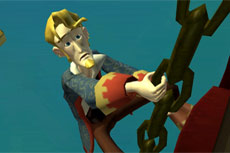
About Chapter One The saga begins with a heated battle involving the brave but often bumbling Mighty Pirate™ Guybrush, his beloved wife Elaine, and their nemesis, the demon pirate LeChuck. When the showdown goes up in flames, Guybrush finds himself marooned on a strange island with winds that always blow inward.
Modeled estimate, not a reported figure. How we estimate →
Media

About
Stats
All-time low is the lowest price we've recorded for this game since we started tracking it.
Languages: English
Engagement
Hours played at review time, across 40 reviews with recorded playtime.
Reviews
Lair of the Leviathan’ starts off a little slow, but quickly becomes an absolute blast. The pacing is energetic without ever feeling overwhelming, packed with sharp humour, memorable characters both new and returning and inventive puzzles. This chapter is where the Tales series truly rises to the standard set by the original classics.
Auch wenn die fünf Episoden respektive Kapitel von Tales of Monkey Island als einzelne Spiele angeboten werden, gehören sie doch untrennbar zusammen und ergeben einzeln nur wenig Sinn. Darum bezieht sich diese Rezension auf alle fünf Kapitel gemeinsam und ist entsprechend auch bei allen fünf Teilen identisch. Ich mag die Monkey-Island-Reihe sehr und habe die Teile 1 und 2 schon vor langer Zeit gespielt und geliebt. Schon länger hatte ich im Sinn, auch die weiteren Teile nachzuholen, wobei sich insbesondere Teil 3 als absolutes Meisterwerk erwiesen hat. Teil 4 dagegen musste ich aufgrund seines grauenvollen technischen Zustands auslassen, und so landete ich schliesslich bei der Telltale-Serie. Und ehrlich gesagt waren meine Erwartungen nicht besonders hoch. Ich ging davon aus, dass die fünf Episoden nicht mit den Originalen mithalten können. Und ja, das war dann auch tatsächlich so, allerdings in deutlich geringerem Mass, als ich das erwartet hatte. Denn ja, ganz an das Meisterwerk-Niveau und den Humor der ersten drei Teile kommt Tales of Monkey Island nicht heran. Aber das ist auch eine unglaublich hohe Hürde. Die fairere Frage ist daher: Macht das Telltale-Abenteuer einem Monkey-Island-Fan trotzdem Spass? Und da lautet die Antwort glasklar: Ja! Das liegt vor allem an der herrlich absurden, typisch Monkey-Island-mässigen Chaosgeschichte mit vielen bekannten Figuren und auch einigen neuen, wunderbar schrägen Charakteren. Die Story ist witzig, voller gelungener Gags in typischer Monkey Island Manier, was bestens unterhält. Die Adventure-Seite tritt in Sachen Rätsel zwar spürbar eine Stufe kürzer, was alte Veteranen vielleicht etwas enttäuschen dürfte, trotzdem ergibt sich insgesamt ein sehr tolles und rundes Monkey-Island-Erlebnis. Dabei helfen auch die Grafik und der Sound. Ja, die simple 3D-Comicgrafik ist kein Grafikblender, wirkt dafür aber relativ zeitlos. Auch wenn der optische Stil dadurch ein bisschen generisch erscheint, ist das Resultat trotzdem stimmig und völlig ok. Besonders stark ist der Sound: Der Soundtrack passt perfekt und die Sprecher machen einen hervorragenden Job. Fazit: Auch wenn die Telltale-Serie nicht ganz an die ersten drei Teile herankommt, ist Tales of Monkey Island trotzdem ein sehr gelungenes Adventure, das ich jedem Adventure-Fan generell und jedem Monkey-Island-Fan erst recht ohne Einschränkungen empfehlen kann.
Tales of Monkey Island Complete Pack: Chapter 3 – Lair of the Leviathan, developed and published by Telltale Games, is the moment where the episodic adventure fully comes into its own, shedding much of the unevenness of earlier chapters and delivering a more confident, cohesive experience. Continuing Guybrush Threepwood’s quest to deal with the spreading voodoo pox, the story takes a sharp turn into one of the most imaginative settings in the series: the interior of a massive sea creature. What initially sounds like a purely comedic concept quickly proves to be one of the most creatively fertile environments the game has to offer, blending humor, puzzle design, and narrative progression into a tightly focused chapter. The setting is the episode’s most immediately striking feature, and it is used with a level of creativity that elevates the entire experience. Rather than serving as a simple backdrop, the interior of the leviathan becomes a living, breathing space filled with its own logic, inhabitants, and social dynamics. The idea of a functioning pirate community existing inside such a bizarre location is quintessentially Monkey Island, embracing absurdity while maintaining internal consistency. This environment not only adds visual variety but also shapes the way players interact with the world, as pathways, objects, and even puzzles are influenced by the organic nature of the setting. It is a concept that could have easily been underutilized, but here it is explored thoroughly enough to feel both novel and meaningful. Narratively, this chapter represents a clear step forward. While previous episodes focused heavily on establishing the premise and introducing key elements, Lair of the Leviathan begins to push the story toward more substantial developments. The search for La Esponja Grande gains urgency, and the consequences of the voodoo pox become more apparent, giving the plot a stronger sense of direction. At the same time, the writing remains firmly rooted in the series’ signature tone, delivering a steady stream of witty dialogue, absurd scenarios, and character-driven humor. The cast introduced within this episode adds to the overall richness, providing new personalities and interactions that keep the story engaging without overshadowing the central narrative. Puzzle design sees a noticeable improvement, striking a better balance between challenge and clarity. Many of the puzzles are integrated directly into the environment, requiring players to think about how the unusual setting influences possible solutions. This results in scenarios that feel more cohesive and less arbitrary than those in earlier chapters. Multi-step problem-solving becomes more prominent, encouraging players to pay attention to details and experiment with different approaches. At the same time, the game avoids becoming overly obscure, ensuring that progress feels satisfying rather than frustrating. The inclusion of more inventive sequences, some of which blend humor with gameplay mechanics, reinforces the sense that this chapter is more confident in its design. The overall pacing benefits from the episode’s more contained structure. Unlike the previous chapter, which required frequent travel between multiple locations, Lair of the Leviathan keeps its focus within a single, well-developed environment. This reduces unnecessary backtracking and allows the story and gameplay to flow more naturally. As a result, the experience feels tighter and more focused, with fewer interruptions to its momentum. The shorter runtime, while noticeable, works in its favor by preventing the pacing issues that affected earlier parts of the series. Visually, the episode makes strong use of its unique setting, offering environments that feel more distinctive and imaginative than those seen before. The organic design of the leviathan’s interior provides a refreshing contrast to the more conventional island locations, and the art direction continues to capture the playful yet atmospheric tone of the series. Character models and animations remain consistent with the rest of the game, but the creativity of the environment helps offset any technical limitations. Audio design is equally effective, with lively music and strong voice performances that enhance both the comedic and narrative elements. Despite its many strengths, the episode is not without its limitations. Its relatively short length means that some of its ideas could have been explored further, and the confined setting, while creatively rich, limits the sense of scale compared to earlier chapters. However, these issues are relatively minor in the context of the overall experience, as the episode succeeds in delivering a more polished and engaging installment. Ultimately, Lair of the Leviathan stands out as one of the strongest chapters in Tales of Monkey Island. It refines the series’ approach to puzzle design, strengthens the narrative, and fully embraces the creativity that defines the franchise. By focusing on a unique setting and delivering a more cohesive experience, it elevates the episodic structure and demonstrates what the series is capable of when its ideas come together effectively. While it may not be the longest or most expansive chapter, it is one of the most memorable, capturing the charm and ingenuity that have long defined Monkey Island. Rating: 8/10
Chapter 3 was great! Not much else to add, clever puzzles, great story etc. just like the two prior chapters. And I loved the end credit scene; very creative and hilarious!
Les aventures de notre pirate emerite continu pour notre plus grand plaisir et pour notre sagacite accrue ! Interet : 14/20 Realisation : 14/20
This one is little better, lot less tedious, but to get here you oughta go through the previous ones and thus I cannot recommend it.
Very fun.
Finora il capitolo più divertente, l'ambientazione del Leviatano funziona molto bene, e tutti i nuovi personaggi introdotti sono simpatici, specialmente Moose. Gli enigmi sono in linea con gli altri due capitoli, non banali né troppo difficili. Il ritorno di Murray poi è la ciliegina sulla torta, super consigliato!
Einfach nur Geil, Chapter 3 macht einfach nur richtig Spaß und man kann sich nur auf das nächste freuen.
**Tales of Monkey Island – Enttäuschung in fünf Akten** Obwohl ich seit Anfang der 90er Fan der Serie bin, habe ich lange die zwei 3D Teile lange ausgelassen. Nun aber habe ich mich nach langer Zeit rangetraut und auch durchgezogen. Das Spiel ist aufgeteilt in fünf Kapitel, also ähnlich wie die Vorgänger. Leider ist es bei Telltale üblich, jedes Kapitel einzeln installieren zu müssen (was dank Steam ja noch schnell geht), einzeln die Einstellungen anzupassen, 5 Reviews zu schreiben, die überall gleich sind. Aber damit kann man noch leben. Das erste was im Spiel auffällt, ist, dass die Steuerung einfach mies ist. Warum kann man nicht einfach klicken und er geht selbst an die Stelle des Klicks? Stattdessen muss man die Figur per Tasten oder mit dem "3D-Laufzeiger" durch die Gegend schieben. Dabei funktioniert das laufen ja auch, wenn man bestimmte Gegenstände anklickt. Die Anzahl der Aktionen haben sich neumodisch auf 1 beschränkt. Also kann man nur noch klicken und wird dann merken, ob es Schauen, Sprechen, Benutzen oder Nehmen war. Aber das ist wohl Geschmackssache. Dafür ist das Inventar unmöglich kompliziert. Statt einfach zwei Objekte aufeinander zu klicken, muss man diese jeweils in ein Feld legen und "Kombinieren" klicken. Umständlicher geht's nicht. Anschauen geht nur mit der Lupe. Und ständig schließt man aus Versehen das Inventar. Möchte man einen Gegenstand aus dem Inventar mit etwas nutzen ist es oft ein Glücksspiel ob nach dem Satz, den Guybrush sagt, der Gegenstand noch in der Hand ist oder wieder neu angeklickt werden muss. Inkonsistenzen ohne Ende. Auch beim Benutzen von Gegenständen in der Spielwelt kann man manchmal einfach mit den Pfeiltasten weggehen oder muss erstmal ins Leere klicken, obwohl man die Figur sieht. Warum das so ist, keine Ahnung. Technisch ist das Spiel auch nicht perfekt. Sprache umstellen geht nur über Steam und dann ein Update der Spieldateien, was noch zu einem Problem werden kann. Die Auflösung geht mindestens bis 4K, das ist OK. Auch wenn das schon schrecklich aussieht. Scharfe Kanten, aber extrem weichgewaschene Texturen. Ich möchte bezweifeln, dass das 2009 noch Stand der Technik war. So gibt's auch keine Option für Fenster-Clipping - man landet also bei zwei Monitoren gern im falschen und verlässt das Spiel. Leider aktiviert das Spiel auch manchmal meinen zweiten Monitor, wenn ich ihn vorher deaktiviere... ARRRR Gestalterisch ist alles OK. Fan des Stils bin ich nicht, aber schlecht ist er auch nicht. Musik passt, wenn auch in der Standardeinstellung viel zu laut, wie auch die Soundeffekte, die Guybrush Stimme stark übertönen. Nervig - wie oben gesagt - dass man die Einstellungen mehrfach ändern muss. Die Story ist OK, das erwarte ich von einer Firma, die sich Telltale nennt aber auch, auch wenn es manchmal etwas unlogisch ist. Die Witze sind auch oft ganz gut, manchmal wirken sie leider aber extrem erzwungen. Hier merkt man dann doch, dass nicht genug Herz in das Projekt geflossen ist. Die Rätsel sind oft OK und bedienen sich dem Witz der Serie, aber manchmal weiß man echt nicht, was man tun muss und ist nur einen Klick daneben. Das frustriert schon sehr oft. Noch frustrierender sind aber die Strecken, die man teilweise laufen muss. Hier wird einfach Spielzeit hochgeschraubt durch unnötiges Laufen. Wenn man dann noch gerade an einem Rätsel hängt, ist es umso frustrierender. Schließlich muss man auch die ganzen Bugs erwähnen - über 15 Jahre nach Erscheinen des Spiels. Wohl auch zusammen mit der deutschen Synchronisation. Letztere wird hier nicht explizit genannt - vielleicht auch wegen der Bugs. Soweit ist es wohl schön, dass man die deutsche Version nutzen kann. Leider haben die Verantwortlichen aber ziemlich nachlässig gehandelt. Da fehlen Übersetzungen, wo man dann englisch liest. In Kapitel 4 muss man eine Datei löschen, damit das Spiel nicht abstürzt. Ich bin in Kapitel 5 hängen geblieben und musste erst auf englisch umstellen, damit ich weiter kam. Aber auch da hatte ich den Bug: "The chest is locked" - "The chest is already unlocked", weshalb ich eine halbe Stunde nochmal spielen musste. Dann ging es aber. Hier scheint einiges uneinheitlich zu sein, da manche Dialoge im Deutschen einfach keinen Sinn gemacht haben. Ob das dann auch im Englischen so war, kann ich aber nicht sagen. Eine Cutscene in Kapitel 3 konnte ich zum Beispiel gar nicht anschauen, da wurde mir nur ein Seehund angezeigt und ich hörte im Hintergrund die Stimmen der Figuren. Schade, denn großteils hat man sich Mühe gegeben, aber empfehlen würde ich das Spiel nicht. Allerdings scheint das Spiel auch nicht wirklich zum Monkey Island Universum dazu zugehören. Der Nachfolger Return to Monkey Island ist jedenfalls unabhängig davon spielbar und auch besser.
Related
Related
Trends
Modeled estimate over time, reconstructed from Steam's monthly review histogram.
Momentum
Pace estimated from the game's recent review growth (our daily snapshots) at its own sales-per-review ratio — a momentum signal, not booked sales.
Audience
Estimated from the language of this game's reviews — a proxy for where players are, not official Steam demographics.
Related
| MADO MONOGATARI: Fia and the Wondrous Academy | $66.9K | 65 | 85% | $39.99 |
| Angry Video Game Nerd 8-bit | $66.9K | 133 | 84% | $19.99 |
| Nickelodeon Kart Racers 2: Grand Prix | $66.9K | 846 | 79% | $4.99 |
| Teenage Mutant Ninja Turtles Arcade: Wrath of the Mutants | $66.9K | 103 | 60% | $29.99 |
| Velvet Bite: Softly, with Teeth | $66.9K | 89 | 53% | $39.99 |
| COLLECTION of SaGa FINAL FANTASY LEGEND | $66.8K | 190 | 80% | $19.99 |