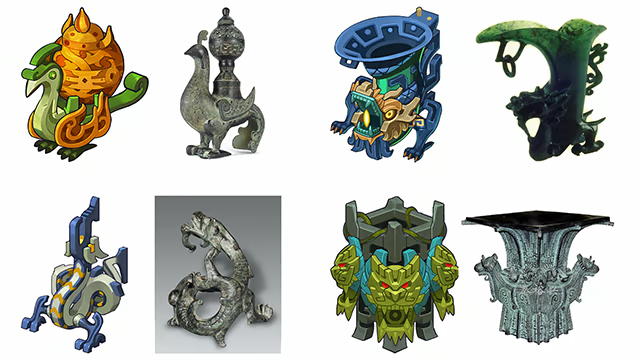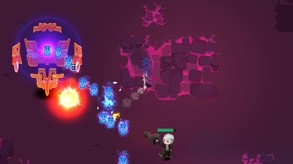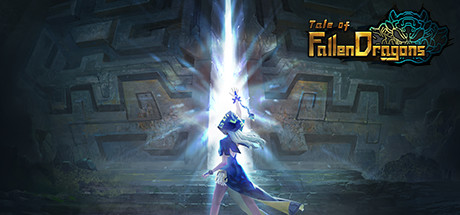
This is a dungeon crawler game with roguelike elements based on Ancient Chinese story. Under the Fallen Dragons Temple, you`ll fight with various dragons which all have different shapes. The art style is based on real artifacts from China, we hope you could experience a different style of our culture.
Modeled estimate, not a reported figure. How we estimate →
Media

About

Genres
Stats
All-time low is the lowest price we've recorded for this game since we started tracking it.
Languages: Simplified Chinese, Traditional Chinese, English
Engagement
Hours played at review time, across 40 reviews with recorded playtime.
Reviews
Themes across 40 recent reviews and how positive each mention is. A keyword signal, not full sentiment analysis.
positive critical· bar length = how often the theme comes up
Reviews
闪避时不能攻击,感觉很僵硬,到后面的boss有点难打,还有是肉鸽,心态不好的不建议购买。接下来说说优点:1、打折后只需9元;2、跑过的图可以无限传送;3、可以带符文进地牢,会略微降低一点难度。 但是,制作组跑路了!!!!!
这鼠标一顿一顿的咋玩???
无聊 毫无打击感
很适合休闲放松
跑路了,可以判刑吗?
如果制作组不跑路可能已经非常成型了吧,感觉这是个半成品。狻猊和相柳的重力牵引我跑不了不知道是不是bug。易上手易下手。
游戏里有大球妹子,快买! 是发射大球啦,乱想的面壁。过的去,不差,还是国货国风,3.6内可考虑入库。俯视地面弹幕射击+肉鸽,满像地下矿工低配射击版;又像霓虹深渊,或者说霓虹深渊像它。话说这游戏英文名是不是翻译错了--陨龙传说?还是改差评了,各方面都不够完善,虽然是同胞,也不能惯着;何况商店页面已经好评。 画面:** 音乐:** 剧情:* 演出:* 玩法:*** 创意:** 手感:** 难度:*** 丰富:*** 耐玩:*** 优化:* 更新:* 热情:* 细节:* 打磨:* 诚意:* 不足,bug,建议等:我们需要继续更新,优化完善,结束抢先体验。 202211下,t a o宝,支付宝红包,杉果,本平台,本平台充值折扣掉卡,indie gala,fanatical,humble,daily indie game,loot boy,它处自定义包入的本体约3元。爱人如己,目前就这,看以后追评。有中文的游戏请耐心自研体验乐趣,攻略指南尽量不用。不建议使用外挂,插件,作弊之类的,游戏都要这样搞,那现实里那更是如此了。兄弟萌,强烈建议不要第三方平台的小店买y u额,通过饰品等挂steam市场转的,高概率red信乃至封号,且行且珍惜。
Tale of Fallen Dragons, developed by BigTapir Games and published by BigTapir Games in collaboration with XD, is an action-driven roguelike dungeon crawler that draws heavily from Chinese mythology and folklore. Released in 2017 and maintained over a long Early Access period, the game positions itself as a challenging, replay-focused experience where adaptability, mechanical skill, and knowledge of item synergies determine success. Rather than following the increasingly common Western fantasy or sci-fi roguelike templates, it establishes a distinct identity through its mythological themes and artifact-inspired aesthetic. The narrative backdrop is rooted in the legend of the Nine Sons of the Dragon, ancient beings whose destructive power once threatened the world. According to the game’s lore, the Five Elder Tribes sealed these entities deep within the Fallen Dragons Temple, a vast underground complex that now serves as the primary setting. Over time, memory of this catastrophe faded into myth, but the temple has begun to stir again. Players descend into its depths as unnamed challengers, motivated less by explicit story beats and more by the implied weight of legend and danger. This light-touch narrative approach allows the game to foreground atmosphere and discovery rather than scripted storytelling. Gameplay centers on repeated dungeon runs through procedurally generated levels. Each descent reshuffles room layouts, enemy placements, traps, and item drops, ensuring that no two attempts feel identical. Combat is fast-paced and responsive, emphasizing movement, positioning, and quick decision-making. Enemies range from lesser dragon kin to powerful mythological creatures, each with unique attack patterns that reward observation and pattern recognition. Boss encounters serve as difficulty spikes, demanding mastery of dodging and timing rather than reliance on raw damage alone. A major pillar of Tale of Fallen Dragons is its extensive item system. With well over a hundred items available, players are encouraged to experiment with builds that can drastically alter how a run unfolds. Some items enhance survivability, others amplify offensive output, while certain combinations create powerful synergies that can turn an otherwise doomed run into a triumphant breakthrough. This system fosters emergent gameplay, where understanding item interactions becomes just as important as mechanical execution. Because item availability is randomized, players must constantly adapt strategies rather than rely on a single optimal build. Visually, the game adopts a stylized look inspired by ancient Chinese art and symbolism. Environments evoke temple ruins, ceremonial chambers, and forgotten sanctums, while enemy designs reflect mythological motifs rather than generic fantasy creatures. This artistic direction gives the game a strong sense of cultural identity, setting it apart from many contemporaries in the roguelike genre. Animations are functional rather than flashy, but they clearly communicate enemy behavior and attack telegraphs, which is crucial in a game built around precision and reaction. Replayability is one of the title’s strongest assets. Procedural generation, combined with varied items and escalating difficulty, encourages players to undertake dozens of runs in pursuit of mastery. Each failure becomes a learning opportunity, gradually improving familiarity with enemy behaviors, boss mechanics, and effective item combinations. Cooperative play further enhances replay value, allowing players to tackle the temple together and coordinate strategies in real time, adding a social dimension to what is otherwise a solitary descent into danger. That said, the game does show signs of its prolonged Early Access development. While the core systems are solid and engaging, some players note uneven pacing in later stages and a desire for greater enemy variety or deeper progression layers. Updates slowed over time, which may leave the impression that certain systems could have been expanded further. Difficulty can also feel unforgiving to newcomers, especially during early runs when item synergies are not yet well understood. Despite these rough edges, community reception has remained largely positive. Players consistently praise the game’s thematic originality, satisfying combat loop, and depth of replayable content. Its willingness to embrace a culturally distinct mythological framework has helped it stand out in a crowded genre, earning it a dedicated niche audience. Support for multiple languages and controller input broadens accessibility, while achievements and collectibles provide additional incentives for long-term engagement. Ultimately, Tale of Fallen Dragons stands as a compelling example of an indie roguelike that succeeds through identity and systems rather than spectacle. Its fusion of Chinese myth, procedural dungeon crawling, and item-driven experimentation offers a challenging and rewarding experience for players who enjoy learning through failure and adapting on the fly. While it may not reach the polish or scope of genre-defining roguelikes, its distinct atmosphere and mechanical depth make it a memorable journey into a myth-laden underworld where every descent tells a different story. Rating: 8/10
游戏相对还是可以的,对于手残党的我来说难度不大
Very good roguelike, on par with Isaac 👍
Related
Related
Trends
Modeled estimate over time, reconstructed from Steam's monthly review histogram.
Momentum
Pace estimated from the game's recent review growth (our daily snapshots) at its own sales-per-review ratio — a momentum signal, not booked sales.
Audience
Estimated from the language of this game's reviews — a proxy for where players are, not official Steam demographics.
Related
| Retrace the Light | $109.7K | 256 | 88% | $17.99 |
| SRX: The Game | $109.8K | 208 | 88% | $19.99 |
| Fall of Light: Darkest Edition | $109.8K | 327 | 55% | $14.99 |
| 桃色武林 | $109.7K | 507 | 79% | $9.99 |
| Rune Knights | $109.6K | 293 | 76% | $19.99 |
| Trainatic | $109.8K | 1.1K | 90% | $4.19 |