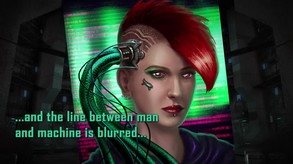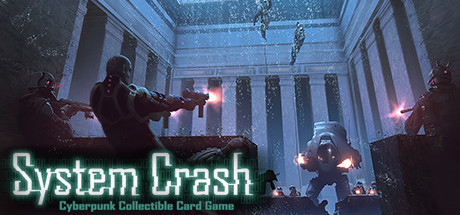
System Crash is a story-driven cyberpunk collectible card game inspired by Blade Runner and Neuromancer. When corporations own everything and the line between man and machine is blurred, your only option is to fight to survive!
Modeled estimate, not a reported figure. How we estimate →
Media
About
Stats
All-time low is the lowest price we've recorded for this game since we started tracking it.
Languages: English
Engagement
Hours played at review time, across 41 reviews with recorded playtime.
Reviews
Themes across 41 recent reviews and how positive each mention is. A keyword signal, not full sentiment analysis.
positive critical· bar length = how often the theme comes up
Reviews
Киберпанк - на чиле и расслабоне. Колодостроение затянуло на всю ночь!
Muito bom! Recomendo.
Great game, pve card game adventure where you have a collection that grows over time and you build decks with it like an irl card game. Awesome game, highly recommend
System Crash is a cyberpunk-inspired collectible card game that delivers a surprisingly deep and engaging strategy experience wrapped inside a dark futuristic world filled with corporate corruption, hackers, cybernetic warfare, and dystopian technology. While many digital card games focus heavily on online competition and endless monetization systems, System Crash takes a different approach by emphasizing a narrative-driven single-player campaign combined with tactical deckbuilding and intelligent AI encounters. The result is a game that feels more focused and atmospheric than many larger card battlers, offering a strong blend of strategy and storytelling that gradually becomes more impressive the longer players spend inside its futuristic setting. The cyberpunk atmosphere is one of the game’s greatest strengths. The world feels heavily influenced by classic science fiction themes where corporations dominate society and technology has become inseparable from everyday life. Neon-lit interfaces, underground networks, corporate conspiracies, and cybernetic agents all help create a setting that feels appropriately bleak and immersive. Even though the production budget is clearly smaller than major AAA strategy games, the developers do an excellent job establishing mood through visual design, dialogue, and environmental presentation. The game successfully captures the feeling of operating inside a dangerous digital underworld where every mission and encounter carries a sense of tension. Gameplay revolves around strategic card battles where players construct decks using futuristic units, weapons, software programs, and specialized abilities designed to overwhelm enemies through tactical planning rather than brute force. Battles require careful resource management, positioning, and long-term thinking because victory often depends on anticipating enemy actions several turns ahead. Unlike many card games where randomness dominates outcomes, System Crash strongly rewards strategic preparation and smart decision-making. Each match feels deliberate, forcing players to adapt constantly instead of relying on repetitive strategies. One of the most impressive aspects of the game is the quality of its enemy AI. Opponents behave intelligently and frequently pressure players into changing tactics or redesigning decks entirely. Enemy forces actively exploit weaknesses and punish careless mistakes, making encounters feel tense and rewarding. This creates a level of challenge that keeps battles engaging throughout the campaign because players cannot simply rely on a single overpowered strategy forever. The AI contributes significantly to the game’s replay value since many encounters demand experimentation and adaptation rather than predictable solutions. Deckbuilding is another major highlight. Players gradually unlock a large variety of cards that support different styles of play ranging from aggressive offense to defensive control and sabotage-focused strategies. Discovering synergies between cards becomes one of the most satisfying parts of the experience because the game encourages creativity rather than forcing players toward a single dominant build. Some decks revolve around overwhelming pressure, while others focus on resource denial or carefully timed counterattacks. The flexibility of the card system gives players a strong sense of ownership over their strategies and makes progression feel consistently rewarding. The campaign structure also helps the game stand out from many online-focused card battlers. Instead of existing purely as a competitive multiplayer platform, System Crash delivers a full single-player narrative where battles are tied directly into the unfolding story. Missions gradually introduce new mechanics, enemies, and strategic challenges while continuing to expand the game’s cyberpunk setting. The story itself is not revolutionary, but it succeeds in maintaining interest through strong atmosphere and consistent worldbuilding. The campaign gives purpose to each battle, making progression feel meaningful rather than simply grinding for rewards. Visually, the game adopts a clean and stylish cyberpunk presentation that complements its themes effectively. Neon lighting, futuristic interfaces, and detailed card artwork all reinforce the dystopian atmosphere without becoming overly cluttered. The user interface is functional and easy to navigate while still maintaining the sleek futuristic aesthetic expected from the genre. Although the visuals are not technically groundbreaking, the art direction remains consistent and helps the game establish a strong identity. The soundtrack also contributes positively to the atmosphere. Electronic music and ambient cyberpunk-inspired tracks create an immersive background during battles and story sequences. Combined with the dark visual presentation, the audio design helps maintain the feeling of operating inside a hostile corporate-controlled future. The sound effects during combat are subtle but effective enough to make card abilities and attacks feel impactful. Another refreshing aspect of System Crash is its progression system. Unlike many modern digital card games filled with aggressive microtransactions and endless grinding systems, this game provides a more self-contained experience where players unlock cards naturally through gameplay. This design philosophy makes progression feel far more rewarding because success comes from experimentation and strategic improvement rather than excessive spending or endless repetition. It feels closer to classic strategy games where players gradually build stronger options through skill and progression rather than monetization systems. Despite its many strengths, the game does have limitations. The lack of multiplayer support is probably the most noticeable omission because the strategic mechanics feel perfectly suited for competitive online matches. Once the campaign is completed and players have experimented with different deck combinations, long-term replayability becomes more limited compared to larger multiplayer-focused card games. The absence of online competition prevents the game from fully reaching its potential. Difficulty balance can also feel uneven at times. Certain battles become extremely challenging if players fail to adapt their decks properly, and some encounters may frustrate players who prefer more forgiving progression systems. The game expects players to think carefully about deck composition and tactical planning, which may overwhelm newcomers unfamiliar with strategy-heavy card games. Even with these flaws, System Crash remains one of the more overlooked indie card games available on Steam. Its combination of strong tactical gameplay, intelligent AI, atmospheric cyberpunk worldbuilding, and rewarding deckbuilding mechanics creates an experience that feels surprisingly polished and thoughtfully designed. The game succeeds because it focuses on strategic depth and immersive storytelling rather than chasing trends or relying heavily on monetization. System Crash may not have the massive player base or production budget of mainstream digital card games, but it offers a satisfying and intelligently crafted strategy experience that deserves far more attention. For players who enjoy cyberpunk settings and tactical deckbuilding, it provides a compelling journey through a dark futuristic world where careful planning and strategic thinking are rewarded at every step. Rating: 8/10
Like others said, this game is absolutly boring. Don't buy, even with high discounts it is not worth it. My rating 3/10.
It's a neat idea for a deck builder card game with cyberpunk narrative, but the balance is just too awful to enjoy. Short version: going 2nd is a crippling disadvantage, not taking simultaneous damage is a mistake, and getting better cards takes far too long. Mostly, it's that it has no idea how tempo works, and the reasons other card games do what they do to create a fair experience. Winning the coin flip for 1st turn is a MASSIVE advantage, because you get to place minions first and are always 1 mana/resource point ahead. In a game like Hearthstone, the 2nd place player gets one extra card plus a card that gives 1 mana so they get one turn of being on parity with the 1st player. Despite this, going 2nd in Hearthstone is still a significant disadvantage. System Crash 2nd player? Gets an extra card and that's it. An already significant disadvantage in other card games turns into a MASSIVE one here. It's to the point where you might as well keep restarting a match until you go 1st, because going 2nd is a waste of time and will result in a loss the large majority of the time. Compounding that is that attacking minions take no return damage when hitting an enemy minions; they only dish out damage. So going 1st gets yet another advantage of not only being 1 mana ahead all game, but one attack round of free damage as well. This also makes the haste/charge ability (attack the same turn a minion is played) super overpowered since it's a free hit. In Hearthstone, not only does the charging unit still take return damage, but its stats are weaker than a typical non-charge unit of the same cost. System Crash? All the haste/charge minions are the same stats as non-haste units. Nobody balanced this. Then there's the way targeting works. Instead of any minion being able to target anyone, they are divided into 4 rows and only attack the minion in the same row. What makes this a problem is the VERY widespread "hacking" ability, which automatically fills up your victory points every turn the minion simply exists. Just plunk down your hacking minions across from the lowest damage enemy minions and you're almost untouchable as you rake in free victory points every turn. Try to get around this, and there are still cards that grant the hacking ability to ANY unit. The hacking units also aren't that fragile even if you do hit them. So just build a good deck on these terms? That's the final nail in the coffin. Getting new cards is GLACIALLY slow. To the point that it feels like this started as a free to play pricing model designed to push you towards spending real money to skip the grind, but at the least minute made it a paid commercial game. Do you want to grind out 40 matches for a single good card? I sure don't. Worse, there are a lot of themed cards that show how rushed and unfinished the game is, because for every themed group that gives bonuses for every matching themed minion, there are only ever 3-5 cards in that group in the ENTIRE game. Trying out any themed deck means doing the above grind 3-5 times. Think that sounds fun? I sure don't. Finally, while there's no direct proof that the computer cheats, it seems to ALWAYS have good cards to play every turn. Out of the nearly one hundred matches I played, I think the computer had ONE turn where it couldn't play anything. I suspect that its "hand" of cards is a lie, and that it simply has access to its entire deck to play one every turn. It will always have good low cost cards to play in the early turns, and high cost cards to play in later turns. That's not simply good deck construction. Even the best decks will whiff on a draw from time to time. To only whiff ONCE out of 600-700 turns? There's something fishy going on. And it would be one thing if the game got this difficult in the later campaign missions, but it's like this from the THIRD mission. Immediately after the two tutorial missions, you're thrown into the cheating deep end. I really wanted to like this for the setting and narrative too. But dang it all feels like a cargo cult understanding of card game design.
It's pretty fun. Neat little game. Definitely worth a few bucks.
Um ótimo card game para passar o tempo ambientado com uma temática cyberpunk. Recomendo. Só poderia ter mais atualizações de cartas.
I want to like it as it does the "run around and find cards" thing like the old Shandalar mtg game, but the game itself is just too basic and cards are too drip fed to want to see how getting everything changes things. Card-based auto battlers ain't it, fam.
Wenn man dieses Spiel startet, erwartet man einen sehr generischen Card-Battler Leider ist das nicht das was man bekommt Man bekommt nämlich einen SCHLECHTEN Card-Battler. Leider werden die Karteneffekte nicht erklärt und man kann auch keine Tooltipps mit drüberhovern bekommen. War nicht töfte 2/7
Related
Related
Trends
Concurrent players on Steam, sampled daily since tracking started.
Audience
Related
| Queen's Glory | $135.4K | 690 | 69% | $6.99 |
| Agreeee | $135.5K | 1.3K | 74% | $4.99 |
| Sphere - Flying Cities | $135.4K | 242 | 50% | $17.99 |
| Kanjozoku Game レーサー Online Street Racing & Drift | $135.5K | 3.5K |
Estimated from the language of this game's reviews — a proxy for where players are, not official Steam demographics.
| 81% |
| $4.99 |
| MURI | $135.5K | 483 | 90% | $9.99 |
| Forgotten but Unbroken | $135.4K | 268 | 78% | $19.99 |
Related
| 7 Days to Die | $425.3M | 403.6K | 87% | $44.99 |
| Mount & Blade II: Bannerlord | $309.8M | 294K | 88% | $49.99 |
| Factorio | $206.6M | 189.7K | 98% | $35.00 |
| RimWorld | $176.7M | 243.3K | 98% | $34.99 |
| Squad | $167.2M | 178.2K | 83% | $39.99 |
| Don't Starve Together | $164.7M | 539.5K | 95% | $14.99 |