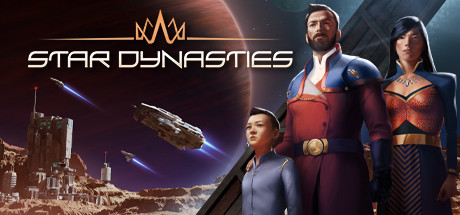
Take the reins of a feudal dynasty in a divided galaxy following the destruction of earth. Star Dynasties is a turn based, procedurally generated narrative of human drama and personal politics, mixed with a light empire management layer. Your choices. Your legacy.
Modeled estimate, not a reported figure. How we estimate →
About
Genres
Stats
All-time low is the lowest price we've recorded for this game since we started tracking it.
Languages: English, German
Engagement
Hours played at review time, across 40 reviews with recorded playtime.
Reviews
Themes across 40 recent reviews and how positive each mention is. A keyword signal, not full sentiment analysis.
positive critical· bar length = how often the theme comes up
Reviews
"Star Dynasties" Review – Game of Houses, RNG, and Broken Dreams – AND – A Spreadsheet Trapped in a Space Opera You are the heir to a minor house, clawing your way through the remains of a shattered galactic civilization. A noble in name, a bureaucrat in practice, and a spectator most of the time. If you ever dreamed of ruling a space empire by filling out HR forms and losing control of everything important to random events, then congrats—you’ve found your dream job. ✔️ The art style is simple—but stylish. The clean, almost minimalist portraits and UI elements sell the “feudal lords in space” vibe effectively. It's not flashy, but it has a quiet dignity that fits the tone of a post-collapse galactic society where even your space throne is probably made of old parts glued together. ✔️ The “feudal sci-fi” concept? Brilliant. Think Crusader Kings meets Battlestar Galactica—but smaller, more personal, more intimate. You’re not commanding fleets of thousands; you’re brokering fragile political marriages and trying not to get murdered by your cousin who’s sleeping with your wife. The world feels lived in, tired, and broken. That’s kind of the point. ✔️ It looks like a strategy game. The galaxy map, icons, skill trees, and popups scream depth. The illusion of complexity is strong—until you realize most of the mechanics are smoke and mirrors. But credit where it’s due: the UI does a lot with a little. It makes spreadsheets feel almost majestic. ❓ Tech in a galaxy where no one knows how a toilet works. You’re not researching new technologies. You’re “rediscovering” how to use stuff your ancestors left behind. That might sound cool… until you realize it could be any era. Medieval. Post-apocalypse. Early modern history. The “space” in Star Dynasties is mostly cosmetic. Your galactic empire might as well be a fancy version of Game of Thrones’ Westeros, with more blinking lights. ❓ The skill system: deceptively deep. Each character has five core skills (Administration, Military, Diplomacy, Security, Technology), and in theory this should open up a ton of interesting possibilities. But in practice? TECHNOLOGY is king. It’s used for healing, spying, teaching, event success, child birthing, and even expeditions. The rest are support acts at best. Admin? Used for repairing!—NOT building—structures or help rebuild fleets. Military? Useless unless you're personally leading your limited fleet. It’s like building a toolbox where 90% of jobs require only a wrench. ❓ Politics and backstabbing galore—but mostly RNG-driven. Scheming, marriages, betrayals, and secrets drive the drama, but whether things succeed or fail is often out of your control. Discovering secrets? Incredibly low chance. Preventing sabotage? Good luck. You’re not a ruler—you’re the least dysfunctional person in a kingdom of horny sociopaths and mildly treasonous family members. ❌ No real empire-building. You don’t expand by upgrading tech. You rely entirely on the few systems you directly control and the handful of vassals under you. Their military, their income, their tech—all flow up to you with minimal control. You need to help build their economy sometimes but not owning the bonuses from buildings, you can’t manage their planets, and you can’t even mirror known building from elsewhere to your own setup. It’s like being the CEO of a company where all your employees are freelancers with personal vendettas. ❌ Fleet management is a board game with extra steps. You get three unit types. That’s it. The combat is pure rock-paper-scissors. Fleet strength? Locked to each system. Composition? Determined by encouraging your vassals to specialize. Want a flexible strike force? Too bad. You’ll get what your direct neighbour vassals give you and pray they managed to build only one tipe that week. You’re playing RISK in space—with fewer options. ❌ You don’t do anything as a leader. Your character might have great skills, but outside of battle, they’re a figurehead. Assignments? Council members handle those. Skill checks? Rely on others. Expeditions? Maybe you tag along if your tech skill is high enough. Your skills mostly exist to bolster the house-wide average like some cosmic Excel formula. In other games like Rogue Trader or XCOM, characters use their skills in action. In Star Dynasties, you’re a glorified morale booster with no frontline role. ❌ Technology skill is the god stat. Want to educate someone? Heal someone? Improve events? Not die during childbirth? All of it is Tech-based. It’s not really “technology” so much as “life competence.” It’s used so much, they might as well rename it “Plot Armor.” If the game were a tabletop RPG, the GM would be accused of Tech-favoritism. ❌ Honor system: a straightjacket made of space bureaucracy. You have to play the noble, just, legitimate ruler—because the system says so. Break rules? Your reputation tanks, and everyone turns on you. Meanwhile, AI lords cheat, seduce, kill, and do whatever they want with zero consequences. The only thing more fragile than your legitimacy is your patience. ❌ RNG determines the outcome of most plans. You can prepare, position, and plan for turns—but a hidden affair, random death, or sudden scandal can undo everything. Events are everywhere, and most don’t offer you real choices. It's a game of constantly reacting, rarely acting. ❌ No long-term progression. There’s no sense of building toward something. No great empire, no ultimate goal, no mega-projects. You’re playing the endless soap opera of succession crises and family drama. Even battles don’t feel decisive. You just push back and forth across the map, like two drunk uncles arguing over a fence line. ❌ "Space" is skin-deep. There's no wonder in rediscovery. No ships to upgrade, no alien artifacts to adapt, no real "tech tree." The setting could’ve been medieval Europe and nothing would change. It's not a space strategy game—it’s a feudal drama in a sci-fi wrapper. Final Verdict: A masterclass in thematic storytelling, trapped inside a passive, RNG-driven spreadsheet. If you love Crusader Kings and think “What if this was more limited and in space?” then Star Dynasties might appeal to you. But if you crave actual control, progression, or meaningful tactical depth, this game will test your patience harder than a space pope with commitment issues. The game is unique and if you did not get this vibe elsewhere it might just be the thing you will love. TL;DR: ✔️ Beautiful minimalist art. ✔️ Vibe is strong. ✔️ Intriguing premise. ❌ Gameplay depth is an illusion. ❌ No real control. ❌ RNG-heavy, Tech-skill dominated, low agency. "Star Dynasties" is a noble idea exiled by poor execution—like a once-great empire, fallen into the hands of spreadsheet warlords and horny individuals and sometimes cousins." I would recommend go play Knights of Honor 2, it has more deep and interesting military mechanic, while still using skills and dynasty, diplomacy and individual skills actions.
Amazing game... a hidden gem! If you think you might like it... you will! However... (there's always a "but")... this game rewards a particular play style one might call "deep contemplation." What is "deep contemplation?" Well, after playing my fair share of different kinds of strategy games over the decades, I have found that there are certain games where a not-so-insignificant amount of the pleasure actually comes from allowing yourself to get lost in the narrative that you are essentially creating turn-by-turn. This is kind of like "role playing," but it's also kind of more than that: you aren't just playing a role, but actually enjoying the aesthetics of the game world that you have helped to craft, turn-by-turn, as story lines evolve and decisions branch out in interesting ways... does that make sense? It may not, probably, to some of you, and that's fine. No judgment here and by no means am I saying that this is the only way to play this or any other game. I find that a lot of my favorite war games (hex-based, operational level war) have this aspect of deep contemplation, where -- in later turns -- it becomes fun to simply look at the map and think about all the decisions, battles, etc. that got you to where you are. The cool thing about this "vibe" is that: it's kind of fun regardless of whether you are "winning" or "losing." When a game is memorable and fun even in stalemate or defeat, folks, that's a gem of a game right there. Anyway, this game rewards making careful decisions and taking advantage of opportunities. This makes the journey fun, no matter the destination. I like games like that. Last thing I'll say: a big thing this game gets right is that, while all the decisions bear upon your House's fortunes to one extent or another, the "big" decisions are never too big in their consequences -- you can try things! You can recover from some slip-ups. Similarly, you might have a few big triumphs -- ok, awesome -- but it doesn't mean that the rest of the way will be a pushover. Far from it! You will still need to pay attention, manage your House's affairs, and keep going. TL;DR: Get it but be patient; this one is not a sprint but a slow build.
A game of conflicting design from the very base level. Beginning with a long and detailed tutorial that actively refuses to explain much of the basic gameplay in favour of trying and failing to explain the ideas behind that gameplay. It's very clear that the devs have an idea here, but it was made expressly for them, and if you don't find yourself on their wavelength, you might as well not play. In addition, the game is far too reactive, rather than active. You have very limited tools to actually do things in the world at your fingers, but rather the game is mostly played via reacting to events with only one or two options, you have such little control over your choices and your house. These events are sparse and repeat themselves very, very quickly, running out of variety just after the start of a game. You'll be bombarded by tens of notifications every turn, most of them offering you no choice but just informing you of a marriage, or a single system changing hands. Inconsequential at best, and annoying at worst, as you have to manually acknowledge each event before being allowed to go forward in the game, with no feedback on how many events are remaining. It is, as many have said, somewhat similar to Crusader Kings in space. However, where Crusader Kings has a bevy of options to expand your control, this game feels like it understood only the most surface level content that Crusader Kings offers and, for some unknown reason, decided that the player needed to wear a pair of handcuffs to keep them from having enough agency to really expand and control their space. There is no web of alliances to navigate, no underhanded tactics to get what you want, no deep and engaging system to manipulate in order to clear a path forward while you tread on the line between honour and achievement. You have a very, very limited set of tools to achieve a very, very limited set of goals. The idea of needing to follow a specific code of honour is very neat! The concept that everyone will always have their eye on you, waiting for you to slip up is interesting! Unfortunately, the only effect appears to be a flat malus to your opinion, universally. Traits hardly effect this, even with rule breakers or other radical rulers. There are also very, very few ways to regain your reputation, leading to an inevitable spiral caused by attempting to do... basically anything in the game, actually! Speaking of reputation, it's basically the only strategic asset you have. Alliances don't seem to exist, nor do royal marriages, nor does any real form of skullduggery, social climbing, and politicking. You simply need to raise attitudes that NPCs have towards you in order for them to have a likelier chance to roll a die and agree to help you based on that roll. They don't seem to care much at all about the actual circumstances which call for that roll. An example- Half of your realm breaks off from you after you refuse to assist them in stealing land from your Archon, who is somewhat negatively ambivalent on you. Then, they join a rival League, whos leader is somewhat positively ambivalent towards you. Who would you expect to help in this situation? The answer is a random baron from inside the rival League's space, whom you have never met nor interacted with. Your liege, despite having every reason to send assistance, simply decides not to do anything. The rival league's archon, despite being likely to accept your call for aid, rolls poorly and decides not to help. Eventually, after exhausting your choices, you click a yellow handshake icon in the rival League's space, and they agree to help. Despite their agreement, and their hatred for your rebel, they still inform this rebel that the attack is coming- Because of a dice roll, it would seem. The effect of the sector's politics hover around 0% in terms of mattering to the game's outcome. It's entirely based on your personal reputation and friendships, and nothing else. Every decision in the game tanks your reputation if it has any chance to benefit you, and that makes you, in effect, a target for the rest of the game, regardless of what decisions you make to avoid that- There really aren't any. It's either war, or spamming opinion improval to make up for the lack of political decisions you have at your disposal. Beyond that, the game does allow for limited empire building, but the effects of this are rarely ever useful. You may gain a slight increase to skill rolls, or a slight boost to jobs within a limited sphere of influence. The buildings which allow for these are more or less placed at random, and its not uncommon for a game to simply put all of the helpful buildings in such a location that they are useless to you. Without any way to build tall (as you rely entirely on "repairing" pre-placed structures rather than actually building infrastructure), you can end up very easily in unwinnable situations at the start of the game. All of the other points compound on this. Again, so so many interesting ideas here, enough to sell the game to me after reading a lot of reviews, but unfortunately I think I might have just expected too much. Maybe I'm missing something, maybe I need to give it another try and see if it clicks, or maybe I'm just holding onto false hope that there's something here to justify the price tag. As it stands, it feels like a mobile game that got ported to PC, what with all the half-baked ideas and the general unfinished feel the game has. It's such a shame, because it's so obvious that a good game could have come out of this. In another world, I guess.
After playing Star Dynasties for 62 hours I can definitely recommend this hidden gem. Other players often describe it as Crusader Kings in space, but there are many differences. It's turn-based and it's much less complicated. In my opinion it's more like a political sim. The gameplay itself is quite simple: each turn you get a string of events and then you use your action points to appoint your house members to various tasks. The game became one of my all time favorites. It's even more impressing once you know the game was made by just one guy. But I understand it might not be for everyone, cause the strict moral system is very challenging.
Star Dynasties is a space empire-building strategy game. I really like it. Let's make one thing clear: when people hear about space empire-building games they envision some sort of spiritual successor to Master of Orion or Civilization, what you call a 4X game. This one isn't that at all and you'd better not come here with preconceived notions of what such a game should contain. It's also not a huge sprawling game with 10 DLCs trying to be infinitely replayable. It is a focused, polished, well-thought-out game with elegant mechanics, great UI. Everything comes together in it. The closest comparison is the Crusader Kings series, but in a way it's even more CK than CK itself. It doesn't need a lot of the fluff necessary for a historical game - it doesn't have religion and church, different cultures, and the mechanics aren't bound by history. Here the mechanics come first, and the setting adds a little flavor and justifies those mechanics. You control a specific person in a galactic human-only society at some point in the future where most technologies were lost, but people can still travel in space and wage war. Dune is an obvious inspiration. The galaxy is organized as a feudal society and the goal is to control more than half of the galaxy by diplomacy or conquest - in that order. You only directly control a single star system/colony, everything else is controlled by vassal "barons" or (if you're an "archon", or space king) "dukes" . Every ruler and everyone in their court has stats and traits and participates in events and diplomacy. The focus of the game becomes its greatest boon: we deal with a single specific culture and it's a culture of interesting mechanics. The map variety is guaranteed, with every star system only having pre-existing buildings you can "repair", so every colony is unique. You get natural borders and varied regions of space because fleets can only travel close to their home system, and any battle means only using what nearby colonies can provide (and mercenaries, but they cost a lot). There's no succession partition like you'd expect in a historical setting - but on the other hand, there's no way for the sovereign to ban vassals from waging war on each other or outward, and rules like that make for really interesting gameplay. The game is extremely dynamic. In many games like this, colony trading or demanding vassalage is extremely limited so as not to be exploited, and the empires stay static and boring, but here actors do it all the time, and the galaxy feels alive. There's a system of laws codifying transgressions and demands, resulting in interesting situations – if your liege has wronged you, then you're justified in, say, not answering the call to support them in battle, or your rebellion might be semi-justified and not affect your reputation as much. It's all a beautiful complex machine. The game looks and feels decent, the UI is great. I can see why people might have issues with its turn-based nature. Every new turn start makes you acknowledge what happens around you and demands your reaction to many events, which might feel frustrating if you don't have much to do on your own turn. However, I find that it benefits the pacing: in similar games I feel like I'm missing what's happening around the world unless I force myself to slow down and look around, but here you effortlessly consume the galactic drama and become familiar with all the houses and important characters. So far I've only had one full campaign in the game and I can clearly see that while there's a lot of variety in how you can approach it (space geography is done very well, maps are randomly generated and you can choose some transformative traits for your starting character and dynasty), it's obviously not as replayable as less deep and wider games. Still, even a single playthrough felt wonderful. I highly recommend it.
First game. The archon declared war to the east, Im the only one bordering them, I must be the only one to bare the brunt. The archon, helping in the war decides to rise my taxes. Besides my scraping by I am benevolent to my neighbors and they succeed to me. Before I know it I have half a sector, larger than the archon's territory and prospering. They dont like that, they want to depose me. So I start a rebellion. The other factions are with me. Long live the Smith's reign. Long live the new archon.
i might as well play manor lords, or crusader kings, or stellaris, it poorly executes on what it promises.
I've seen so little movement on this I am beginning to wonder if it was abandoned. There's a lot of potential here.
There is much I wanted to love about Star Dynasties. But it's too limited in possible actions and what you should be able to do. For exemple, I can't adopt a child as mine ?
Despite how simple Star Dynasties is, it's one of the best strategy games I've ever played. People often compare it to Crusader Kings and there is some of that in this game, such as the political system. But, there's also a kind of random story generator which mostly generates events across the turns of other empires. It's not AI-generated or anything like that. I like to create a basic family of my own and start out as an upstart ruler. Which is a ruler who illegitimately gained control of their territory. It makes it a little harder starting out, as the rulers in your territory generally don't like you much, but it also gives you some extra points for customizing your leader/faction. I could go on and on about the game, but I don't really want to spoil anything for those who are interested. Just know that this game doesn't revolve around pure military might. Individually, each star system is severely limited, in terms of military might, compared to 2+ other star systems attacking it. Most star systems will have single digit numbers for building its fleet of star ships. Some will get over 10 and some can even host upward of around 20 when all of their installations have been repaired. In other words, you might not be as successful as you'd hope if you're solely relying on military might. Assuming you aren't massively outnumbering your enemy, your fleet will suffer significant losses with each battle. On top of that, when forming an empire of star systems to rule over, you are only ever able to summon fleets within so much star lanes of the battle. The radius is a decent enough size so that you can summon all of the star systems nearby. You can even ask the rulers of star systems who belong to other empires and leagues to join you without any repercussion. If your relations are good, they'll likely accept unless they're honor-bound or related to your enemy. Even then, depending on the character, you may still be able to get them to turn on, say, their empire's leader or even have a whole empire betray the league it's in to side with you. There's arguably far more ways to win by subterfuge and politics than there are simply by attacking all of your enemies. Instead of being outright aggressive with your ruling Archon, send your security specialists to build a spy network to learn the dirty secrets of them or their faction leaders. Use those secrets to gain more power for yourself by blackmailing those people and forcing them to do things which put you into a better position when it eventually comes to challenging your ruling Archon. You can also send your security specialists in to assassinate that Archon, or any other person in the game. A well loved Archon can be hard to depose. Even when you're pushing propaganda to defame them. Often times, simply taking them out of the picture is the best option. Just don't forget to set one of your security specialists on covering up the fact that you just ordered someone's murder. Another path altogether is marriage. Assuming your faction holds a higher position in the political hierarchy, such as being a Duke and ruling over other star system in your empire, or being an Archon and ruling over your own empire of star systems AND other empires of star systems with their own rulers. Like vassal states. Assume you're an Archon? And let's assume your ruler is eligible for marriage. Now let's say there's another empire near you that you want. It's just a normal empire, not the Archon of a league of empires. It can even be a normal empire IN a League that's ruled by some other empire. It can even be an empire in your own League that you're the Archon of. Say that empire in question has an heir your ruler can marry. As your faction holds a higher political authority than the empire you're looking to marry into, the character you're trying to marry will join your faction. When their parent/guardian dies, assuming they aren't removed as heir, the empire you married into will be handed over to you. Not as a vassal, but all of its star systems will be added directly to your own faction's control. If you wanted to be devious, you could marry someone like I just described and then use one of your security specialists to assassinate the leader of the faction you just married into. Once successful, the faction will be handed over to you immediately. Beware doing something like this, though, and not covering the secret up that gets created from assassinating someone. If made public, it could turn all or most of the star systems you just acquired against you. These are just some of the things you can do in this amazing game.
Related
Related
Trends
Modeled estimate over time, reconstructed from Steam's monthly review histogram.
Momentum
Pace estimated from the game's recent review growth (our daily snapshots) at its own sales-per-review ratio — a momentum signal, not booked sales.
Audience
Estimated from the language of this game's reviews — a proxy for where players are, not official Steam demographics.
Related
| Robin Hood: The Legend of Sherwood | $407.7K | 1.7K | 67% | $7.99 |
| Ship Simulator Extremes | $408.8K | 2.3K | 51% | $4.99 |
| Moto Racer 4 | $408.8K | 1.1K | 62% | $14.99 |
| Hyperdevotion Noire: Goddess Black Heart (Neptunia) | $408.8K | 984 | 78% | $14.99 |
| Bravery and Greed | $407.6K | 1K | 77% | $19.99 |
| Beast Battle Simulator | $407.6K | 1.3K | 88% | $9.99 |