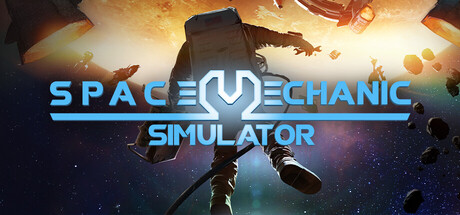
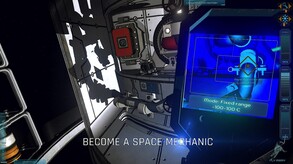
Become a Space Mechanic! Get your hands dirty, explore the depths of space and repair broken machinery. Diagnose problems using diagrams and tools, perform repairs, manage your resources and watch the simulated machinery come alive. Or just gaze upon the beauty of the Solar System.
Modeled estimate, not a reported figure. How we estimate →
Media

About
Genres
Stats
All-time low is the lowest price we've recorded for this game since we started tracking it.
Languages: English*, French, Italian, German, Spanish - Spain, Simplified Chinese, Polish, Russian, Turkish, Ukrainian*languages with full audio support
Engagement
Hours played at review time, across 40 reviews with recorded playtime.
Reviews
Themes across 40 recent reviews and how positive each mention is. A keyword signal, not full sentiment analysis.
positive critical· bar length = how often the theme comes up
Reviews
Space Mechanic Simulator, developed by Atomic Jelly and published by Wildlands Interactive and Ultimate Publishing, is a unique and ambitious simulation game that trades traditional racing or combat in space for something more grounded and technical—the meticulous work of repairing satellites, space stations, and planetary rovers. Rather than piloting a spacecraft through epic battles, players step into the boots of a lone space engineer, performing the kind of slow, methodical maintenance that keeps humanity’s presence in the stars alive. It is a refreshing concept in a genre often dominated by spectacle, offering a slower and more thoughtful approach to space exploration. The game’s appeal lies in its authenticity and attention to detail, presenting a world where every nut, bolt, and cable matters, and where every successful repair brings a quiet sense of accomplishment. At the core of the experience is the act of repair itself. Each mission tasks you with diagnosing and fixing different pieces of equipment—anything from solar arrays and oxygen regulators to malfunctioning communication satellites and planetary rovers. What makes this process engaging is the degree of realism baked into every step. The player must identify the fault, isolate the defective component, and then dismantle and replace it, sometimes dealing with dozens of small parts in succession. Working in zero gravity adds another layer of challenge: tools and objects drift if released, and even simple movements require careful use of your thrusters to maintain control. When missions move to lunar or Martian surfaces, gravity changes again, altering how you move and interact with machinery. These details give the gameplay a deliberate rhythm, making every successful fix feel earned rather than automatic. Space Mechanic Simulator also succeeds in creating a genuine sense of place. The visual presentation might not reach the photorealistic heights of major studios, but its art direction captures the stark, haunting beauty of outer space. Floating above the Earth while working on a damaged satellite, the planet’s curvature and cloud formations stretch endlessly beneath you, giving a sense of both awe and isolation. The sound design complements this perfectly—the faint hum of machinery, the muffled thuds of metal against metal, and the silence of the void between actions. On planetary surfaces, the environmental design shifts tone: dusty horizons, red sand, and metallic rovers breaking the monotony of alien landscapes. The game’s environments, while not extravagant, are effective at evoking immersion, placing you firmly in the boots of a professional who must stay calm and methodical in one of the harshest workplaces imaginable. Despite its immersive setting and thoughtful design, Space Mechanic Simulator is not without its rough edges. The game’s controls can feel cumbersome, particularly during zero-gravity segments where managing movement and tool use simultaneously can lead to clumsy mishaps. While this can be argued as part of the realism—the difficulty of working in space—it occasionally crosses the line into frustration, as hitboxes and camera angles make certain interactions more awkward than they should be. The interface, though functional, could benefit from smoother organization, as some menus and part assemblies require unnecessary backtracking. Repetition is another issue: although the variety of machines increases over time, many tasks boil down to a similar sequence of unscrewing panels, detaching modules, and replacing components. The sense of progression is gradual, but the gameplay loop may not hold the attention of players seeking constant novelty. Where the game excels, however, is in its dedication to simulation authenticity and the meditative satisfaction it provides. It invites players to slow down and appreciate precision work—a contrast to the fast-paced demands of most space-themed games. Completing a repair feels genuinely rewarding, especially when performed under the constraints of limited oxygen, power, or mobility. The realism extends beyond mechanical tasks; players must monitor their life-support systems, manage resources, and plan their movements carefully to avoid accidents. This sense of vulnerability and discipline mirrors real-world astronautic work, giving Space Mechanic Simulator a rare sense of credibility in its genre. It’s less about instant gratification and more about patience, focus, and understanding systems piece by piece—a design philosophy that resonates deeply with fans of technical simulations. In the end, Space Mechanic Simulator is a game that dares to slow things down and remind players that space isn’t just about discovery or adventure—it’s about survival through maintenance, precision, and discipline. Atomic Jelly’s attention to mechanical realism and environmental immersion gives it a niche but meaningful identity among simulation titles. It’s a game best suited for players who enjoy complex systems, methodical problem-solving, and the satisfaction of mastering practical tasks in demanding environments. For some, its pacing and mechanical rigidity may feel daunting or repetitive, but for others, those same qualities make it quietly absorbing and authentic. It’s not the grandeur of space exploration that defines it, but the quiet heroism of those who keep the machines running—a celebration of the unseen labor that sustains the human presence among the stars. Rating: 6/10
Good idea for a game, I initially enjoyed it although the early missions are somewhat the same. I had to stop playing when trying to do the E2 training mission to repair a PLC I ran out of money to repair it as you have to have same amount of resources to repair it as are contained within in it when fully repaired....... 120g of aluminium, 80g copper, 110g rubber, 105g of clay and glaze, 125g plastic and 150g silicon just to repair 21% of damage to a small component and then you have to pay credits again on repair. The pricing for materials and the repair mechanics seem way off and killed the game for me as I couldn't continue with the training mission, even with not being able to start the mission without 2000 reserve credits for expenses - it just seems a little bit ridiculous. Hopefully the costs and repairs will be adjusted to make more sense.
For the long time this game was developed i expect it much better , not recommend
This indie game is extremely fun, relaxing, and a huge effort for a small indie game developer. I am thoroughly enjoying it. I really don't understand the negative comments, especially from the reviews where clearly the player has somehow never played a Unity game that has device conflicts -- which is more than half of them. Just unplug your joy devices if you want mouse and keyboard. That's a 5 minute fix which leads to hours and hours of great entertainment. I went back into YouTube and watched this developer's dev diaries leading up to the release two years ago. He worked on it for 4 years. The thought he put into the puzzles and mechanics around fixing space station and satellite problems is really great. That said, I wish he would continue development because the game could add even more, like damage to the player for flying in too fast to a satellite, disabling clicking on a panel when you're moving too fast, and a time-bonus system where the faster you complete a task the more reward you get. Still, the game stands on its own pretty well. I throw on some gaming music from youtube running in the background then try to figure out how to fix things with the Rover on the moon, solve puzzles in space and make enough money to get my next levels of training. I wish I could encourage the dev to do a version 2.0 because space games are now all the rage, it's a popular time and I think it would get a lot of attention. For anyone who likes sims and is hesitating, really, just go for it. If you're not using a gamepad and want kb/mouse, disable your joysticks/rudders/etc and settle into this world of repairing broken space equipment like a boss astronaut for a little while.
The controls are abit flaky and you need to spend time mapping out keyboard equivalent controls as it uses xbox controller and I think a PS4 game controllers are the only 2 choices. But once you figure out the controls it's a fun game.
This game is enjoyable and perfect for someone who likes space. The physics and space simulation aspects are particularly impressive. Although the repair system is quite complex, it's great that the game helps, explaining everything clearly to the player. It's a pity that the player doesn't fly at a given speed all the time when you stop giving it speed
for those looking for a very specific niche, this is definitely it
It's good, but incomplete. Plenty of other reviews will get into detail about controls and bug problems, It is also, unfortunately, unfinished content-wise. What's missing is the ability to work within the interior of any station part. The Demo has this feature, but it's also been built to be very focused and linear making it a pretty different work from the main game so it would have to be rebuilt for every possible station in the actual game. This, unfortunately, hasn't happened. It's also missing the ability to pilot the Shuttle yourself, but I'm not sure if that was actually promised or even a good idea. It has pretty much everything else, thankfully. Electronics, Software, Pipes, Rovers... Just kind of a shame it feels so repetitive. It's pretty neat otherwise, missing content notwithstanding.
bug-riddled mess. DO NOT BUY! The idea is very cool and I tried now for the 3rd time to get into it after some updates were released, but it simply does not work. Besides the tutorial missions, I haven't encountered a single mission that is not completely bugged (repairs not being registered, pipes that can't be removed, pipes that somehow duplicate, and so on). If this had been early access I wouldn't have given a negative review, but it is what it is. Spare yourself some money and headache.
The level of detail and systems being simulated here is fairly comparable to Stationeers (if you're familiar with that); Almost feels like a combination of Stationeers and Hardspace Shipbreaker... in the sense that there are very in depth systems to manage and fix, along with taking various contracts from a company that loves to charge you for the very air you breathe (pretty tongue and cheek humor); This is definitely a game you can sink a ton of hours into, grinding away at various space mechanic related tasks. If that sounds like something you're into, then this game is a steal for the price. (currently picked it up for 11$ on sale) Can't even get a decent lunch for that price anymore.
Related
Related
Trends
Concurrent players on Steam, sampled daily since tracking started.
Audience
Estimated from the language of this game's reviews — a proxy for where players are, not official Steam demographics.
Related
| Colony City 27λ | $74K | 426 | 88% | $8.02 |
| Achron | $74K | 113 | 65% | $19.99 |
| Doodle Kingdom | $74K | 231 | 46% | $8.99 |
| Tales of Monkey Island Complete Pack: Chapter 4 - The Trial and Execution of Guybrush Threepwood | $74K | 187 | 81% | $14.99 |
| Blacksmith. Song of two Kings. | $74K | 304 | 81% | $24.99 |
| War Brokers | $74K | 520 | 91% | $4.99 |