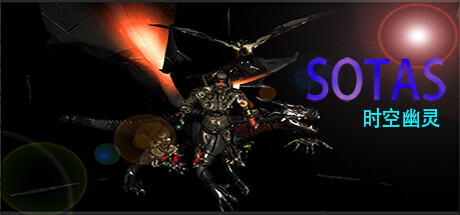
Aliens occupy the Earth, mechanize a large number of organisms on the Earth, a small number of Earth people survive, and issue resistance to it... Players need to use their weapons to destroy mechanical monsters, occupy the alien base, and call teammates to fight together
Modeled estimate, not a reported figure. How we estimate →
Media

About
Genres
Stats
All-time low is the lowest price we've recorded for this game since we started tracking it.
Languages: English, French, German, Russian, Japanese, Simplified Chinese, Korean
Reviews
这怕是个学了三天Unity 3D开发出的纸糊游戏。糟糕的操作,难受的控制,只差说一句“♥♥♥♥”了!
Best indie title of the year. Do not pass this one by.
sotas/时空幽灵 is a psychological horror adventure that relies heavily on atmosphere, fragmented storytelling, and emotional discomfort rather than traditional horror spectacle. Developed and published by liugao, the game immediately feels different from many indie horror titles because it approaches fear through surreal imagery, isolation, and confusion instead of constant jump scares or combat-heavy survival mechanics. The experience unfolds like a distorted dream where reality constantly shifts, memories blur together, and every new environment feels emotionally unstable. While the game is intentionally cryptic and sometimes difficult to fully understand, its oppressive atmosphere and artistic direction make it a memorable psychological horror experience for players willing to embrace ambiguity and slow exploration. From the opening moments, the game establishes a feeling of uncertainty. Players enter a strange world where very little is explained directly, forcing them to navigate environments filled with fragmented dialogue, disturbing imagery, and symbolic details that gradually hint at deeper emotional themes. The story does not follow a conventional structure with clear objectives and direct exposition. Instead, it unfolds through scattered clues, environmental storytelling, and surreal events that slowly reveal connections between memory, trauma, identity, and psychological collapse. This fragmented narrative style creates a strong sense of mystery because players are constantly trying to interpret what is real and what may exist only inside the protagonist’s mind. The atmosphere is easily the game’s greatest strength. Nearly every location feels oppressive and emotionally heavy in a way that goes beyond ordinary horror design. Long abandoned corridors, distorted architecture, empty rooms, and strange visual anomalies constantly create tension even when nothing overtly threatening is happening. The environments feel less like realistic physical locations and more like manifestations of emotional trauma and fragmented consciousness. This gives the game a deeply unsettling quality because the world itself rarely feels stable or trustworthy. Visually, sotas/时空幽灵 uses a minimalistic side-scrolling style that becomes surprisingly effective because of its strong art direction. Lighting, shadows, and environmental distortion are used constantly to create discomfort and confusion. Certain areas appear almost abstract, with broken perspectives and surreal visual transitions that reinforce the game’s dreamlike structure. Despite the relatively simple graphics, the presentation remains memorable because every visual element supports the oppressive tone. The environments often feel intentionally hostile to the player’s understanding, which strengthens the psychological horror atmosphere significantly. Exploration forms the core of the gameplay experience. Players slowly move through interconnected environments while interacting with objects, uncovering narrative fragments, and solving environmental puzzles. The pacing is deliberately slow, encouraging careful observation and emotional immersion rather than fast progression. Every room feels important because even small environmental details may contain clues about the story or the mental state of the protagonist. The game constantly rewards players who pay close attention to atmosphere and symbolism instead of simply searching for direct objectives. Puzzle-solving is integrated naturally into exploration. Most puzzles focus on environmental interaction, logic, and observation rather than highly complicated mechanical systems. Certain sections require players to manipulate objects, uncover hidden pathways, or interpret clues embedded within the world itself. The puzzles fit the surreal tone of the game because solutions are not always entirely straightforward. While this ambiguity strengthens immersion and psychological tension, it can occasionally become frustrating for players who prefer clearer guidance and more traditional puzzle design. The sound design deserves enormous praise because it contributes heavily to the game’s emotional impact. Distorted ambient noises, distant whispers, industrial sounds, and long stretches of silence constantly build tension throughout exploration. Instead of relying on loud horror cues or sudden audio shocks, the game creates fear gradually through subtle environmental soundscapes. The soundtrack itself remains minimalistic, often blending seamlessly into the background while reinforcing the feeling of loneliness and emotional decay. Some of the most unsettling moments in the game occur simply because of how effectively silence and ambient sound are used together. Narratively, the game remains intentionally open to interpretation. Themes of memory, trauma, guilt, identity, and psychological deterioration are explored through symbolism rather than direct explanation. Players searching for a completely straightforward narrative may struggle with the fragmented storytelling style, but those who enjoy surreal psychological horror will likely appreciate how much the game leaves unresolved. Much of the emotional impact comes from interpreting the symbolism and atmosphere rather than receiving explicit answers. In many ways, the experience feels closer to an interactive psychological art piece than a traditional horror game. One of the most interesting aspects of sotas is how personal and uncompromising it feels. The game clearly prioritizes emotional expression and atmosphere over mainstream accessibility or gameplay complexity. It does not attempt to become an action-oriented horror experience or a cinematic blockbuster. Instead, it fully commits to creating discomfort through isolation, uncertainty, and emotional tension. This artistic focus gives the game a stronger identity than many indie horror titles that rely heavily on familiar genre formulas. However, the same experimental qualities that make the game memorable can also become its biggest weaknesses. The pacing may feel excessively slow for some players, especially because the game prioritizes atmosphere over constant gameplay variation. Certain sections can become confusing due to the intentionally vague narrative structure, and progression occasionally feels unclear. The minimalist gameplay systems also mean that players looking for combat, survival mechanics, or deep interaction systems may find the experience too limited mechanically. Technical roughness is noticeable in some areas as well. Movement and interactions can occasionally feel stiff, and certain environmental sequences lack polish compared to larger psychological horror productions. Yet many of these imperfections become easier to overlook because the game’s atmosphere remains so consistently effective. The emotional intensity of the world carries the experience even when the mechanics themselves are relatively simple. What ultimately makes sotas/时空幽灵 memorable is how successfully it creates emotional unease. The game constantly feels lonely, unstable, and psychologically exhausting in a deliberate way. Even when the narrative becomes difficult to fully interpret, the emotional atmosphere remains powerful because every visual, audio, and environmental detail works together to create a sense of mental and emotional collapse. It is not a horror game focused on adrenaline or spectacle, but rather one built around confusion, vulnerability, and emotional discomfort. For players who enjoy surreal psychological horror, symbolic storytelling, and slow atmospheric exploration, sotas offers a haunting and artistically ambitious experience that lingers long after the ending. It may not appeal to everyone because of its abstract structure and slower pacing, but for fans of experimental indie horror, it stands out as a deeply unsettling and emotionally memorable journey. Rating: 6/10
Related
Related
Trends
Concurrent players on Steam, sampled daily since tracking started.
Momentum
Pace estimated from the game's recent review growth (our daily snapshots) at its own sales-per-review ratio — a momentum signal, not booked sales.
Related
| Food and Girls | $315.6 | 51 | 86% | $0.99 |
| Bongo Quest | $315.6 | 51 | 45% | $0.49 |
| Glasses and Girls | $315.6 | 51 | 82% | $0.99 |
| Dances and Girls | $322 | 52 | 83% | $0.99 |
| Anime Sunset Ride | $334.4 | 54 | 67% | $0.49 |
| Carnival and Girls | $334.4 | 53 | 85% | $0.99 |