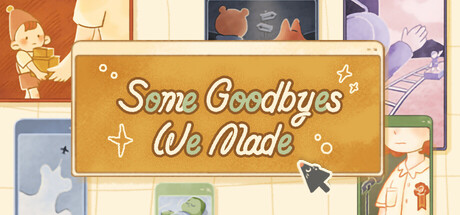
I have some memories of saying goodbye that I don't want to forget, so I turned them into 11 minigames and backed them up in this collection.
Modeled estimate, not a reported figure. How we estimate →
Media

About
Stats
All-time low is the lowest price we've recorded for this game since we started tracking it.
Languages: English, Traditional Chinese, Simplified Chinese
Engagement
Hours played at review time, across 41 reviews with recorded playtime.
Reviews
Themes across 41 recent reviews and how positive each mention is. A keyword signal, not full sentiment analysis.
positive critical· bar length = how often the theme comes up
Reviews
adorable. heart breaking. warning dont play if going through attachment/separation. it put me out.
Súper redondo. Me ha llegado al corazoncito por todo lo que cuenta pero, a decir verdad, especialmente por cómo lo cuenta. Tengo una especial predilección por cositas contenidas (y estas son cositas MUY contenidas [cumplido]) que aprovechan el medio interactivo para darle una vueltecita a cómo contar su cosa. Y aquí hay 11 ejemplos extremadamente tiernos y muy potentes.
印象最深刻的是揮手的遊戲,喜歡那種簡單卻直接的表達。 過了一陣子後再重新玩過一遍,還是覺得真的很棒。 我也喜歡遊戲中。讓我體驗開發者本身以及他們人生中的一部分, 對於那些回憶的呈現方式也都很逗趣、可愛、感人,彷彿我也跟遊戲裡面的對象告別一樣。 "再見"本身或許是一件憂傷的事,但"再見的備份"給我更多的感受是溫馨溫暖,溫柔地告訴我們"再見"並沒有關係。 希望世界上可以多一點這樣的遊戲,我衷心的希望著。 謝謝開發者,帶給我這麼清新的遊玩體驗🙏。
美丽、轻巧、有趣又真心,真是好游戏!
分段才敢玩完的遊戲, 大概知道為甚麼自己會有囤物症了 再見始終是很難的課題
Some Goodbyes We Made is a quiet, emotionally focused indie experience that uses interactivity to explore one of the most universal human moments: saying goodbye. Developed and published by Safe Flight Games and Joey Schutz, the game deliberately avoids traditional structures like progression systems, win conditions, or mechanical difficulty. Instead, it presents a curated collection of short interactive vignettes, each centered on a different kind of farewell, and invites players to engage with them at their own pace. The result is less a conventional “game” and more a reflective journey through memory, nostalgia, and the subtle emotions that accompany change. The experience is structured as a series of standalone mini-games that can be played in any order. Each vignette represents a specific moment of parting, whether it’s leaving a childhood home, drifting away from friends, losing a cherished object, or marking the end of a fleeting but meaningful phase of life. None of these moments are dramatized through heavy exposition; instead, they rely on implication, mood, and small interactions to convey their emotional weight. This understated approach allows players to project their own memories onto the scenarios, making each vignette feel deeply personal even though the situations themselves are broadly relatable. One of the game’s greatest strengths lies in its artistic variety. Every vignette uses a different visual style, ranging from pixel art and simple 2D sketches to collage-like compositions and minimal 3D scenes. These shifts are not just aesthetic experiments, but deliberate choices that reinforce the emotional tone of each goodbye. Lighter, playful styles accompany moments of youthful innocence or bittersweet humor, while more abstract or muted visuals underscore themes of loss and uncertainty. The art direction constantly changes, but it never feels disjointed; instead, it mirrors the fragmented way memories surface and fade over time. Sound design and music play an equally important role. Each vignette is paired with its own audio identity, whether that’s a gentle melody, ambient noise, or a short musical loop that repeats just long enough to settle into the player’s mind. These soundscapes often linger after a vignette ends, reinforcing the emotional resonance of the moment. The careful use of silence is also notable, as some goodbyes are allowed to breathe without music, emphasizing the quiet discomfort or calm acceptance that often accompanies real-life partings. Gameplay mechanics are intentionally simple and varied. Some vignettes involve light movement or environmental interaction, others rely on dialogue choices or symbolic actions, and a few are almost purely observational. There are no fail states, timers, or scores, which reinforces the idea that these moments are not challenges to overcome but experiences to sit with. The lack of mechanical pressure encourages players to slow down, experiment, and pay attention to small details that might otherwise be overlooked in a more traditional game structure. Despite its short overall length—often completed in around an hour—the game leaves a lasting impression. Its pacing is gentle, and the freedom to choose the order of vignettes allows players to shape their own emotional arc. Some moments may resonate more strongly than others depending on personal experience, but even the quieter vignettes contribute to the broader theme of impermanence and transition. The brevity of each segment mirrors the fleeting nature of the moments they represent, reinforcing the idea that goodbyes are often small, unremarkable on the surface, yet profound in hindsight. What sets Some Goodbyes We Made apart is its sincerity. It does not attempt to shock, instruct, or moralize. Instead, it trusts players to bring their own emotions into the experience and to find meaning in subtle interactions. This makes it especially powerful for players who appreciate introspective games that prioritize emotional authenticity over mechanical complexity. It is also highly accessible, both in terms of controls and time commitment, making it easy to recommend even to those who don’t regularly play games. Ultimately, Some Goodbyes We Made is a testament to the expressive potential of games as an art form. It demonstrates how interactivity, when used thoughtfully, can deepen emotional engagement rather than distract from it. While it may not appeal to players seeking challenge, progression, or traditional storytelling, it offers something far rarer: a space to reflect on the quiet, universal moments that shape our lives. For those open to a short, heartfelt experience that lingers long after it ends, it is a gentle and memorable exploration of what it means to let go. Rating: 8/10
滑thread發現的小遊戲 美術、音樂和每段小遊戲的時長都很剛好 喜歡在每段小遊戲結束後 會有幾個選項讓玩家自行撰寫自己的文章
This is art. The games are relatively light on "gameplay' but they still manage to convey so much beauty and so much emotion. Some of the games feel like contemplative exercises, and some are just there to kick your heart in the feels. This is very worth $5, and should give you a couple of hours of entertainment and a lot to think about. It was hard saying goodbye to this game when I finished it.
很有创意的小游戏集合。 非常喜欢每个关卡的通关文档,再见不一定都是难过的。
這是由台灣的獨立遊戲工作室-慢走遊戲所開發的溫馨小品,描述作者利用遊戲製作的能力,創作了11款關於「再見」的小遊戲,並分享給玩家們。 我為了寫評論,時隔一年多重新打開遊戲遊玩。儘管先前已經玩過一輪,卻還是在這次遊玩裡不到五分鐘就落淚了。畫風單純可愛,玩法簡易,擁有十一個不同的小遊戲體驗。內容簡單,意涵卻雋永無比,令人反覆省思,玩家能在每一種道別的回憶裡,回顧自己人生裡那些說再見的不捨。 我哭得最慘的關卡,首先是<難聽的再見>,玩家可以選擇在畢業表演時,專心地獻唱歌曲、維持音準;當然,也可以選擇在唱歌時認真感受情緒、回想與朋友相處的點滴,讓自己唱得唏哩嘩啦、泣不成聲。 另一個則是<以為的再見>,玩家與朋友在回家路上面臨即將到來的岔路,放慢腳步與思緒時,則心中會湧現許多想說卻不曉得該如何開口的思念、虧欠、感謝與祝福。 我還喜歡一個很有溫度的設計,每個小遊戲結束後,會有作者留下的備忘錄,裡頭記錄了這個小遊戲連結了作者的哪個生命經驗,以及作者對這項道別的情緒及省思。閱讀的過程,更能夠體會每款小遊戲背後的意義;而且,我也好喜歡作者對遊戲的詮釋,遊戲真的是最適合用來紀錄與練習「再見」的事情了。 總之,遊戲時間約莫1小時,全年齡向皆可遊玩。我會很想分享給兒童或青少年遊玩,因為這遊戲宛如童書,用溫柔的方式敘述了人生裡種種讓人懷念與不捨的瞬間;當然,像我一樣的成熟大人更該遊玩,因為已然歷經許多「再見」的我們,能夠有個安心的地方,好好去回憶與提醒自己如何珍惜那些深愛的人事物。
Related
Related
Trends
Modeled estimate over time, reconstructed from Steam's monthly review histogram.
Audience
Estimated from the language of this game's reviews — a proxy for where players are, not official Steam demographics.
Related
| Border Conqueror | $14.1K | 122 | 60% | $4.40 |
| World Turtles | $14.1K | 67 | 67% | $6.49 |
| Serra de Deus | $14.1K | 88 | 94% | $4.99 |
| Black Baby | $14.1K | 168 | 93% | $4.99 |
| Under Domain - Alien Invasion Simulator | $14.1K | 84 | 44% | $5.99 |
| 三国吕布传说(Legend of Lv Bu of the Three Kingdoms) | $14.1K | 72 | 76% | $6.99 |