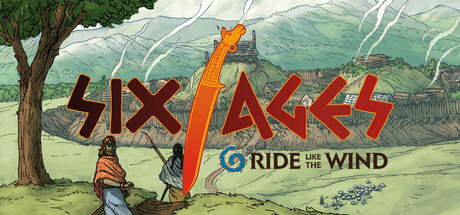
Six Ages: Ride Like the Wind, developed by A Sharp and published by Kitfox Games, is a remarkable continuation of the design philosophy that made King of Dragon Pass a cult classic. It is not merely a sequel but an evolution of the same formula—an intricate fusion of strategy, storytelling, and myth-making that turns each playthrough into a living epic. Set in the legendary world of Glorantha, the game places players in command of a clan of horse-riding nomads struggling to survive, grow, and find meaning in a land defined by gods, spirits, and ancient rivalries. Rather than offering a typical fantasy experience centered on combat or conquest, Six Ages immerses players in the cyclical rhythm of life itself—seasons pass, leaders age, alliances shift, and faith guides every decision. What makes it special is how it transforms the act of leadership into a story not just about power, but about belief, survival, and the fragile bond between mortals and their gods.
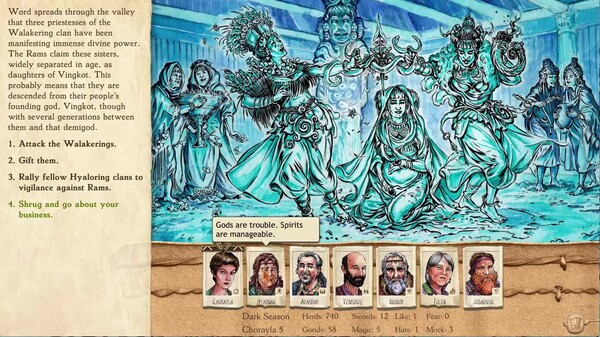
The structure of Six Ages unfolds across seasonal cycles. Each year is divided into segments—Storm Season, Fire Season, Earth Season, and others—each with specific actions available to your clan. You choose how to allocate your limited time: explore distant lands, forge alliances through diplomacy, raid your enemies, trade resources, or perform sacred rituals to maintain harmony with the spirits. Every action is meaningful, but none exist in isolation. Resources such as food, herds, magic, and reputation are interconnected, and the consequences of your decisions can ripple across years. At the heart of these systems lies the clan ring, a council of seven advisors representing different virtues, deities, and priorities. Their advice is not always consistent—one might advocate aggression, another caution, and a third might appeal to faith rather than reason. These advisors are more than gameplay tools; they embody the conflicting philosophies within your people, giving the player a sense of guiding a living community rather than commanding an obedient faction.
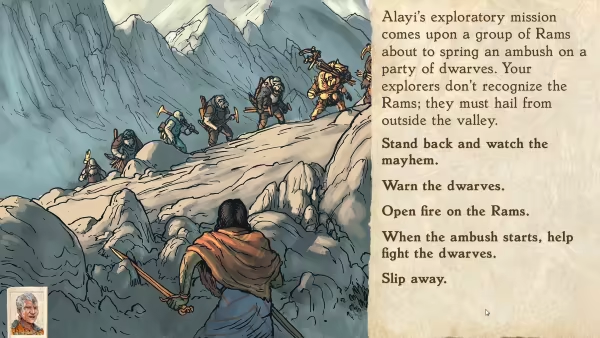
Where Six Ages truly distinguishes itself is in its narrative depth. The world of Glorantha is ancient, mystical, and brimming with mythological resonance, and the game captures that complexity through hundreds of interactive story events. These vignettes—ranging from the mundane to the miraculous—form the backbone of the experience. You might be asked to judge a theft between clans, interpret an omen in the stars, or deal with a spirit demanding tribute. Sometimes the choices seem straightforward, but each decision carries unseen moral, spiritual, or political consequences that can unfold years later. The writing is meticulous, weaving myth and emotion together in a way that feels both intimate and grand. Each playthrough becomes a tapestry of cause and effect, a chronicle of your clan’s triumphs and mistakes that feels deeply personal. Even small moments, such as sending a child to apprentice with another clan or choosing which god to honor during sacred time, can have far-reaching repercussions that subtly shape the destiny of your people.
The game’s presentation complements its depth beautifully. The art direction leans toward painterly illustrations, rich with texture and symbolism, depicting everything from sweeping pastoral landscapes to haunting visions of divine intervention. The interface is elegant and unobtrusive, allowing the player to focus on the narrative without distraction. The sound design, though understated, builds a sense of atmosphere with ambient tones and occasional bursts of music that evoke ritual, danger, and awe. Each story scene feels carefully composed, and even without animation, the visuals carry a powerful sense of life and history. This minimalist presentation allows the imagination to fill in the gaps, making the experience feel closer to reading an ancient chronicle than playing a traditional video game. The visual identity reinforces the game’s meditative quality—less about instant gratification, more about immersion in a living myth.
Mechanically, Six Ages walks a fine line between narrative and strategy. It gives players control over tangible elements such as herds, crops, trade goods, and military strength, but its true complexity lies in the intangible—faith, morale, and relationships. Magic plays a critical role, not just as a resource but as a worldview. Each god your clan worships provides blessings and expectations, and how you honor them determines both your fortune and your spiritual identity. Warfare exists, but it is not glorified; every raid and skirmish carries risk, and victory often comes at a moral or material cost. Diplomacy, trade, and ritual often yield more lasting success than brute force. The result is a game that encourages careful thought rather than domination, and patience rather than conquest. Success in Six Ages is not measured by territory or wealth but by the survival of your stories—whether your clan’s legacy endures in the eyes of gods and kin alike.
However, the game demands a great deal from its players. It does not hold your hand, and much of its world operates on logic drawn from myth rather than modern reasoning. You must learn its symbols, traditions, and cycles to truly understand how to lead. The lack of explicit tutorials means that early playthroughs often end in failure as you slowly discover how the world works. Mismanaging resources, angering spirits, or neglecting diplomacy can lead to slow and inevitable collapse. Yet these failures are part of the experience. Every downfall teaches you something about the world’s structure, every catastrophe adds texture to the lore you uncover. For players who prefer fast-paced or easily digestible systems, the game’s pacing may feel daunting, but for those who enjoy deep simulation wrapped in narrative complexity, this challenge is precisely what gives it its richness.
What makes Six Ages: Ride Like the Wind so enduring is how it blurs the boundary between story and simulation. It is not simply a game about managing numbers or making moral choices—it is about understanding an alien worldview, where the divine and the mundane intertwine. The Riders’ lives are defined by myth, and to lead them well, you must think as they do, embracing uncertainty and trusting intuition as much as logic. The world changes in subtle ways with each generation, and though your clan’s struggles may seem small compared to the cosmic scale of Glorantha, their stories carry weight because they feel timeless. Every sacrifice, every raid, every dream sequence adds another brushstroke to the portrait of a people trying to survive in a world that constantly tests their faith.
In the end, Six Ages: Ride Like the Wind is more than just a strategy game—it is a living saga that invites you to become part of an ancient mythology. Its slow rhythm, intricate storytelling, and deep cultural texture create an experience unlike anything else in modern gaming. It is a game to savor, to fail at, to return to, and to ponder long after the screen goes dark. Like the oral traditions it draws from, it rewards patience and reflection, allowing you to feel not only the passage of time but the evolution of a civilization through your choices. For those willing to immerse themselves in its world, Six Ages offers something rare and profound: a chance to lead not just a clan, but a legend.
Rating: 8/10