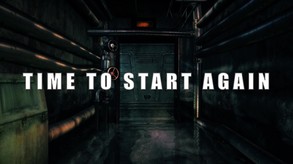
We live in a troubled world. Viruses, military conflicts - you never know what danger the world will face tomorrow. It's time to get ready now! Lead a bunker network and start developing society after a global disaster.
Modeled estimate, not a reported figure. How we estimate →
Media

About
Genres
Stats
All-time low is the lowest price we've recorded for this game since we started tracking it.
Languages: English, Russian, French, German, Simplified Chinese, Italian, Spanish - Spain, Portuguese - Brazil, Korean, Japanese, Polish, Turkish
Engagement
Hours played at review time, across 40 reviews with recorded playtime.
Reviews
Themes across 40 recent reviews and how positive each mention is. A keyword signal, not full sentiment analysis.
positive critical· bar length = how often the theme comes up
Reviews
Shelter Manager, developed and published by Hamsters Gaming, is a post-apocalyptic management and strategy simulation that places the player in charge of an underground bunker struggling to survive after a global catastrophe. Rather than focusing on moment-to-moment drama or character-driven storytelling, the game emphasizes systems, numbers, and long-term planning, asking players to think like administrators tasked with keeping an entire shelter functional under constant pressure. From the beginning, it establishes a tone of scarcity and responsibility, where every decision has consequences that ripple through the population and infrastructure of the bunker. At the heart of Shelter Manager is resource management. Players must carefully balance food production, energy generation, morale, labor efficiency, and population growth, all while ensuring that basic human needs are met. Survivors are not just passive numbers; they require housing, rest, and purpose, and neglecting any of these elements can quickly lead to declining productivity or outright collapse. The game constantly pushes the player to juggle short-term survival with long-term stability, creating a steady tension between immediate fixes and strategic investment. Expanding and organizing the bunker is one of the most engaging aspects of the experience. New rooms can be constructed and upgraded to serve different functions, such as living quarters, farms, power facilities, research labs, or military training areas. Each room contributes to the overall ecosystem of the shelter, and inefficient layouts or poor prioritization can bottleneck progress. Research plays a crucial role in improving efficiency and unlocking new options, encouraging players to invest in scientific advancement even when resources feel too scarce to spare. Beyond internal management, Shelter Manager introduces external threats and opportunities through interactions with the outside world. Players can train and equip squads to venture above ground or attack rival bunkers in search of resources. These operations add a layer of strategic risk, as sending out too many capable workers or soldiers can weaken the shelter’s internal stability, while failure in combat can result in losses that are difficult to replace. At the same time, ignoring external expansion entirely can leave the bunker stagnant and vulnerable in the long run. The game’s structure and pacing make it clear that Shelter Manager is not designed to be forgiving. The learning curve is steep, especially for players unfamiliar with management simulations that rely heavily on statistics and interconnected systems. Tutorials exist, but they often assume a level of familiarity with genre conventions, which can make early hours feel overwhelming. Mistakes are rarely trivial, and recovering from poor decisions can require significant time and careful rebalancing, reinforcing the game’s identity as a demanding strategic experience. Visually, the presentation is utilitarian and restrained. The graphics prioritize clarity and information density over atmosphere, with a clean interface designed to present large amounts of data efficiently. While this approach suits the game’s systemic focus, it may feel dry to players who value visual immersion or environmental storytelling. The aesthetic reinforces the idea that Shelter Manager is about oversight and control rather than emotional engagement or cinematic flair. Player reception reflects this divide in design philosophy. Those who enjoy deep micromanagement and the satisfaction of optimizing complex systems often praise the game for its depth and challenge. Successfully stabilizing a shelter and watching it grow into a self-sustaining operation can be deeply rewarding. Conversely, players seeking a more accessible survival experience or a stronger narrative hook may find the game frustrating or overly opaque, particularly during the early stages. Ultimately, Shelter Manager is a game that knows its audience. It does not attempt to simplify its mechanics or soften its challenges to appeal to a broad player base. Instead, it offers a methodical, numbers-driven simulation that rewards careful planning, patience, and analytical thinking. For players who enjoy managing intricate systems under pressure and don’t mind learning through failure, it provides a solid and demanding post-apocalyptic management experience. Those looking for emotional storytelling or immediate gratification, however, may find its strengths lie outside their preferred style of play. Rating: 6/10
i am idiot
Very unpolished game. A lot text bugs and some critical bugs, when game, without any explanation, just rejects to end turn.
Es un juego bastante entretenido. La única pega que le pongo es que hay demasiada información en pantalla, bastante cargante la verdad. Lo recomiendo por que te hace pasar el tiempo y te entretiene, que al fin y al cabo, es el propósito de todo juego ^^
This has the potential to be fun, but is unnecessarily complicated.
なんちゃって基地建設ゲーム! ってぐらいには遊べるけど、今のところはやり込み要素は薄め つまりはお値段相応である。 良い点としてはちゃんと基地運営として取引や研究の優先順など工夫が出来ること。 悪い点としては被害が出る周辺への探索や戦闘にまったく工夫する余地がないこと。 視点が硬直して動けなくなるバグも存在するが保存して再起動すればだいたい直る。 現状のちょい攻略 数値の設定が甘いのか労働力多めの方で高価な武器を作って売ると序盤から、かなり儲けることが出来る。 相場も変化しないので利益が継続し、武器製造に傾倒しながら食料も十分に賄えてしまう。 被害を受けると武器が減る、つまり高価な武器を下手に新兵に渡してしまうと周辺への略だ・・・探索程度の行動で 遠慮なく消耗していくので高価な武器は基地攻撃前まで温存しておくといい感じ。 シングルプレイでは頻度は低いものの、こちらの基地への攻撃はしてくるので再占領されないよう抑えとしての 防衛部隊も編成しよう。
这玩意不值50 5元差不多
wow... just wow... a turn based shelter management game. never saw such a bad game concept before.
I got this on sale so it seems worth it enough to me. Good for a management bunker game to play in small to medium doses, though it does feel more repetitive to be longer. It becomes a game of decisions and strategy, which is what it aims to do I believe so it achieves that! You have to decide each turn what to produce, place, or upgrade, or can just click a couple turns to get the materials you need to produce more stuff. The raids themselves I think could use some more clarification or balancing in terms of how the surrounding bunkers react to your own growth. I'll be trying to get my army built up to take a bunker on, only to find out they increased theirs right along with me so it makes it trickier. There's probably a strategy to it that I need to figure out still so there is that to come back to. All in all, I can see why people say it can feel kinda mobile gaming-esque but it is entertaining for those random itches for a bunker management game. If you want more resource and production management, this is the game for that. If you want more personalization of the residents and getting to experience the combat yourself, then Fallout Shelter would be your game. Two similar-ish but still different ways to scratch that itch.
Non mi ha dato per niente un bello stimolo per avanzare. Inizia con dei dialoghi ironici, uno stile in cui si vuol sdrammatizzare il disastro che si sta vivendo, quindi si fa un tutorial che è si,abbastanza dettagliato,ma che in alcuni passi tende un pochino a perdersi e/o esser troppo lungo. Poi turni. Un dannato gioco a turni in cui spesso si dovrà spammare il passaggio del turno per tirar su sufficienti risorse. Tante barrette da regolare, per avere più risorse da un lato piuttosto che dall'altro, per spedire i soldati a raccogliere cose e/o per creare ulteriori truppe. Non mi ha preso,non mi ha divertito, non ho trovato un motivo per restarne attaccato,mi spiace. Forse mi aspettavo un discendente di Fallout Shelter, molto più frenetico e gradevole,forse è solo la storia dei turni che a me ha rovinato tutto...chissà. https://youtu.be/goVHh9j4Mt0
Related
Related
Trends
Modeled estimate over time, reconstructed from Steam's monthly review histogram.
Momentum
Pace estimated from the game's recent review growth (our daily snapshots) at its own sales-per-review ratio — a momentum signal, not booked sales.
Audience
Estimated from the language of this game's reviews — a proxy for where players are, not official Steam demographics.
Related
| The Tiny Bang Story | $117K | 6.6K | 87% | $4.99 |
| Blues and Bullets | $117K | 1.4K | 62% | $4.99 |
| Anachronox | $117K | 634 | 75% | $6.99 |
| Dredgers | $117K | 504 | 89% | $11.99 |
| Timberman | $117.1K | 11.2K | 93% | $0.99 |
| The Spatials | $117.1K | 329 | 69% | $9.99 |
Related
| 7 Days to Die | $425.3M | 403.5K | 87% | $44.99 |
| Mount & Blade II: Bannerlord | $309.8M | 293.9K | 88% | $49.99 |
| Squad | $166.3M | 240.4K | 81% | $39.99 |
| Satisfactory | $164.4M | 275.8K | 97% | $27.99 |
| Kerbal Space Program | $154.7M | 144.7K | 96% | $39.99 |
| RimWorld | $149.6M | 205.9K | 98% | $34.99 |