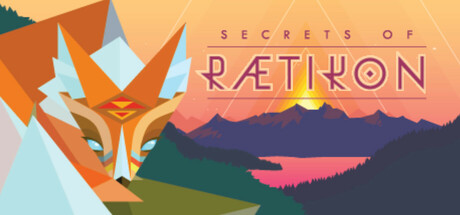
Ruthless bird versus bird action. Wild animals and the artefacts of a mysterious ancient culture. A game full of challenge and discovery – unlike anything you've played before.
Modeled estimate, not a reported figure. How we estimate →
Media

About
Stats
All-time low is the lowest price we've recorded for this game since we started tracking it.
Languages: English
Engagement
Hours played at review time, across 41 reviews with recorded playtime.
Reviews
Themes across 41 recent reviews and how positive each mention is. A keyword signal, not full sentiment analysis.
positive critical· bar length = how often the theme comes up
Reviews
I have been in a pickle recently with my backlog battle. Having hit a wall of decision paralysis, I just didn't know—or couldn't decide, rather—where to take my battle next and what I should play. Well, they say simple solutions are almost always the best, so I thought it would be a good idea to look at my Steam beginnings. My only purchase in 2019, and my first Steam purchase overall, was [i]Secrets of Raetikon[/i]. I can't remember what drove me to buy this at the time, or what my motivations were, but here I was, installing it. And it made sense: if I could complete the first game I bought on this digital platform, it would make my journey feel much more... I don't know... coherent? Maybe. Or maybe I just subconsciously wanted a firm starting point. [i]SoR[/i] was a disappointing experience. The whole thing feels like a copy of [i]Chasing Aurora[/i], a Wii U exclusive created by the same developer that, frankly, not many people played. Assets are blatantly reused—some slightly touched up, but others lifted entirely. I am really not a fan of this approach; it just feels lazy to release almost the same game under a different name. It starts with your main character—a bird—falling from the sky right into a very short and simple tutorial level. It's here that [i]SoR[/i] fails to make a good first impression. It doesn't explain most of the mechanics very well (if at all), so you're left to figure things out for yourself. It's not a [i]metroidvania[/i]—it's a 2D flying exploration game. Exploration is one of my favorite mechanics in gaming, but here it misses the mark completely. You are thrown into small areas with very little room to actually [i]stretch your wings[/i], both literally and figuratively. What's the point of flying if you're in a cage? [url=https://store.steampowered.com/app/331870/AER_Memories_of_Old/][i]Aer: Memories of Old[/i][/url] did the same flying and exploration concept amazingly well. While it also plays out in a relatively small world, it utilizes its mechanics flawlessly. Enough with the metaphors. The second issue I have with this [i]faux[/i] exploration is that the game essentially doesn't want you to explore. As soon as you venture out and try to make your own way, you'll start encountering bugs that soft-lock your progress. This is exactly what happened to me and many other players in the Evil Tree/Swamp area. The developers were aware of this issue but failed to patch it or do anything to resolve it. There are more locations like this in the game, too. I actually had to manually edit one of the game files to change my character's coordinates so I could progress without starting a new save file. No player should ever have to do that in any game. The backtracking is a pain, too. Right at the beginning, you unlock some sort of hub world where you need to bring back shards to start up an ancient machine. Obviously, the further you get in the game, the further you have to backtrack. There are no shortcuts unlocked along the way, and every time you grab a shard and make your way back, all the animals attack you, trying to steal it from you. Yes, it is explained narratively once you reach the ending, so I understand why it was happening, but it is such a poorly implemented mechanic that it enrages rather than engages. It is short—you need 4 hours max to beat it—but my oh my... it's definitely not what I expected.
i honestly dont get why yall hate this game its amazing
Cute game, nice style. Finally came back to finish it after years and years.
Striking presentation, tedious gameplay Oh what you want me to do combat with those controls now? Nah
Secrets of Rætikon is an unconventional indie action-adventure developed and published by Broken Rules that places exploration, movement, and atmosphere far above traditional goals such as combat mastery or narrative exposition. Set in a stylized alpine wilderness inspired by the real Rätikon mountain range, the game casts the player as a bird navigating an open environment filled with ancient machines, wildlife, and environmental mysteries. Rather than guiding players with explicit objectives or scripted storytelling, the game encourages curiosity and experimentation, asking players to learn its systems organically and piece together meaning through observation and interaction. The defining feature of Secrets of Rætikon is its flight system. Movement is not abstracted into simple controls; instead, flight is governed by momentum, gravity, and physics-based interactions. Flapping consumes stamina, gliding preserves energy, and mastering the balance between the two becomes essential for traversal. This system gives flight a tangible sense of weight and effort, making movement itself a core challenge. Soaring across valleys, skimming lakes, or weaving between trees feels expressive and physical, but it also demands patience and practice. Early moments can feel awkward or punishing, yet over time the controls begin to feel intuitive, turning traversal into a skill rather than a convenience. Exploration unfolds across a broad, interconnected world divided into regions that each introduce new environmental dynamics and hazards. The primary progression loop involves collecting glowing shards scattered throughout the landscape and using them to activate ancient structures that unlock new areas. There is no mini-map or waypoint system, and the world rarely offers explicit direction. Instead, landmarks, visual cues, and memory become the player’s navigational tools. This design fosters a strong sense of discovery but can also lead to disorientation, especially when objectives require returning to previously visited locations while carrying fragile items. The game’s ecosystem plays an active role in shaping moment-to-moment gameplay. Wildlife is not simply decorative; animals react dynamically to your presence and to each other. Some creatures are passive, others hostile, and many can interfere with your objectives by stealing carried objects or attacking at inopportune moments. These interactions reinforce the idea that the world is not built solely for the player’s convenience, but they can also introduce frustration when repeated interruptions slow progress. Combat, such as it is, remains secondary to evasion and environmental awareness, emphasizing survival and adaptability rather than domination. Visually, Secrets of Rætikon is striking and distinctive. Its low-poly, paper-like aesthetic gives the world a handcrafted quality that feels both serene and otherworldly. Colors are muted but expressive, lighting shifts subtly with time and weather, and the overall presentation evokes a sense of quiet reverence for nature. The art direction does much of the emotional storytelling, conveying isolation, mystery, and scale without relying on dialogue or exposition. Complementing this is an ambient soundtrack that blends gently into the background, enhancing immersion without demanding attention. Narrative elements are intentionally abstract. The ancient machines scattered throughout the world hint at a lost civilization or forgotten purpose, but answers are never clearly articulated. Story emerges indirectly through environmental design and player inference, leaving much open to interpretation. For some players, this ambiguity adds depth and invites reflection; for others, it can feel unsatisfying or underdeveloped, as there is little concrete resolution or narrative payoff beyond completing the mechanical objectives. The game’s pacing is one of its most divisive aspects. Tasks that require transporting shards or objects across long distances can become repetitive, particularly when navigation errors or enemy encounters force restarts. Without fast travel or clear guidance, progress often depends on patience and persistence. These design choices reinforce the game’s contemplative tone but can clash with players expecting smoother progression or more conventional challenge curves. Despite its rough edges, Secrets of Rætikon stands out for its ambition and identity. It is a game more concerned with evoking sensation and mood than with delivering constant rewards. It asks players to slow down, observe, and engage with its systems on their own terms, accepting frustration as part of the journey. When its elements align—when flight feels fluid, the landscape opens up, and exploration leads to unexpected discovery—the experience can feel quietly transcendent. Ultimately, Secrets of Rætikon is best suited for players who appreciate experimental design and atmospheric exploration over polish and structure. It is not a universally accessible game, nor does it aim to be. Instead, it offers a distinctive, sometimes challenging meditation on movement, nature, and discovery, rewarding those willing to meet it halfway. For players drawn to artistic indie experiences that prioritize feeling over convention, it remains a memorable and singular journey through a world that resists being fully understood. Rating: 6/10
An exploration game with great art. Lots of backtracking without a map which might not be for everyone.
The game had lots of potential, but the ending was horrible. The runes you get also do not auto-translate the stones, meaning for every one of them you'd have to manually cross-reference and translate.
Several years later and still poor game mechanics.
Cool art design, other than that the game is not fun. Gameplay is boring and you can get stuck in the environment leading to frustration. Not worth it in my book, even on sale.
penis
Related
Related
Trends
Modeled estimate over time, reconstructed from Steam's monthly review histogram.
Audience
Estimated from the language of this game's reviews — a proxy for where players are, not official Steam demographics.
Related
| Vampire: The Masquerade - Redemption | $125K | 988 | 88% | $5.99 |
| GeoDepths | $124.9K | 304 | 87% | $16.99 |
| Forsaken Remastered | $124.9K | 296 | 87% | $19.99 |
| Modbox | $125K | 220 | 86% | $14.99 |
| Code of Princess | $125K | 330 | 56% | $14.99 |
| Garden In! | $125K | 428 | 86% | $9.99 |
Related
| 7 Days to Die | $425.3M | 403.5K | 87% | $44.99 |
| Mount & Blade II: Bannerlord | $309.8M | 293.9K | 88% | $49.99 |
| Palworld | $279.6M | 445.8K | 94% | $20.99 |
| Clair Obscur: Expedition 33 | $263.7M | 178K | 95% | $47.99 |
| The Forest | $254.8M | 678.5K | 96% | $19.99 |
| Ready or Not | $238.1M | 338.9K | 78% | $49.99 |