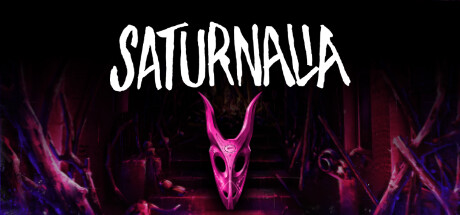
A Single-Player Survival Horror Adventure: play as a cast of characters exploring an isolated village haunted by an ancient ritual—but beware, its labyrinthine roads will change each time you lose all your characters.
Modeled estimate, not a reported figure. How we estimate →
Media
About
Genres
Stats
All-time low is the lowest price we've recorded for this game since we started tracking it.
Engagement
Hours played at review time, across 42 reviews with recorded playtime.
Reviews
Themes across 42 recent reviews and how positive each mention is. A keyword signal, not full sentiment analysis.
positive critical· bar length = how often the theme comes up
Reviews
The style in this is strong enough that it makes me disappointed that it's somewhat lacking in substance. It has a lot of good in it but it doesn't feel fully formed. Everything from characters (likeable but not deep enough to really demand narrative gravity), to the monster (threatening in design but not memorable in concept or spectacle), to ideas like the town shifting every time you get a gameover (I never got a real gameover once, but my character did get stuck under the map at one point, and at some points you just have to manually shift the town because you run out of resources), to just the general level of jank that the game has (plenty) make this feel like a minor game in my eyes. And rather than phrase that as a criticism, I think what I really feel is that I like the game enough and I admire all the things it's trying to do and be that I wish I could see a fully formed, major version of it. I wish I could see this Dario Argento visual style and a town-centric mystery horror narrative like this on the scale of like, [i]Pathologic[/i]. But I appreciate and really enjoyed the game that the devs made, which is still quite good, even if it doesn't rise to great heights. I also have to express gratitude as a very dizzy person for the amount of accessibility options this game has for motion sickness. If only every dev team could be so considerate.
This is a criminally underrated game
Good, creepy, queer, italian
Saturnalia, developed and published by Santa Ragione, is a survival horror adventure that distinguishes itself through atmosphere, structure, and artistic intent rather than conventional genre thrills. Instead of relying on frequent jump scares or combat-driven tension, the game builds unease slowly and deliberately, drawing players into a decaying, folklore-soaked village where fear comes from disorientation, uncertainty, and the sense of being watched. Set in the isolated town of Gravoi, Saturnalia presents horror as something cultural and psychological, rooted deeply in place, memory, and ritual. The game’s structure is one of its most defining features. Saturnalia blends survival horror with roguelite elements, meaning the village subtly reshapes itself each time all playable characters are lost. Streets change, pathways rearrange, and the player is forced to relearn the geography of Gravoi with every failed run. This design reinforces the game’s themes of confusion and instability, turning navigation itself into a source of tension. Familiar landmarks become unreliable, and even returning players are never fully comfortable. Progress is less about memorizing a single optimal route and more about understanding systems, shortcuts, and narrative connections that persist across runs. Players control multiple characters, each with their own background, motivations, and personal stakes tied to the events unfolding in Gravoi. Rather than functioning as interchangeable avatars, these characters offer different perspectives on the village and its secrets. Their stories are not delivered through heavy exposition or cutscenes but are uncovered gradually through environmental details, documents, and contextual interactions. This fragmented approach to storytelling mirrors the fractured mental and emotional state of the town itself, asking players to actively piece together meaning rather than passively consume a plot. Exploration forms the backbone of the experience. Gravoi is dense, claustrophobic, and deliberately confusing, with narrow streets, locked doors, hidden passages, and interconnected spaces that reward careful observation. Puzzles are integrated naturally into the environment, often tied to cultural symbols, rituals, or practical obstacles rather than abstract logic challenges. Solving them feels like uncovering pieces of the village’s history rather than manipulating game mechanics, which strengthens immersion and narrative cohesion. Threats in Saturnalia are used sparingly but effectively. A lurking presence stalks the village, and its unpredictability keeps players in a constant state of alertness. Encounters are tense precisely because they are not frequent; the game understands the power of anticipation. Survival is rarely about confrontation and more about evasion, planning, and restraint. Limited resources, such as light sources, reinforce vulnerability and encourage thoughtful movement rather than reckless exploration. Visually, Saturnalia is striking and unmistakable. Its hand-drawn aesthetic, inspired by sketch art and stop-motion animation, gives the game a dreamlike, almost storybook quality that contrasts sharply with its oppressive tone. Characters move with an unnatural fluidity, and environments feel simultaneously beautiful and unsettling. Lighting, color, and shadow are used masterfully to guide the eye while maintaining a persistent sense of unease. The art style is not merely decorative; it actively supports the game’s themes of distortion, memory, and decay. Sound design further deepens the atmosphere. Ambient noises, distant echoes, and subtle audio cues create a constant sense of tension without overwhelming the player. Music is used sparingly, allowing silence and environmental sounds to do much of the work. This restraint makes moments of heightened audio impact more effective and keeps the focus on immersion rather than spectacle. Saturnalia does demand patience. Its lack of explicit guidance, combined with its shifting map and layered narrative, can be frustrating for players accustomed to clearer objectives or linear progression. Some puzzles and story beats require careful attention and a willingness to experiment, and the game rarely rushes to reward the player with immediate answers. However, this deliberate pacing is central to its identity, reinforcing the feeling of being trapped in a place that does not want to be understood. Overall, Saturnalia is a bold and thoughtfully constructed horror experience that prioritizes mood, culture, and psychological tension over traditional scares. It is a game that trusts the player to engage deeply, to observe, to remember, and to endure uncertainty. While its unconventional structure and slow-burning design may not appeal to everyone, those willing to meet it on its own terms will find a haunting, memorable journey that lingers long after play ends, much like the village of Gravoi itself. Rating: 8/10
The game's still a bit buggy but it's really worth a shot: this game is set in an original setting, rural Sardinia, and it follows the story of 4 people all connected to the village because of different reasons, and it's your job to find out why! The game has a a great story and the artstyle is very pretty. You won't be disappointed by the experience, I'm sure it'll hook you :)
J’ai eu beaucoup de mal à mettre un avis négatif sur ce jeu, parce que j’aime profondément le principe même des petits studios indépendants qui mettent tout leur cœur dans des jeux de niche. Mais là, je préfère prévenir les joueurs et joueuses qui ne seraient pas prêts à vivre la même galère que moi. Saturnalia, développé par le studio italien Santa Ragione, est sorti à la base à l’automne 2022. Le jeu avait attiré pas mal de curiosité avec son style visuel crayonné ultra singulier et son mélange étrange entre horreur, folklore sarde et gameplay de type exploration/survie. Beaucoup le qualifiaient de “perle indé expérimentale”, et clairement, l’ambition est là. Sauf que dès mes premières minutes, le jeu m’a stoppé net : impossible de bouger. Ce n’était pas un souci de clavier AZERTY, non, mais un vrai bug lié au moteur. Après avoir cherché sur Internet, j’ai trouvé un message d’un des devs sur Steam expliquant qu’il fallait limiter son affichage à 120 FPS maximum (dans le jeu et dans Windows sinon le moteur pète un câble). Apparemment, ce n’est pas vraiment corrigeable. Franchement, un petit message d’avertissement ça aurait été bienvenu… Ensuite, j’ai eu deux gros blocages : une fois, mon perso s’est retrouvé coincé sans solution (même en relançant), j’ai dû “réinitialiser le village” pour débloquer l’aventure. Et une autre fois, c’est un compagnon IA qui s’est coincé dans un mur. Pour un petit jeu indé, on peut tolérer des bugs, mais là ça m’a clairement sorti de l’ambiance. Et justement, l’ambiance… c’est là que le bât blesse. Je n’ai jamais eu peur. Oui, c’est sombre, stylisé, bizarre à souhait, mais le monstre n’est jamais vraiment flippant. On dirait un vieux Slender Man remis au goût du jour. Le jeu cherche à instaurer de l’angoisse, mais pas à provoquer de vraies sueurs froides. Le lore, lui, est à la fois trop confus et trop superficiel : y a de bonnes idées (trauma familial, rites anciens, secrets du village), mais rien n’est vraiment creusé. L’écran des indices et des liens devient vite un bazar incompréhensible, et les multiples personnages rendent le tout encore plus brouillon. Résultat : j’ai juste voulu finir le jeu, sans réelle curiosité pour comprendre davantage. Côté bon points, la direction artistique déchire. Le style graphique crayonné, les ombres, les textures, le chara design tout est original. L’audio aussi, bien qu’un peu vide par moments (peut-être voulu pour renforcer la tension), contribue à cette identité unique. Mention spéciale aux chuchotements dans le menu principal ambiance ASMR, ça fera sourire certains et crier d’agacement chez d’autres mdr. Le gameplay repose sur un mélange de die & retry, d'exploration pour la recherche d’indices et de petit loot et d’un système de village procédural qui change à chaque “mort”, histoire de vous perdre un peu plus. C’est malin sur le papier, mais j’aurais aimé plus d’énigmes. Là, j’en retiens à peine une. Je pense aussi que ma déception vient de mes attentes : je m’attendais à un jeu narratif linéaire façon “couloir flippant avec métaphores psychologiques”, et Saturnalia est tout sauf ça. C’est expérimental, organique, un peu pété, et parfois frustrant. Mais bon, un jeu d’horreur italien bourré de personnalité, dans un folklore sarde rarement exploré, ça mérite quand même le coup d’œil pour les curieux. Rien que pour ça, respect à l’équipe.
I'm so glad I played this. You know how sometimes you have a brain itch that needs to be scratched with good thinking? This game does that. It's so satisfyingly challenging but every time I was going to give up I ended up figuring things out. Highly recommend if you don't mind being chased and need a good game to get you thinking.
我从来没有玩过有这么丰富机制的恐怖游戏,不是说怪,而是说玩家能“生存”的手段非常多。 游戏中最大的一个特色就是多角色,不是说每个角色单独出安全屋解密,死一次换一条命,而是所有角色同时在一个地方,当然你也可以一个人去探索,但游戏是可以让队友跟随的,在安全的时候你可以对话来切换角色。 而这个多角色的玩法也就带来了很多有意思的设计,除了可以面对面对话换角色,你也可以通过游戏中的 电话 去切换,但在此之前你需要将一个角色“停”在一个电话旁边,然后再打电话回安全屋让安全屋里面的角色接听,因此来换角色,这样一来游戏的玩法思路就丰富了很多,例如你需要去某个地方打开一个电闸,但你现在离电闸很远,你可以找一个比较近的电话去换角色,让另外一个角色去处理,然后再切回来。 当一个角色被抓了之后,你依然可以去拯救那个角色,这其实有点像黎明杀机,时间过得太久,被绑架的那名角色就会被献祭掉。 游戏的整体框架其实算“类奶奶”,即箱庭式地图逃脱,但游戏同样有个非常亮眼的地方,随机地图。这点跟固定地图随机物品的《奶奶》相比,可玩性和挑战性就大了许多,游戏也有多种逃脱手段,另外游戏的不同主角也有不同的技能,这点非常重要,也就是你想走某个路线,需要某些特定的角色才能去解决。 还比较有意思的是不同的主角面对同一个互动都有完全不同的对话,这样丰富了角色的刻画 总之这游戏作为类奶奶这块的游戏,可玩性是非常足的,游戏的玩法套路还远不止我说的这些,非常推荐。 (至于为什么我的游玩时间那么短,是因为这游戏我原本是在switch上玩的)
Bought this game to support the developer after their recent title, Horses, was banned from Steam. Go over to GOG and check it out.
A chilling and artistic horror experience! Though I felt some game mechanics were under-telegraphed, with trial and error (and a few guides) I muscled through the tough sections and was treated to a game that goes all in on its tone and setting, and does a great job keeping the player feeling alternately clever and terrified. All horror game fans should give Saturnalia a shot 💪 (Not to mention, Passacaglia Dei Saturnalia goes the hardest of any track in game music history!!)
Related
Related
Trends
Concurrent players on Steam, sampled daily since tracking started.
Momentum
Pace estimated from the game's recent review growth (our daily snapshots) at its own sales-per-review ratio — a momentum signal, not booked sales.
Audience
Languages: English, French, Italian, German, Spanish - Spain, Simplified Chinese
Estimated from the language of this game's reviews — a proxy for where players are, not official Steam demographics.
Related
| Drunken FC | $4.8K | 70 | 81% | $3.49 |
| Pembrey | $4.8K | 59 | 58% | $3.99 |
| Cycle 28 | $4.8K | 59 | 81% | $0.67 |
| Isle of Skye | $4.8K | 147 | 67% | $1.46 |
| the white chamber | $4.8K | 99 | 99% | $2.99 |
| Undholm | $4.8K | 86 | 64% | $1.99 |