
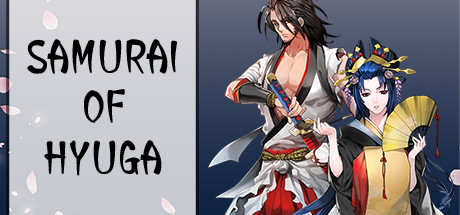
Samurai of Hyuga is a brutal, heart-pounding interactive tale. Prepare to enter the land of silk and steel, where fantasy clashes against grim reality, and where the good guys don't always win in the end. It's a harsh world with tough choices at every turn. Good thing you're the toughest ronin around.
Modeled estimate, not a reported figure. How we estimate →
Media
About
Stats
All-time low is the lowest price we've recorded for this game since we started tracking it.
Languages: English
Engagement
Hours played at review time, across 40 reviews with recorded playtime.
Reviews
Themes across 40 recent reviews and how positive each mention is. A keyword signal, not full sentiment analysis.
positive critical· bar length = how often the theme comes up
Reviews
I gotta say this has a little bit of everything you need in an epic adventure story. You start out as a bodyguard for a small child, who's kinda like your moral compass. Later you're given an important mission, that could have dire consequences for all of Japan. Throughout the adventure you'll learn more about the main character's dark past. You'll have to decide if you want to be a better person, use the darkness to accomplish your mission, or run back into the darkness. Pros: -Good twists. -Collect a group of misfits. -The author's sense of humour blends perfectly with the serious situations you're put in. -Pick your own spirit animal. 5-10 choices depending on your stats. -I became very sympathetic to the ronin I played. There are a lot of moments that really humanized him. Being handed a letter then admitting "I can't read" broke my heart. -It's rewarding to see how much your character has grown throughout the adventure. -Felt a lot longer than 140,000 words. Neutral: -You really have to pay attention. There's times when the game will ask what you said or did in earlier chapters. It's great when you recall these moments, it really shows how your character has grown. But it can be annoying if you rushed through the earlier chapters and don't remember. Cons: -The mechanics. So you don't really have skills, you have 5 personality traits. Your decisions in the earlier chapters will determine your personality. And you're stuck with that, so choose wisely. There's still decisions to make, but fewer of them and their effectiveness will depend on your personality. It's kinda like a guessing game. Does the author think this decision corresponds to this personality trait, etc. A lot of the time you're not given a choice. For example: Your personality is calculated so you will respond to this situation in a calculated way. -There are a few decisions that don't rely on your stats at all, you just pick what you want. Overall: -I really don't like the mechanics, but the story is solid. So solid that's it's worth full price.
Reviewing (mostly) every game (or DLC) in my library, part 503: ⭐️⭐️⭐️⭐️⭐️⭐️⭐️⭐️☆☆ (8/10) [i] Samurai of Hyuga[/i] is one of the more talked about games in the Interactive Fiction community. I haven't read it due to lack of time and lack of interest in the subject matter, but after getting a free copy (thank you, staff!), I found myself finishing the game in one sitting because [i]Samurai of Hyuga[/i] grabbed me in a chokehold through my computer screen. It moves at a frantic pace and is truly action-packed, throwing the reader into a mystical Japan—including swords, ronin, and demons. While the prose is hit-or-miss as it's rather anime-esque, I found myself settling in nicely. While some players don't like the mechanics, I found them to mold the main character into a living protagonist easier. I'll definitely be checking out the rest of the series. [b][h2]Pros:[/h2][/b] ✅ Excellent pacing. [i]Samurai of Hyuga[/i] doesn’t waste time. The pacing is snappy, the exposition never drags, and the whole adventure feels like stepping into a gritty, myth-touched, Japanese-inspired fever dream. Most writers would drop paragraphs on exposition, but Connell cleverly avoids this trap by revealing the key ideas slowly, and only what the reader needs to know. For example, you learn about spirit animals early on. Instead of learning about what spirit animals represent, or if they're real or not, Connell saves that for later, when the reader has more interaction with spirit animals. ✅ [i]Samurai of Hyuga [/i]is at its strongest when it leans into its writing. The prose has a clarity and confidence, even when it's cheesy. Action sequences, in particular, are handled with a level of precision and momentum that’s rare in interactive fiction. Usually, my eyes glaze over from boredom, but reading about your ronin cutting down men feels fast without being rushed, descriptive without being florid, and consistently cinematic. Even quieter scenes maintain that sense of sharp pacing. There’s never a moment where the story drags its feet or gets lost in backstory. It knows exactly what kind of tale it wants to tell and moves with the rhythm of a well-edited novel. ✅ The ronin protagonist ends up being one of the most memorable parts of the experience. Instead of being a blank slate, the ronin is a fully realized character with flaws, fears, and a human sense of weariness. They have a defined backstory and semi-defined personality. Honestly, the ronin is kinda ... an ass. But I appreciate it! Still, the game quietly slips in moments that make them feel real: a confession of illiteracy, a rare moment of vulnerability, a reflexive act of kindness they didn’t intend to show. Bby the end of the book, it’s hard not to feel like you’ve watched someone change. ✅ The supporting cast. They're a lively mix of outsiders (weirdos), and each brings something distinct to the narrative. They challenge the ronin, irritate them, humanize them, and occasionally drag them into trouble, but they always move the story forward. Even though the bonding period was short, I found the group's dynamics to be ... well, dynamic. Each character had their own mini-arc, as well. ✅ The setting is a blend of Japanese-inspired fiction and mythological horror. I didn't read the store description closely enough and was surprised by the strong mythological plot points. However, I found myself warming up to it! Again, rather than dumping lore on the reader, the game reveals its world through strange creatures you encounter on the road. I found it refreshing how there wasn't any questioning if demons or oni were real; they were real. The question is: how do you handle them? ✅ I'm a big fan of the attunement system and spirit animal concept. It adds a psychological texture to the narrative and reactivity. Instead of relying on traditional stats (like charisma or strength or agility), the game ties your actions to internal attitudes: calm, stoic, ruthless, impulsive, charming, or perverted. You get to pick a spirit animal that matches your personality. And when your choices align with your established attunement, the story gains a sense of thematic cohesion, almost like you’re reinforcing the ronin’s identity rather than cherry-picking reactions. Instead of feeling like my player agency was removed, I found it reinforced. ✅ I'm not sure of the importance, but I liked how twice, the game asked me to recall a choice I made. And of course, I remembered :) [b][h2]Cons:[/h2][/b] 🟥 The personality-based mechanics can feel restrictive, especially in the later chapters. Once your core traits settle into place, the story often assumes your ronin must respond in a way consistent with those traits (e.g. I had a Calculating trait, so I responded in a calculating way often). Moments where you want to pivot emotionally or morally may simply not be available because your character is already “locked in.” 🟥 It's rather difficult to understand what choice raises what stat. 🟥 For all its strengths, the story is ultimately linear. While you can adjust tone, relationships, and reactions, the actual plot beats remain fixed. Players who want major branching paths, alternate endings, or dramatically divergent routes might find the interactivity more limited than expected. 🟥 For all the humor and wackiness, the game does lean heavily into intensity: trauma, angst, self-destruction, guilt, that sort of thing. I can see the narrative getting darker in the future. While well written, it may come as a surprise to some readers. 🟥 Ends on a cliffhanger! Nooooooooo! [hr] If you enjoyed this review, please check out my curator page to find more: [url=https://store.steampowered.com/curator/45814768-Verdict-Play-or-Pass/]Verdict: Play or Pass. [/url] Also, please leave a like and visit [url=https://steamcommunity.com/groups/Indie_Gems]IndieGems[/url] and our YouTube channel for more reviews like this one. [/hr]
I think it's pretty bad. Plenty of silly anime tropes. Characters with no depth. You don't actually play the protagonist, they have their own thoughts and concerns regardless of what you think as a player. To be fair, maybe the sequels get better, I don't think I will try them out, tho.
ein lesespiel was insgesamt in ordnung für zwischendurch ist. der preiß des spiels ist aber meiner meinung nach zu hoch.
Probably one of the best CoG series out there. Once you get used to some of the strange writing quirks presented in this series, the books have a phenomenal sense of tone. Pacing is great and the books don't waste your time with dry dumps of exposition thanks to how the narration is presented. The main character exudes an amazing charm no matter what direction you take them in and allows for a unique vibe as the series goes on. Wholly recommend.
I feel like the author started writing with the intent of an anime, comic, or visual novel; and it still came out just as great as a text-based choose-your-own-adventure. It's a little bit linear for book 1, as far as I've played, but it has charm. It has humor. It had genuinely likable characters. That's everything I ask for in an actual novel, and it's something this game has.
i like it lots tbh
[h1]FANFIC FOR WEEBS[/h1] Samurai of Hyuga had been on my radar for quite some time. I was curious to find out why this particular Interactive Fiction series generates such polarizing opinions. On paper, it sounds really interesting - a fantasy setting inspired by real-world history, cool mythological elements, romantic buildup, and the option to play as a complete ♥♥♥♥♥♥♥. After almost five hours and finishing the first book, I finally get it. I understand why so many people either love it or hate it. Samurai of Hyuga feels like fanfiction-level writing with a main character who too often comes across as a self-insert. You can tell there’s genuine passion behind the text, and everything makes sense in its own weird way, but I just couldn’t take anything that happened seriously (more on that later). [b]In my opinion, this simply isn’t a good story, and I can’t recommend it.[/b] It’s a very specific game aimed at a very narrow subset of weebs and anime fans. Is that a bad thing? Hell no. If you like it, you like it. It’s just not my thing. [b]World[/b] If you were excited about historical Japan being the setting for this game, then I have some bad news for you. Samurai of Hyuga takes place in a fantasy land heavily inspired by Japan, but it’s not actually Japan. The game borrows various historical elements and mixes them together into this weird mumbo-jumbo. Maybe I just expected a bit too much from it? [b]Story[/b] Samurai of Hyuga tells the story of a ronin hired to protect a young noble child named Masashi. Unfortunately for us, it doesn’t take long for everything to go wrong, and we quickly get dragged into another mission - hunting down and killing various demons. The book ends with [spoiler]us killing the first demon from our "list", followed by an annoying cliffhanger where someone from our past tries to kill Masashi[/spoiler]. It’s not the most interesting plot in the world, but I’ve definitely seen worse. This game is first and foremost an "action-adventure" in IF form, so you should adjust your expectations accordingly. [b]Writing[/b] First things first: the choices and dialogue in this game can be both incredibly dumb and unbelievably cringy. You can tell the author is actually capable of writing decent prose, but he has this bizarre tendency to throw immersion-breaking modern speech into completely random places. Random example: “I still had a chance with this exotic-looking babe.” Bro... why? And adding "baka" or "gomenasai" to the dialogue definitely doesn’t help either. Even weebs should realize that this is a bit too much, right? There’s also one particularly annoying moment that really stuck with me. Why even include this random option to spare a fish, only to immediately tell me afterward that this game is for mature audiences and I’m apparently not allowed to do that? Just don’t give me the option in the first place instead of pulling that kind of nonsense. [b]Characters[/b] You have the option to play as either a male or female character. You can also change your sexual preference, which in turn gender-swaps the romanceable options (and Masashi as well...) to match your choice. We don’t know much about our backstory. We know we were an orphan, and that a lot of dark things happened before "now", but the game doesn’t spend too much time filling in the details (though from what I’ve seen, later books focus much more on it). Surprisingly, the secondary characters are actually not bad, and I can see why someone might stick around for a second or even third book just to see what happens with them. [b]Stats[/b] Not gonna lie, the stat system in this game is just weird. It makes some sense at the beginning, when you’re defining your character through choices. For example, you can play as an unashamed pervert and get some funny dialogue, or you can be a chivalrous protector of Masashi. But the moment the attunement system gets introduced, things start getting annoying. It forces you to pick answers that match your character’s established personality, otherwise you lose attunement. Losing too much attunement can even lead to a bad ending. This basically kills the ability to choose dialogue purely for roleplay, because the stat system will punish you for it otherwise. [b]Audio & Visuals[/b] This game is purely text-based, so there’s not much to comment on in terms of audio or visuals. Still, I’ll leave my usual note for interactive fiction: even basic visuals and audio could make these games more accessible and appealing to a wider audience, similar to what Roadwarden or Wayfarer have done. [b]Technicalities[/b] The lack of a save system - or at least a "back to the previous page" button - is just incredibly frustrating. I can’t stress enough how much I dislike it when interactive fiction games do this. It’s all too easy to misclick on a choice you didn’t intend, especially in longer games, so give players a way to fix it. I only noticed a few typos/missing words here and there. No bugs or other problems.
The absolute best book series I have ever read in my life. Tops Harry Potter, tops Lord of The Rings, tops everything! I loved all three of them and I hope that the series will continue to a four.
We’ve been trying to reach you about your car’s extended warranty
Related
Related
Trends
Modeled estimate over time, reconstructed from Steam's monthly review histogram.
Momentum
Pace estimated from the game's recent review growth (our daily snapshots) at its own sales-per-review ratio — a momentum signal, not booked sales.
Audience
Estimated from the language of this game's reviews — a proxy for where players are, not official Steam demographics.
Related
| Journey to Foundation | $7.4K | 57 | 58% | $24.99 |
| Hotel Anatolia | $7.4K | 392 | 70% | $0.99 |
| Pretty Sweet! Healing Guardian | $7.4K | 54 | 100% | $3.99 |
| Mara | $7.4K | 81 | 69% | $3.99 |
| White Room Protocol | $7.4K | 54 | 78% | $3.99 |
| Hidden Kitten | $7.4K | 132 | 91% | $3.99 |