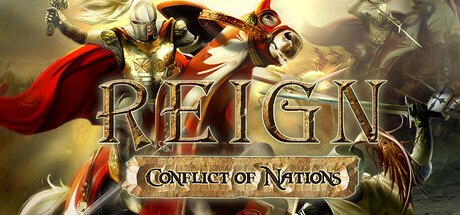
Reign: Conflict of Nations allows players to have a well thought-out and historically accurate system of building and assigning labor forces in cities, a large selection of scenario-based and random missions, an expansive and realistic technology tree, more than 150 types of military units and elaborated graphics and animations which brin
Modeled estimate, not a reported figure. How we estimate →
About
Stats
All-time low is the lowest price we've recorded for this game since we started tracking it.
Languages: English, Russian, German, Japanese, Polish
Engagement
Reviews
Themes across 45 recent reviews and how positive each mention is. A keyword signal, not full sentiment analysis.
Reviews
Of of few games that offers a challenge for a prolonged period of time and the price was good i personally find it better than the similar games by paradox
Fun game, but buggy. If you like the Total War and Paradox games you may like this. It is a big dated now, but still a fun game. I would recommend playing Medieval 2 Total War or Crusader Kings II besides this game though since this game is very buggy and you get much more with those other games.
Yes.
Media

Related
Related
Price dynamics, follower growth, revenue and sales trajectories with interactive tooltips
This and every other Pro feature is free until October 20, 2026. A free account is all it takes.
Hours played at review time, across 45 reviews with recorded playtime.
positive critical· bar length = how often the theme comes up
Reign: Conflict of Nations is a large-scale historical real-time strategy game developed by Lesta Studio and published by Fulqrum Publishing that sets its sights firmly on long-term medieval statecraft rather than short, spectacle-driven battles. Designed to span roughly three centuries of European history, the game places players in control of one of dozens of medieval factions and challenges them to navigate the intertwined demands of governance, economics, diplomacy, and warfare over generations. From the outset, it is clear that Reign prioritizes scope and systemic depth over accessibility, aiming to appeal to players who enjoy deliberate, methodical strategy and the slow accumulation of power. Rather than focusing on a single campaign narrative, Reign offers a broad strategic sandbox in which each faction begins with its own geographic position, political pressures, and developmental hurdles. Players must guide their realm from relative obscurity to regional or continental dominance by managing cities, allocating labor forces, expanding infrastructure, and securing vital resources. Economic management is central to success, as population distribution and production efficiency directly influence military capacity and diplomatic leverage. Growth is rarely explosive; instead, it unfolds gradually, rewarding patience and careful planning rather than impulsive expansion. Diplomacy plays a significant role in shaping the flow of each campaign. Relations with neighboring states can be influenced through treaties, alliances, and strategic restraint, allowing players to secure borders or isolate rivals without immediately resorting to war. These systems encourage a long-view approach, where maintaining stability and influence can be just as valuable as outright conquest. While diplomacy lacks the narrative flair of some modern grand strategy titles, it is functionally integrated into the broader simulation, reinforcing the idea that medieval power was often exercised through negotiation as much as through force. Military conflict in Reign reflects the game’s overarching philosophy. Armies consist of a wide range of historically inspired units that evolve as technologies advance across eras. Battles are typically resolved through large-scale engagements that emphasize preparation and numerical strength rather than moment-to-moment tactical control. Much of the strategic decision-making occurs before armies ever meet, in choices about recruitment, logistics, and timing. This approach can feel detached for players seeking hands-on battlefield control, but it aligns with the game’s emphasis on governance and macro-strategy rather than tactical micromanagement. The game’s structure encourages long-term thinking in almost every aspect. Technological advancement unfolds slowly, often requiring decades of in-game time to fully realize its benefits. Decisions made early in a campaign—such as how to specialize cities or which neighbors to placate—can echo far into the future, shaping the viability of later expansion or defense. This sense of historical continuity is one of Reign’s strongest qualities, as it makes success feel earned through sustained competence rather than short bursts of optimization. Presentation is functional rather than flashy. The 3D strategic map and unit models provide clear information about territories, movements, and control, but they lack the visual refinement seen in more contemporary strategy titles. Interfaces and menus are dense and occasionally unwieldy, contributing to a steep learning curve that can be intimidating for newcomers. The game offers limited guidance, often expecting players to learn systems through experimentation, which reinforces its appeal to experienced strategy enthusiasts while potentially alienating those unfamiliar with complex simulations. This demanding design philosophy has shaped the game’s reception. Many players praise Reign: Conflict of Nations for its ambition, historical scope, and willingness to model medieval politics and economics in depth. Others criticize its dated interface, opaque mechanics, and lack of polish, noting that managing a growing realm can sometimes feel more laborious than satisfying. These criticisms are not unfounded, but they are often inseparable from the game’s commitment to complexity and realism over convenience. Ultimately, Reign: Conflict of Nations is a game for a specific audience—players who value depth, historical flavor, and long campaigns that unfold over dozens of hours. It does not aim to streamline or simplify the grand strategy experience, instead embracing a slower, more demanding pace that mirrors the realities of medieval rule. For those willing to invest time into learning its systems and tolerating its rough edges, Reign offers a richly layered strategic experience that emphasizes foresight, patience, and careful stewardship over centuries of virtual history. Rating: 5/10
boring
可以
Too much micromanagement for nothing. If this game would be more streamlined it could be great. Fights are mundane and fell punishing sometimes. No way to influence it.
Imperium: Zeit der Unruhen, so die Übersetzung des Original-Titels aus dem Russischen, ist ein Grand Strategy Game, welches nicht aus dem Hause Paradox stammt. Allein deshalb gibt es schon mal einen Pluspunkt von mir :-) Nicht weil ich Paradox nicht mag, sondern weil man nur mühsam was anderes im Markt findet. Das Spiel ist sicher in vielerlei Hinsicht nicht perfekt. Doch worauf ich meinen Augenmerk gelegt habe, ist die liebevolle Gestaltung der Spielwelt, die sofort aufkommende Immersion sowie die durchaus innovativen - oder zumindest hinreichend eigenständigen - Mechaniken und Spielsysteme. Ich habe das Spiel für unter einen Euro erstanden. Für einen Kinobesuch lege ich mal locker 12 Euro hin, d.h. bei einem dreistündigen Film ca. 1 Euro für 15 Minuten "Spaß" (falls der Film gut ist). Ich habe in diesem Spiel definitiv länger als 15 Minuten verbracht und hatte dabei "Spaß" bzw. das Äquivalent an Immersion und intellektueller Stimulanz. Für mich ist das Glas eher halb voll als halb leer. Somit kann ich das Spiel jedem empfehlen, der sich für Grand Strategy Game Design interessiert und einfach mal was anderes sehen bzw. ausprobieren will. PS: hier der Link zu meinem [url=https://steamcommunity.com/sharedfiles/filedetails/?id=3625786290] Essential Game Guide [/url] :-)
2 na 10. wygląda ok, ale potrafi się bez powodu scrashować i cześć.
Bad
Selling now
See how fast this game is selling right now — estimated copies and revenue per day from recent review growth.
Players by region
Where this game's players are, estimated from review languages.
Related
| Game | Estimated lifetime revenue | Reviews | Review score | Price |
|---|---|---|---|---|
| $57.6M | 67.8K | 92% | $29.99 | |
| $18.2M | 37.8K | 82% | $19.99 | |
| $19.6M | 36.5K | 96% | $19.99 | |
| $10.5M | 13.8K | 77% | $29.99 | |
| $6.9M | 14.9K | 71% | $19.99 | |
| $359.8K | 3.6K | 82% | $4.49 |
Related
| Game | Estimated lifetime revenue | Reviews | Review score | Price |
|---|---|---|---|---|
| $10.1K | 53 | 92% | $8.99 | |
| $10.1K | 52 | 98% | $7.49 | |
| $10.1K | 535 | 53% | $0.99 | |
| $10.1K | 121 | 83% | $2.99 | |
| $10.1K | 177 | 77% | $2.99 | |
| $10.1K | 95 | 74% | $3.99 |