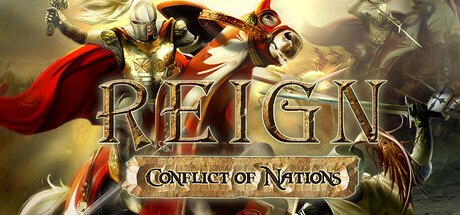
Reign: Conflict of Nations allows players to have a well thought-out and historically accurate system of building and assigning labor forces in cities, a large selection of scenario-based and random missions, an expansive and realistic technology tree, more than 150 types of military units and elaborated graphics and animations which brin
Modeled estimate, not a reported figure. How we estimate →
Media

About
Genres
Stats
All-time low is the lowest price we've recorded for this game since we started tracking it.
Languages: English, Russian, German, Japanese, Polish
Engagement
Hours played at review time, across 40 reviews with recorded playtime.
Reviews
Themes across 40 recent reviews and how positive each mention is. A keyword signal, not full sentiment analysis.
positive critical· bar length = how often the theme comes up
Reviews
Возможно, Reign: Conflict of Nations и хорошая игра. Меня она заинтересовала возможностью поиграть за разные стороны конфликта 14 века, Поучаствовать в объединении России, захватить мир за Речь Посполитую. Посмотрел обзоры и игра понравилась, поэтому и купил. Но она так и не запустилась, ни на разных компьютерах, ни с разными настройками запуска/совместимости. Поэтому я не советую тратить на неё деньги, поиграть у вас, скорее всего, не получится, как и у меня.
Хорошая милималистическая игра стратегия про смутное время по атмосфере хорошо сделана!
[h3]The tricks your memories play on you or how to not leave a review for a game that you didn't play for a very long time (decade or so).[/h3] [i]When I found this game, it was like a dream come true! My favorite historical period and my most favorite region, no less! [spoiler]At that time, of course.[/spoiler] And it was such a fun game to play too! Great soundtrack, RPG elements, [strike]turn-based combat[/strike], overall feel. At least at the beginning... Because the more time went on and the further you expanded your borders, the more tiresome the game began to feel. It was so underwhelming to contain your state in any form. So after some time, it always crumbled under the pressure of your neighbors or internal revolts. Which you can say is fitting considering the overall history of the region. Especially in this time period. [strike]But despite the drawbacks, I still had fun playing this game.[/strike][/i] [b]At least I'd continue to say so further if I didn't actually replay it again later.[/b] Now after it, I must change my review to negative, as I don't see any reason to recommend it to anyone. Not even to those who are interested in this time period or the region. Sure, it had some good potential when it was released with many elements blended into it. But it was so flawed even then. And the game was abandoned shortly after without polishing any ideas. Not to mention improving the game overall. [u]Additionally, as a veteran of many strategic games at this point. I've seen many mods that do a better job than this particular game.[/u]
Ta gra jest dla mnie zagadką, wciąga na wiele godzin, chociąż nie ma wielu mechanik. Po prostu ma coś w sobie, pomimo tego że czuć już wiele lat od premiery
Polska wersja steamowa powoduje wyłączenie się gry w samouczku - pierwszej kampanii - gra swobodna (na początku - "wyrzucenie do pulpitu"). Należy często zapisywać i przejść początkowy samouczek ("moment wyrzucenia do pulpitu") po angielsku, zapisać grę w tym języku. Dopiero później dociągnąć polski język i wczytać moment zapisu. Płytowa wersja 1.1 (od cenegi) - bez drm, nie ma tego błędu. Aby uniknąć wyrzucenia do pulpitu, można też wyłączyć w grze zadania treningowe (samouczek), ale nie polecam tego robić - bo tylko w jednym momencie gra wywala do pulpitu, gdy dodajemy dowódcy umiejętność "patent dowódcy" postępując za wskazaniami samouczka. Należy ten patent dodać na wersji angielskiej i zapisać grę, następnie wczytać na wersji polskiej moment tego zapisu. Język zmieniamy klikając w bibliotece steam, drugim klawiszem myszy, na nazwę gry > wybierając z menu > właściwości >ogólne >język polski (angielski itp.). Chwilę czekamy na ściągnięcie języka. Aby zdążyć wykonać zadania z samouczka musimy używać tzw. "aktywnej pauzy", bo na zadania jest określony czas. Gra jest wspaniała - jest trochę podobna do Crusader Kings II, jednak jest prostsza. Mimo że ma zagmatwany samouczek i niezbyt jasną instrukcję, to uważam, że jest mniej kontrowersyjna od Crusader Kings II. Teksty w grze są ładnie stylizowane i oddają klimat epoki. Na steamie, gra posiada szczegółowy poradnik po angielsku. Instrukcja polska znajduje się w folderze gry Steam > steamapps > common > Reign Conflict of Nations (instrukcja.pdf) Drobne wady: - nie zawsze gra reaguje na kliknięcie w model postaci lub miasto, potrzeba do tego trochę precyzji. - czasem trzeba doprowadzić jednostkę bliżej celu, aby można było zaatakować lub połączyć oddziały. -Ikonki nie zawsze precyzyjnie opisują to, do czego służą. Aby można było atakować inne miasta, należy wysłać wojska do dowódcy, wtedy pojawi się opcja "atakuj" - po wybraniu dowódcy z wojskami. Wojska do miasta wprowadzamy używając dowódcy "opcją wymień odziały", tak samo przekazujemy je dowódcy w drugą stronę. Gdy wprowadzimy wojsko do miasta nie za pomocą dowódcy "opcją wymień" tylko zwyczajnie, aby wyleczyć jednostki, aby je stamtąd wyprowadzić należy kliknąć "uformuj armię". Aby powolać armię na mapę - gdy dodaliśmy umiejętność dowódcy "patent dowódcy", klikamy na ikonkę patent dowódcy - powołaj wszystkie odziały, lub ikonkę uformuj armię Gra ma bardzo proste zasady - należy do określonego czasu przejąć dyplomatycznie lub podbić większość ziem i koronować się na Króla Polski, gdy gramy tym krajem. Uważam Polskie Imperium: Od Krzyżaków do Potopu (Reign: Conflict of Nations) za lepszą i bardziej przystępną grę niż Crusader Kings II, pod warunkiem, że poświęcimy trochę czasu na naukę interfejsu. Niestety instrukcja, jak i samouczek nie uczy dokładnie jak poruszać się po grze, jednak można łatwo się tego nauczyć, czytając wszystkie "wiadomości" i obserwując migające elementy ekranu (klikając w nie).
Если сравнивать с машинами, то эта игра как жигуль, а европа универсалис как мерседес
Of of few games that offers a challenge for a prolonged period of time and the price was good i personally find it better than the similar games by paradox
beznadzieja, ciągle się kraszuje. nie wiem co zrobić
Too much micromanagement for nothing. If this game would be more streamlined it could be great. Fights are mundane and fell punishing sometimes. No way to influence it.
Reign: Conflict of Nations is a large-scale historical real-time strategy game developed by Lesta Studio and published by Fulqrum Publishing that sets its sights firmly on long-term medieval statecraft rather than short, spectacle-driven battles. Designed to span roughly three centuries of European history, the game places players in control of one of dozens of medieval factions and challenges them to navigate the intertwined demands of governance, economics, diplomacy, and warfare over generations. From the outset, it is clear that Reign prioritizes scope and systemic depth over accessibility, aiming to appeal to players who enjoy deliberate, methodical strategy and the slow accumulation of power. Rather than focusing on a single campaign narrative, Reign offers a broad strategic sandbox in which each faction begins with its own geographic position, political pressures, and developmental hurdles. Players must guide their realm from relative obscurity to regional or continental dominance by managing cities, allocating labor forces, expanding infrastructure, and securing vital resources. Economic management is central to success, as population distribution and production efficiency directly influence military capacity and diplomatic leverage. Growth is rarely explosive; instead, it unfolds gradually, rewarding patience and careful planning rather than impulsive expansion. Diplomacy plays a significant role in shaping the flow of each campaign. Relations with neighboring states can be influenced through treaties, alliances, and strategic restraint, allowing players to secure borders or isolate rivals without immediately resorting to war. These systems encourage a long-view approach, where maintaining stability and influence can be just as valuable as outright conquest. While diplomacy lacks the narrative flair of some modern grand strategy titles, it is functionally integrated into the broader simulation, reinforcing the idea that medieval power was often exercised through negotiation as much as through force. Military conflict in Reign reflects the game’s overarching philosophy. Armies consist of a wide range of historically inspired units that evolve as technologies advance across eras. Battles are typically resolved through large-scale engagements that emphasize preparation and numerical strength rather than moment-to-moment tactical control. Much of the strategic decision-making occurs before armies ever meet, in choices about recruitment, logistics, and timing. This approach can feel detached for players seeking hands-on battlefield control, but it aligns with the game’s emphasis on governance and macro-strategy rather than tactical micromanagement. The game’s structure encourages long-term thinking in almost every aspect. Technological advancement unfolds slowly, often requiring decades of in-game time to fully realize its benefits. Decisions made early in a campaign—such as how to specialize cities or which neighbors to placate—can echo far into the future, shaping the viability of later expansion or defense. This sense of historical continuity is one of Reign’s strongest qualities, as it makes success feel earned through sustained competence rather than short bursts of optimization. Presentation is functional rather than flashy. The 3D strategic map and unit models provide clear information about territories, movements, and control, but they lack the visual refinement seen in more contemporary strategy titles. Interfaces and menus are dense and occasionally unwieldy, contributing to a steep learning curve that can be intimidating for newcomers. The game offers limited guidance, often expecting players to learn systems through experimentation, which reinforces its appeal to experienced strategy enthusiasts while potentially alienating those unfamiliar with complex simulations. This demanding design philosophy has shaped the game’s reception. Many players praise Reign: Conflict of Nations for its ambition, historical scope, and willingness to model medieval politics and economics in depth. Others criticize its dated interface, opaque mechanics, and lack of polish, noting that managing a growing realm can sometimes feel more laborious than satisfying. These criticisms are not unfounded, but they are often inseparable from the game’s commitment to complexity and realism over convenience. Ultimately, Reign: Conflict of Nations is a game for a specific audience—players who value depth, historical flavor, and long campaigns that unfold over dozens of hours. It does not aim to streamline or simplify the grand strategy experience, instead embracing a slower, more demanding pace that mirrors the realities of medieval rule. For those willing to invest time into learning its systems and tolerating its rough edges, Reign offers a richly layered strategic experience that emphasizes foresight, patience, and careful stewardship over centuries of virtual history. Rating: 5/10
Related
Related
Trends
Modeled estimate over time, reconstructed from Steam's monthly review histogram.
Momentum
Pace estimated from the game's recent review growth (our daily snapshots) at its own sales-per-review ratio — a momentum signal, not booked sales.
Audience
Estimated from the language of this game's reviews — a proxy for where players are, not official Steam demographics.
Related
| Warhammer 40,000: Chaos Gate (Classic) | $15.1K | 67 | 91% | $7.49 |
| Bighead Runner | $15.1K | 199 | 73% | $4.99 |
| SCP Strategy | $15.1K | 590 | 79% | $0.97 |
| DarkEnd | $15.1K | 354 | 52% | $1.99 |
| Great Toilet Simulator | $15.1K | 547 | 81% | $0.99 |
| Castaway | $15.1K | 279 | 74% | $2.79 |