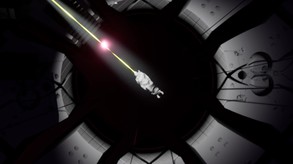
A story rich narrative puzzle game in which an artist comes to terms with their grief. Explore an infinitely recursive world of strange fractal beauty and solve mind-bending puzzles. Confront the ineffable and chat with your cat in a search for meaning and hope.
Modeled estimate, not a reported figure. How we estimate →
Discounts
Every price cut of more than 20% we have observed, in each market that quoted one, with this game's chart position on either side of it. These are episodes, not a model: a sale is one event, and one event cannot tell you what the next one will do.
Reviews, worldwide (the counter carries no country): 0.14/day in the week to Aug 18 → 0.43/day in the week after.
For scale, across Steam · Top Sellers · Brazil over the last 30 days: the 25 chart moves that followed a price cut of more than 20% went a median of 10 places towards #1, and the 2,413 moves with no price cut behind them went 2 away. One store, one chart, one country — it is the only place we have enough observations to say even that.
Prices outside the United States have been collected since 6 August 2026 and chart positions since 19 July 2026, so a cut older than that has no market to compare and a market that joined later has no history yet. Nothing here is converted between currencies.
About

Manipulate an infinitely recursive landscape to solve a series of environmental puzzles as you work through your own struggles with grief and a creative crisis.
With Behemoth, The Cat at your side — or at least somewhere nearby — unlock an introspective journey through your past and discover new meaning in a chaotic world.
A Dying, Visually Stunning World
Lose yourself in the Infinite Realms, a dying, fractal world of strange beauty and mind-bending physics that repeats eternally inward and outward. Uncover the secrets of seven hypnotizing landscapes filled with hidden spaces and bizarre celestial denizens. Overcome the impossible and use circular logic to manipulate recursive physics and solve challenging, self-referential puzzles.
A Deeply Personal Journey
Begin an introspective search for meaning and experience a bittersweet story that cascades into the surreal. Use your unique abilities and shape the world to beat back the scourge known as Ichor, a malevolent substance eating away at the fabric of reality.
Rediscover Meaning, and Hope
Through the fight against the Ichor, and the satisfying completion of peculiar puzzles, balance out the chaos of the Infinite Realms and reconcile your own inner turmoil.
Genres
Sums Steam only; GOG, Epic publish no volume signal, so the true total is higher by an unknown amount.
| Store | Price | Audience | Score | Chart | Est. revenue |
|---|---|---|---|---|---|
SteamYou are here | $14.99 | 327reviews | 79% | — | $99K |
| $3.75−75% | 16ratings | 78% | — | not modelled | |
Engagement
Reviews
Themes across 49 recent reviews and how positive each mention is. A keyword signal, not full sentiment analysis.
Reviews
the puzzles were pretty good but i felt a few levels were lacking just a bit, the story was ok but it was portrayed in the most boring way ever, some of the levels felt like i was placed inside a walking sim, if you like puzzle games you will like this as long as you have a little bit of patience to sit through the boring bits which there are quite a lot of. I Rate it 6.7/10
I get it, it's right up my street. Graphics, music, puzzles, story. Enjoying it. Download the demo first, then you'll know whether to buy it. The imperfecion is just an honest part of it. Edit: just finished the game. Enjoyed the story, and atmosphere. It's definitely one of the strangest games I've played, some real WTF moments haha.
Media

Related
Related
Price dynamics, follower growth, revenue and sales trajectories with interactive tooltips
This and every other Pro feature is free until October 20, 2026. A free account is all it takes.
Stats
All-time low is the lowest price we've recorded for this game since we started tracking it.
Languages: English, French, Italian, German, Spanish - Spain, Russian, Simplified Chinese
| $14.99 |
| — |
| — |
| — |
| not modelled |
Matched by title — a reused name can pair the wrong games. * is a critic aggregate. Prices and positions are each store's United States storefront; Epic charts worldwide. Audience and Score too, except Steam's, which is worldwide.
Hours played at review time, across 49 reviews with recorded playtime.
positive critical· bar length = how often the theme comes up
Recursive Ruin is the best first-person puzzler I've played. Three things make this game special. First, it's the only first-person puzzler whose art and aesthetics I find enthralling. In The Talos Principle, you have competent nature scenery and ruins. In Manifold Garden, you have cold, sterile fractal shapes. The aesthetics of those games simply do not compare with the disorienting, kaleidoscopic, alien demoscene cyber-Kandinsky landscapes of Recursive Ruin. The corecursively unfolding geometry would have been cool enough by itself, but that doesn't even touch on the color combinations, the pink and purple lights, the pulsing black alien orbs, the alien spikes, and the metallic elliptical accents carved into the walls. Second, the soundtrack is excellent and matches the game perfectly. In the Infinite Lands, the music sounds experimental, electronic, and even alien—it reminds me of the album R Plus Seven by Oneohtrix Point Never. Those with a taste for the abstract will love it. In the main character's real-world apartment, the piano solos are emotional but ambient and undistracting. Third, the writing is brilliant. Much like the level geometry allows you to descend into infinite regress, similar structures emerge in the writing at several points, though I don't want to spoil those delightful moments. The story's unhinged willingness to go off on creative tangents reminded me of a David Mitchell novel. The nonlinear fashion in which the story unfolds gave me something to chew on, and the abstract story hints interspersed throughout the puzzle-solving sequences kept me engaged for the entire length of the game. The puzzles themselves were fun enough to solve. Most of the challenge lies in visually parsing the disorienting corecursive landscape around you. Once you've done that, there isn't typically much analysis left before finding the solution. This is the one area where Recursive Ruin is merely on par with a typical first-person puzzler. In any case, this game's strength isn't really its puzzles; it's strength is its complete package. It should appeal to anyone with a taste for abstract art, weird geometry, and creative storytelling. Buy it. It's excellent.
+ Awesome experience that could only be realized as a video game. + Mind bending visuals and puzzles to match. - Slight "hitch" whenever you circle back on the same path. Possibly an error of doing non-euclidean geometry in the unreal engine, but would have been nice to iron out. - Screen space occlusion artifacts very noticeable because there are so many reflective surfaces.
If you love mindbending puzzlers like Manifold Garden or Antechamber, you'll likely get a kick out of the puzzles in Recursive Ruin. They're psychedelic, eye-pleasing trials with intuitive solutions and a satisfying progression of knowledge for the most part. If the game was condensed to the puzzles, it would be pretty short but great and totally worth 5-10 dollars. However, it's packaged with a walking-sim style story that's confusing, long-winded and feels pseudophilosophical. I don't want to totally disparage it because there are interesting elements, but they don't come together cleanly. I liked the psychedelic entities, but their plot felt like a sci-fi without the exposition needed to grasp what was going on, and the protagonists internal turmoil is compelling on its own but didn't click with the psychedelic otherworld in a way that made it feel relevant or was satisfying in any way. The narrative being the only part I didn't like of a game isn't usually a big deal, but It's also no small part, probably taking up an hour or two of your playtime in total if you take the time to listen and read rather than skip. If you love psychedelic puzzlers like me, I think this game is worthwhile because the puzzles are so unique and compelling, but definitely get it on a sale and be prepared to skip through some dialogue to get to the good bits.
This was a really fun game. The puzzles are tricky and mind-bending, the visuals are unique and purposeful, the music is beautiful and haunting, and the story is thoughtful and hopeful in a way. A great, fairly short indie game that is worth playing even for the cat alone.
Recommended, with caveats. First, the puzzles and mechanics of the game are excellent. Not the hardest puzzler I've ever played, but did really scratch an itch. The visuals were an interesting mix of hyper-complex and simple, which was a neat approach. On the down side, this game is DARK. Like, menacingly, unnecessarily DARK - across its various storylines. Trigger warning for domestic violence, self-ending ideation, implied body horror, and deep loss. The metaphysical concepts in the weirder story arc seem (to me) clearly inspired by "bad trip" psychedelic exploration, which, although it sounds odd to say, on its own might be triggering, if you've "been there" - seriously. Overall, a good play if you're into puzzles, and all of these caveats aren't of concern.
Awesome fractal puzzles, surreal world, very weird sad story. The story seems like a big emphasis of the game, so keep that mind. Play if you like surrealism, David Lynch, and mind-bending puzzles. But don't play if you just want Manifold Garden with minimal narrative.
一个不断断裂、再生、自我引用的万华镜般的分形世界,不过是一个平凡人反复回顾往事挣扎破碎的心灵。 各关卡基本上是心灵图景的超现实图像化——主人公在挚友意外丧生的痛苦中努力反思往事以抵御负罪感的侵蚀。美术极其贴切,叙事简洁有深度,NPC形象也非常美丽独特有象征性。 玩法上还是传送门那一套,虽然解谜涉及了嵌套与自引用且有点难度也不重复,但对递归的探索不深,不如Cocoon、Patrick's Parabox。在一众和递归有关的游戏中这是美术与叙事最好的一个,应用的是概念而非手法,突出其表现而非玩乐。 “我不理解。因为越是明哲,痛就越真;越是渊博,伤就越深。” 作为故事的开始,主角为朋友制作了第一张专辑的封面,而海报上是古斯塔夫·多雷为《神曲·天堂XXXI》绘制的插图——但丁经历了漫长艰辛的旅程,在尘世中已经逝去的贝雅特利奇的引领下,终于抵达了至高天。二人一同仰望着Rosa celeste,如玫瑰般展开、层层嵌套的圆形天穹——正是源自故去友人善的陪伴、对故去父亲恶的告别,主角走完了炼狱、地狱、天堂的朝圣路,从内心无限循环的死胡同中解放,回归了现实的故土:"Tu m'hai di servo tratto a libertate per tutte quelle vie, per tutt'i modi che di ciò fare avei la potestate..." 其实逝者已逝万物皆流,无论备受折磨还是走出沉沦的动机都来自于自身,来自主角自己,也来自玩家努力解决问题的力量——我亦是长河,我亦是猛虎,我看着一切而一切都在我之中。游戏与玩家的关系、经历与人格的关系同样也是一场递归。博尔赫斯是最好的递归作家,很高兴游戏最后提到了。 通过这个游戏,得以见证制作者、见证人类非凡的能力、情感、智慧与勇气。 -------------------------- 想到了顺便说一下,《天堂》canto 31、32里Dante Alighieri对至高天的描述完全符合爱因斯坦在1917年提出的“三维球面”设想,这个设想解决了横亘西方文明上千年的宇宙边界问题,就是递归中的“无限性”,而诗人的幻想比爱因斯坦早六百年就发现了——八十年代这个发现让天文物理数学文学家都为之疯狂。游戏里引用的Gustave Doré的这幅插图,描绘的就是这一场景。 我想说的是:这个游戏的作者真的对递归做出了非常跨领域的研究,而不仅仅是做一个视频游戏。 希望作者明白,尽管创作中那么多泥泞中的痛苦、云端上的欢欣、顿悟后的狂喜与年复一年的努力都在冰山之下看不见的地方,还会被空洞随意地评价“看不懂”“精神污染”,但是冥冥宇宙中,或早或晚、或多或少,总会有人看到你。这样的作品自然有它超越时间的价值。
Recursive Ruin is an introspective puzzle adventure that blends surreal geometry, psychological storytelling, and inventive spatial design into a deeply atmospheric experience. Developed by Bit Rot and published by Iceberg Interactive, the game frames itself as the journey of an artist wrestling with grief, stagnation, and the fear of creative collapse. You step into the Infinite Realms—a strange, fractal dimension where architecture folds back onto itself endlessly—and begin exploring alongside your companion and emotional anchor, a cat named Behemoth. Rather than presenting a traditional world with linear spatial rules, Recursive Ruin constructs a landscape where every corridor, vista, and structure loops into itself, forming a physically impossible labyrinth that mirrors the protagonist’s turbulent inner world. Central to the game is its recursive mechanic: environments repeat in all directions, creating scenarios where what you see in the distance is simply a larger or smaller version of the space you currently occupy. This concept becomes the backbone of the puzzle design. Many challenges require manipulating objects in one level of the loop to affect another, observing how movement ripples across recursive layers, or repositioning the world so that the infinite copies align in your favor. Rather than relying on timing or reflexes, Recursive Ruin encourages you to slow down and study how the environment behaves—how a cube shrinks or grows depending on its placement, how openings reveal new paths when aligned with their mirrored counterparts, or how adjusting the configuration of one space reshapes the next. It’s a puzzle system that feels both logical and dreamlike, engaging the mind in a way that few puzzle games attempt. The game excels in its presentation, using fractal-inspired landscapes to evoke emotional tone as much as visual spectacle. Levels shift between colossal repeating towers, organic caverns that fold inward, and impossible structures reminiscent of kaleidoscopes and mirrored cathedrals. The art direction leans into sharp contrasts and disorienting symmetry, giving the sensation that you’re wandering through an elaborate mental diagram brought to life. The soundtrack reinforces this feeling of suspended reality, blending ambient textures, subtle melodies, and occasional unsettling audio cues that underline both the beauty and alienness of the Realms. The result is an atmosphere that alternates between meditative stillness and oppressive tension, drawing you deeper with each step. Narratively, Recursive Ruin experiments with a blend of metaphor and introspection. The Infinite Realms serve not only as a setting but as a representation of the protagonist’s psychological state—looping thoughts, unresolved trauma, and the cyclical struggle of trying to create in the face of emotional weight. The story touches on themes of identity, artistic pressure, loss, and the burden of expectation, communicated through abstract sequences, spoken reflections, and interactions with Behemoth. Some segments are direct and emotional, grounding the experience in relatable struggles, while others lean into surrealism that leaves interpretation up to the player. This narrative style can feel fragmented at times, but the fragments intentionally echo the nonlinear structure of the world and the recursive nature of grief itself. While the game reaches ambitious heights in presentation and design, it is not without limitations. The puzzle mechanics, though conceptually strong, vary in complexity, and some players may find certain sections too straightforward or wishing for deeper escalation of challenge. Because many puzzles hinge on singular insights, the overall difficulty curve remains relatively gentle, and the campaign is short enough that experienced puzzle players may complete it in one or two sittings. Replayability is limited due to the linear story structure and the fixed nature of puzzle solutions; once the key ideas click, much of the game’s mystery dissipates. The narrative’s abstraction may also feel uneven, as moments of emotional clarity sometimes compete with passages that are more symbolic than concrete. Despite these constraints, Recursive Ruin succeeds in carving out a very distinct space within the puzzle adventure genre. It is a work best appreciated as a cohesive artistic experience—one that prioritizes atmosphere, introspection, and conceptual elegance over mechanical complexity or extended length. The recursive world is not only fascinating to engage with mechanically but meaningful as metaphor; the sense of moving through an endlessly looping landscape resonates with the game’s themes of emotional repetition and the challenge of breaking free from internal cycles. The result is a thoughtful, aesthetically striking journey that lingers in the mind long after its puzzles are solved. Recursive Ruin is an easy recommendation for players intrigued by surreal spaces, narrative-driven puzzles, and atmospheric design. It is a quieter, more contemplative title, but within its focused scope it delivers a memorable and uniquely crafted experience—one that uses recursion not just as a technical gimmick but as a lens through which to explore the complexities of the human mind. Rating: 7/10
Selling now
See how fast this game is selling right now — estimated copies and revenue per day from recent review growth.
Players by region
Where this game's players are, estimated from review languages.
Related
| Game | Estimated lifetime revenue | Reviews | Review score | Price |
|---|---|---|---|---|
| $104.5K | 152 | 61% | $19.99 | |
| $35.5K | 69 | 93% | $19.99 | |
| $417.8K | 2.9K | 81% | $5.99 | |
| $7.7K | 164 | 88% | $1.99 | |
| $3K | 33 | 100% | $5.99 | |
| — | 0 | — | — |
Related
| Game | Estimated lifetime revenue | Reviews | Review score | Price |
|---|---|---|---|---|
| $99K | 71 | 72% | $49.99 | |
| $99K | 125 | 79% | $24.99 | |
| $99K | 421 | 89% | $10.99 | |
| $98.9K | 687 | 96% | $6.45 | |
| $98.9K | 160 | 69% | $29.99 | |
| $99.1K | 185 | 77% | $24.99 |