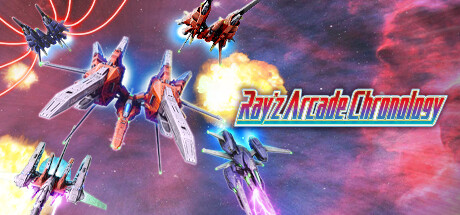
Lock-on to an exhilarating sci-fi shooting fest with the trilogy which put Taito on the 90s arcade shooting map: The Ray Series, together in one collection for the first time!
Modeled estimate, not a reported figure. How we estimate →
Prices
The United States storefront in every case, so this compares stores and not countries.
About
Genres
Stats
All-time low is the lowest price we've recorded for this game since we started tracking it.
Sums Steam only; Nintendo publishes no volume signal, so the true total is higher by an unknown amount.
| Store | Price | Audience | Score | Chart | Est. revenue |
|---|---|---|---|---|---|
SteamYou are here | $49.99 | 111reviews | 90% | — | $148.3K |
| $49.99 | — | — | — | not modelled |
Matched by title — a reused name can pair the wrong games. * is a critic aggregate. Prices and positions are each store's United States storefront; Epic charts worldwide. Audience and Score too, except Steam's, which is worldwide.
Engagement
Reviews
Themes across 44 recent reviews and how positive each mention is. A keyword signal, not full sentiment analysis.
Reviews
おすすめしたいところなのですが、レイストームとレイクライシス(HD含む)がFPS30に固定されてしまう現象が解決できない。 あれこれ設定いじってもどうにもならず・・・ レイフォースはちゃんとプレイ出来るだけに、ここが解決できないことにはどうにもこうにも・・・
My childhood on PS1 <3 Great PC port, I recommend.
thank you m2
Media

Related
Related
Price dynamics, follower growth, revenue and sales trajectories with interactive tooltips
This and every other Pro feature is free until October 20, 2026. A free account is all it takes.
Languages: English, Japanese, Simplified Chinese, Traditional Chinese, Korean
Hours played at review time, across 44 reviews with recorded playtime.
positive critical· bar length = how often the theme comes up
✍️ A Theory of Shmup Evolution By: Joseph Salomonsen Gradius → R‑Type → Darius → Toaplan → Cave / Treasure / G.rev 🟨 Foundations — Designed Space Gradius (Konami, 1985) The origin of control: resource systems, checkpoints, and authored space. The player shapes their ship to survive the level. R‑Type (Irem, 1987) The Force system: space becomes weaponized. A slow, methodical philosophy—positioning over reflex. Darius (Taito, 1987) Branching structure and spectacle. The first step toward non-linear shmup identity. 🟥 Line 1 — Density → Pattern → Bullet Hell (Toaplan → Cave) Twin Cobra (Toaplan, 1987) The definitive military shooter. Discipline, routing, survival. (my personal fave) Truxton / Tatsujin (Toaplan, 1988) The birth of the “Mega-Bomb” aesthetic—power as expression. Batsugun (Toaplan, 1993) The bridge to Bullet Hell. Density begins to dominate space. DoDonPachi (Cave, 1997) The system is complete. Patterns become language. Mushihimesama (Cave, 2004) The organic extreme. Bullets form ecosystems, not just obstacles. Deathsmiles (Cave, 2007) A divergence: horizontal design fused with atmosphere. Bullet hell becomes mood, not just system. 🟩 Line 2 — Weight → Realism → Physicality (Seibu → G.rev) Raiden II / DX (Seibu, 1993) The peak of “Heavy Metal” sprite-work. Industrial, grounded, uncompromising. Under Defeat (G.rev, 2005) The final expression of the military shmup. Momentum, recoil, and battlefield physics replace abstraction. Here: space > bullets weight > pattern movement > memorization 🟦 Line 3 — Mechanics → Abstraction → Philosophy (Iuchi Lineage) Hiroshi Iuchi ❤️ Radiant Silvergun → Judgment Silversword → Ikaruga → Kokuga → Ubusuna Treasure → M‑KAI → G.rev → M2 Radiant Silvergun (Treasure, 1998) The maximalist foundation. A shmup with layered systems and narrative ambition rarely seen in arcades. Judgment Silversword (M‑KAI, 2004) The technical bridge. The “Silver” philosophy reduced to pure system and code. Ikaruga (Treasure, 2001) The minimalist apex. Seven weapons collapse into one binary system: Black or White. The “chess” of shmups. Kokuga (G.rev, 2012) The tactical pivot. The ship becomes a tank. Weight replaces speed. Strategy replaces reaction. Ubusuna (M2, 2025/2026) The philosophical return. A synthesis of polarity and modern standards—a reflection on the lineage itself. ✅ Synthesis Shmups do not evolve in a single line. They fragment into three competing philosophies: Toaplan → Cave = density / pattern / abstraction of space Seibu → G.rev = weight / realism / physical presence Treasure → Iuchi = system / reduction / philosophy All of them emerge from: Gradius = designed systems R‑Type = controlled space Darius = structural possibility ✅ Final statement From Gradius’ authored space to Cave’s infinite bullet fields, from Iuchi’s compression of systems to G.rev’s return to physicality— The shmup is not just reflex, but a philosophy of dynamic control.
Ray’z Arcade Chronology is a lovingly crafted collection that preserves one of Taito’s most influential shoot-’em-up franchises for modern audiences. Developed by M2 and published by TAITO, this compilation brings together RayForce, RayStorm, RayStorm neo-HD, RayCrisis, and RayCrisis HD, creating a comprehensive showcase of a series that played a significant role in the evolution of arcade shooters. Rather than feeling like a simple bundle of old games, the collection presents itself as a historical journey through the growth of the genre, highlighting how each installment expanded upon the ideas introduced by its predecessor. The defining feature of the Ray series is its innovative lock-on laser system, a mechanic that continues to stand out even decades after its debut. Players are challenged to engage enemies across multiple layers of the battlefield, targeting threats above and below while managing waves of incoming fire. This adds a strategic dimension that separates the games from many traditional shooters that rely solely on quick reflexes. The mechanic remains engaging throughout the collection, rewarding precision, planning, and mastery while delivering the satisfying spectacle of destroying entire groups of enemies with a well-timed attack. RayForce remains an exceptional example of classic arcade design. Its futuristic presentation, memorable stage progression, and carefully balanced difficulty create an experience that still feels remarkably fresh. The game excels at building atmosphere through its visual style and pacing, drawing players into a large-scale science-fiction conflict while maintaining tight and responsive gameplay. Despite its age, it demonstrates why it earned a reputation as one of the most respected vertical shooters of its era. RayStorm marks the franchise’s transition into the world of 3D graphics. While many games struggled during the industry's move from sprites to polygons, RayStorm successfully retained the series’ identity. The original version offers a fascinating snapshot of arcade gaming in the late 1990s, while RayStorm neo-HD provides an updated visual presentation with enhanced clarity and smoother visuals. The result is a game that bridges nostalgia and modernization, allowing both longtime fans and newcomers to appreciate its strengths. The collection’s darkest and most experimental entry is RayCrisis. With its cybernetic themes, unique progression structure, and more intense atmosphere, it pushes the series into new territory. The game introduces additional layers of challenge and complexity that encourage repeated playthroughs. Both the original and HD versions capture the title’s distinctive personality, offering an experience that feels more ambitious and emotionally charged than many arcade shooters of its time. One of the collection’s greatest strengths is the work performed by M2, a developer widely respected for arcade preservation. The package includes numerous quality-of-life features designed to make these demanding games more approachable. Save states, replay functions, practice options, and performance tracking tools allow players to learn mechanics at their own pace while also supporting advanced score-chasing strategies. These additions enhance accessibility without compromising the authenticity of the original arcade experience. The soundtrack across the series deserves special recognition. The music perfectly complements the futuristic settings, blending atmospheric electronic compositions with energetic battle themes. Each title benefits from a distinctive audio identity that amplifies the excitement of gameplay while reinforcing the mood of its science-fiction worlds. Even years after their original release, many of the tracks remain memorable and contribute significantly to the franchise’s enduring appeal. While the collection excels as a preservation effort, it is not entirely flawless. Some players may have appreciated a larger selection of historical extras, such as development materials, concept artwork, interviews, or deeper behind-the-scenes content. The focus remains primarily on the games themselves and the tools that support them. Additionally, newcomers unfamiliar with arcade shooters may find the difficulty intimidating, although the included practice features help ease the learning curve considerably. Overall, Ray’z Arcade Chronology is an outstanding tribute to a legendary shoot-’em-up series. It successfully preserves five versions of three highly influential games while adding modern conveniences that make them more enjoyable than ever. The collection highlights the creativity, challenge, and style that helped define arcade shooters during their golden years. Whether approached as a piece of gaming history or as a set of timeless action games, it delivers a rewarding and expertly presented experience that showcases the enduring brilliance of the Ray franchise. Rating: 8/10
Excellent collection of some of the best Shoot 'em ups ever made!
兎に角、弾をすり抜けて敵を撃破するのが気持ちよいよね。 レーザーで大量に一掃すればことさら。 頑張れば頑張るほど、上手くなっていく気もするし。
If everybody loves classic games this collection should be for you
[strike] 取り消し線付のテキスト 下線レイストの一面ボス前で必ず落ちるんやが... 調べたら2P側でR-GRAY1を使っていると必ず落ちるよう。 わけわからんバグなので直してください。 [/strike] 修正をしてくれました。
当時、対してやりこんだわけではない程度の自分にとっては、あの頃と変わらず楽しめる良移植でした。
Selling now
See how fast this game is selling right now — estimated copies and revenue per day from recent review growth.
Players by region
Where this game's players are, estimated from review languages.
Related
| Game | Estimated lifetime revenue | Reviews | Review score | Price |
|---|---|---|---|---|
| $119.5K | 165 | 95% | $29.99 | |
| $958.3K | 2K | 94% | $19.99 | |
| $384.2K | 1.1K | 96% | $14.99 | |
| $239.8K | 1.4K | 89% | $6.99 | |
| $175K | 267 | 89% | $29.99 | |
| $67.9K | 386 | 97% | $9.99 |
Related
| Game | Estimated lifetime revenue | Reviews | Review score | Price |
|---|---|---|---|---|
| $148.3K | 512 | 87% | $6.99 | |
| $148.4K | 2.9K | 37% | $2.99 | |
| $148.4K | 642 | 90% | $9.99 | |
| $148.4K | 1K | 86% | $5.99 | |
| $148.3K | 1.5K | 64% | $4.99 | |
| $148.4K | 188 | 84% | $9.99 |