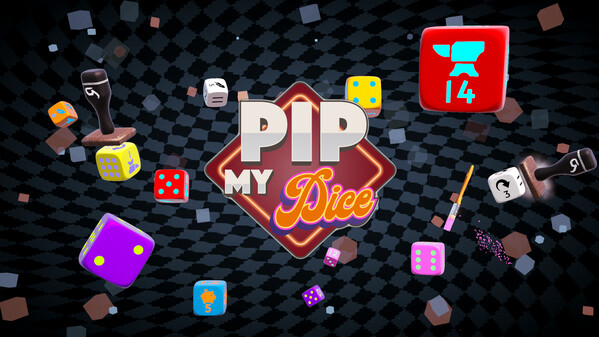
Pip My Dice is a Yahtzee Roguelike experience. Score enough to make it to the next level, customize your dice to score more and collect relics to create unlimited combos! Collect money through the rounds to buy new dice, relics, and customizers to upgrade your dice. Enjoy a different run every time!
Modeled estimate, not a reported figure. How we estimate →
Media

About
Pip My Dice is a roguelike deck builder inspired by Balatro and the Yahtzee game. Customize different dice and use them together with powerful relics to break high scores and climb the leaderboard.
Collect powerful relics to create synergies with your dice and upgrade your combination slots. Take your time and make wise decisions about what you buy in the shop and how you use it. Don't be greedy, you never know if you are going to roll what you are expecting... Unless you customize your dice so much that all faces are the same!
Enjoy endless replayability with the guarantee that every run will be different from the previous one, and save your favorite seeds to replay and share those you like the most.
Customize all faces of your dice individually to make the most of your relics and create game-breaking combos! Rig the odds by modifying the value of the dice faces, and make sure that there is no room for chance. Hold on to precious consumables to get you out of trouble.
130 Relics to create various builds and synergies with your dice
Climb the leaderboard with seeded or random runs to compete with the world or your friends!
Select from 15+ different starting dice cups
50+ Different dice modifiers with unique effects
20+ Different bosses to defeat
Daily runs
Stats and Run History
25 Consumables to give you some extra help when you need it the most
Level up your combination slots as the run goes on
Stats
All-time low is the lowest price we've recorded for this game since we started tracking it.
Languages: English, French, Italian, German, Spanish - Spain, Japanese, Portuguese - Portugal, Simplified Chinese, Korean, Portuguese - Brazil, Russian
Engagement
Hours played at review time, across 41 reviews with recorded playtime.
Reviews
Themes across 41 recent reviews and how positive each mention is. A keyword signal, not full sentiment analysis.
positive critical· bar length = how often the theme comes up
Reviews
I want to love the game but I can't. It's been presented to me as a "balatro with dices". Indeed you can modify the faces, you have relics and you can repaint your dices. Pro: The Idea Con: -There is no enough incentive to go outside the base 1to6 faces. Negative or giant values are hard to get and do not have enough relic/consumable synergies to be viable -The inflation system makes it impossible to have a "I broke the game" feeling. -Locking the shop costs golds but unless you have a good economy generation, you don't generate enough gold to even have more golds than before locking it. -The game becomes repetitive very fast -The boss debuffs can be as hard to pass as "well end of run". TLDR: Looks like a game that has lots of options but is still in alpha with lots of unexplored areas.
Could be a fun game, but the boss modifiers are so badly designed it's not even funny. Some of them don't do anything at all or hardly have any impact while others will completely screw you over leaving you with zero (yes, ZERO) chance to proceed/win. This is obviously a game that involves luck to win, but if you get an unbeatable modifier after playing for 20 minutes it sucks all the fun out of the game. Keep in mind that on low difficulties like easy or normal this doesn't matter that much, but on hard and especially extreme difficulty where you get 2-3 modifiers per boss combined with high win requirements it comes down to pure luck whether you can win a run or not and more often than not the game just says 'nope, not this time' when you reach a boss because you rolled the wrong two (completely literally unbeatable) modifiers to choose from.
Awfully designed, not steam deck compatible. The UI is simply terrible for a game where the UI is central to the core gameplay. Navigating the buttons is frustrating, trying to apply modifiers to the dice via a controller is clunky and frequently confusing, with focus being shifted to other containers in the UI and an overall lack of selection indicators (or very unclear ones when present). The UI would frequently just stop showing me where my cursor was after purchasing something or selecting dice. There was no visible shortcut in the UI for "add these dice to track A" so I had to keep moving my controller cursor up to where I wanted to go. The rewards indicator as well as many other indicators use a slight dimming of the background to indicate focus, which isn't good when there are only two buttons onscreen (am I highlighting the left button or the right button? What state is "highlighted" even?) The gameplay itself isn't very satisfying and I felt like there was no incentive for build diversity. Shop prices were insanely high so it felt like I was just skipping adding new dice, and I won a run using only one combination track the whole time, because I never got enough dice to do anything else. I was mostly just throwing the same few modifiers on my dice. I think this part isn't the fault of the developer, but rather that Yahtzee is just not a particularly interesting game, and it has somewhat low potential as a roguelike. IMO, it would require nearly a full overhaul of the whole game in order for it to be fun, which is a shame because it's likely never going to. Overall, I won't refund it, I got an hour of some sort of entertainment out of it, and it was only $10. I hope it gets some much needed controller support and UX improvement
Pip My Dice is a surprisingly deep and addictive roguelike that transforms the simple act of rolling dice into a strategic obsession filled with powerful synergies, escalating score chains, and constant experimentation. Developed and published by Diving Swan Games, the title takes inspiration from classic dice games while blending them with modern roguelike progression systems and score-focused mechanics that feel heavily influenced by deckbuilding strategy games. What begins as a straightforward challenge built around creating scoring combinations gradually evolves into a layered experience where players manipulate dice values, stack modifiers, and engineer absurd builds capable of generating massive point totals. The core gameplay loop is immediately accessible but hides an impressive amount of depth beneath its simplicity. Each run revolves around rolling customizable dice to reach increasingly demanding score requirements while collecting upgrades, relics, and modifiers that dramatically alter how the game functions. Early rounds feel manageable, but the complexity increases rapidly once multiple systems begin interacting simultaneously. Players constantly balance rerolls, combination setups, resource management, and long-term strategy while adapting to whatever random rewards the game offers. This constant decision-making gives the game a satisfying momentum that makes even failed runs feel educational rather than frustrating. One of the strongest aspects of Pip My Dice is how much control it gives players over randomness. Although luck naturally plays a role, success depends heavily on understanding how to manipulate dice faces, modifiers, and relic interactions. Individual dice can be upgraded, altered, or transformed entirely, allowing players to shape builds around specific strategies instead of relying purely on chance. Some runs focus on maximizing multipliers while others revolve around reroll efficiency, repeated combinations, or specialized scoring mechanics. Discovering an unexpectedly powerful synergy between upgrades becomes one of the most rewarding parts of the experience, especially when a modest run suddenly explodes into enormous score totals. The relic system adds another layer of strategy that keeps every playthrough feeling fresh. Relics can completely reshape how players approach a run, introducing bonuses, penalties, or entirely new mechanics that force constant adaptation. Certain relic combinations become incredibly powerful when paired together, creating those satisfying moments where a carefully planned build starts functioning like a perfectly optimized machine. Much of the game’s long-term appeal comes from experimenting with different combinations and uncovering interactions that dramatically change the pace of a run. The progression system is also well designed because it steadily unlocks new possibilities without overwhelming players immediately. New dice types, challenges, modifiers, and gameplay options gradually expand the strategic complexity over time. This creates a strong sense of progression where players are constantly learning more efficient strategies and discovering stronger combinations. Even after many hours, there is usually another build idea worth testing or another strategy that feels capable of pushing scores even higher. Boss encounters help prevent the gameplay from becoming too repetitive by introducing sudden disruptions to otherwise stable builds. Some bosses apply restrictions to rerolls or scoring opportunities, while others punish specific strategies players may have relied on heavily throughout the run. These encounters force adaptation and prevent players from mindlessly repeating the same combinations every game. While some bosses feel more balanced than others, they generally succeed at adding tension to later stages of a run where builds might otherwise become unstoppable. Visually, the game favors a clean and readable presentation that prioritizes clarity over flashy effects. The colorful interface, animated dice rolls, and satisfying score explosions provide enough visual feedback to make strong combinations feel impactful without cluttering the screen excessively. The art style is simple but charming, and it complements the arcade-like pace of the gameplay effectively. Sound design also contributes positively to the overall experience, with energetic background music and satisfying sound effects helping reinforce the excitement of landing high-scoring combinations. Replayability is easily one of the game’s biggest strengths. Daily challenges, unlockable content, multiple starting setups, and randomized relic combinations create endless opportunities for experimentation. Every run feels slightly different depending on what upgrades appear and which strategies become viable. The game thrives on the excitement of discovering new interactions, and that constant sense of possibility makes it difficult to stop playing after only one session. Players who enjoy optimization-heavy roguelikes will likely spend dozens of hours trying to create increasingly broken builds. Despite its strengths, Pip My Dice still has several rough edges that occasionally hold the experience back. The user interface can sometimes feel unintuitive, especially during busy turns where multiple actions and menus compete for attention. Certain buttons and options are awkwardly placed, leading to accidental inputs that can ruin carefully planned turns. Since the game relies heavily on strategic thinking and precision, these interface frustrations become more noticeable during longer sessions. Balance can also feel inconsistent. Some relics and build combinations are significantly stronger than others, which may discourage experimentation once players identify particularly dominant strategies. Likewise, certain runs can become heavily dependent on fortunate relic drops or shop offerings. While randomness is part of the roguelike formula, there are moments where bad luck feels overly punishing compared to the amount of control players actually possess. Difficulty spikes from some bosses or modifiers can also feel abrupt rather than naturally challenging. Another limitation is the lack of narrative or thematic depth outside the gameplay systems themselves. Pip My Dice is entirely focused on mechanics, progression, and score optimization. There are no memorable characters, elaborate world-building elements, or emotional storytelling components driving the experience forward. For players seeking pure strategy and gameplay experimentation, this will not matter at all. However, those looking for stronger atmosphere or narrative motivation may find the presentation somewhat sterile compared to other modern roguelikes. Still, what the game accomplishes mechanically is undeniably impressive. Pip My Dice takes a familiar concept and builds an engaging strategy experience around it through intelligent progression systems, satisfying customization, and addictive score-chasing gameplay. It captures the same excitement found in the best roguelikes where every small upgrade can evolve into a devastatingly effective build if combined properly. The constant experimentation and escalating chaos make each run feel rewarding, even when failure eventually arrives. Pip My Dice ultimately succeeds because it understands exactly what makes roguelikes so compelling: experimentation, unpredictability, and the thrill of building something absurdly powerful from modest beginnings. While interface issues and occasional balance concerns prevent it from reaching perfection, the game remains an incredibly entertaining and replayable strategy experience that can easily consume countless hours. For fans of dice games, roguelikes, and synergy-heavy progression systems, it delivers a satisfying mix of accessibility and strategic depth that keeps every run engaging. Rating: 8/10

I quite like it. The music needs more variety though I dig the pseudo like 32bit era arcade music (it's not really 32bit but it has that feel) The only gripe I have is not being able to identify which die has or may have a modified face to it. You can't spin them around during the round as far as I know, and of course you can make them identifiable with paints and whatnot but if all the default die are white and you add some modifiers to a few of them, and they all roll the face where you can't see the modified face on the visible sides, then it becomes a bit annoying to know if it is worth a re-roll or not. Other than that one gripe, I quiet enjoy this. Dicey Dungeons is a similar game but this has more RNG and balatro influence.
A Balatro rouglike deckbuilder with a Yahtzee twist -- what more can be said about the creative genius of this game? I've played Balatro and Dungeons & Degenerate Gamblers, and I am proud to say that this game offers a fresh new twist on the genre. What I love most about this game is the easy entry to get into it, yet it also gives that sweet sweet dopamine hit when taking your time to optimize each distinct run -- embodying the "easy to play, hard to master" trope. The variety in starting die pushes players to think about the game in new, unique ways, such that you must continually need to think through which modifiers and relics you choose each new run. I've loved the runs where certain power-ups I wouldn't have chosen with one starting die set are necessary (and sometimes, required) to choose with other starting die, ensuring you get the most out of all the game has to offer. Whether you win or lose your run, you end each run with the knowledge of what went right, and what could have been improved in future runs. The addition of a global leaderboard (as well as seeking out the hard-to-obtain achievements) make me keep wanting to play more of this game. As a die-hard Yahtzee player (pun humbly intended), it is with great pride that I call this game one of my favorite games -- not just within the genre, but of all time. I cannot recommend this game enough to anyone interested, and at its price point, you cannot go wrong by adding this to your game library -- you'll certainly get your money's worth! My only wish is that this game gets the proper attention it deserves.
주사위 슬더스 주사위를 고쳐서 최고 최적의 빌드를 만드는 게임. 머리를 잘 굴리면 말도 안되는 스코어도 만들수 있을듯. 주사위말고도 유물이 있어서 더 슬더스 느낌이 나는듯. 다른 쓸데없는게 추가되지 않아서 간결해서 더 좋은듯함
This game is so fun. Tell all your friends about it. Deserves a way bigger playerbase... its so fun definitely balatro vibes
The "We have Balatro at home" game.
https://youtu.be/OwoqGSW1rnM Slow plodding rounds with little player interaction or decision making drags out the experience well past the interest lasts.
Related
Related
Trends
Concurrent players on Steam, sampled daily since tracking started.
Audience
Estimated from the language of this game's reviews — a proxy for where players are, not official Steam demographics.
Related
| [DE:]Fanastasis | $47.7K | 172 | 97% | $12.79 |
| Tech Store Simulator | $47.6K | 138 | 63% | $9.99 |
| NIGHT STRIKER GEAR | $47.6K | 98 | 88% | $18.99 |
| Whiplash - Crash Valley | $47.7K | 280 | 49% | $4.99 |
| House Designer : Fix & Flip | $47.7K | 136 | 76% | $11.99 |
| Zombie Riot | $47.7K | 91 | 76% | $19.99 |
Related
| Factorio | $140.6M | 232.2K | 98% | $35.00 |
| Slay the Spire | $80.1M | 216.5K | 97% | $24.99 |
| House Flipper | $65.8M | 110.8K | 94% | $24.99 |
| Prison Architect | $63.1M | 73.6K | 89% | $29.99 |
| Dyson Sphere Program | $56M | 83K | 97% | $15.99 |
| Balatro | $55.5M | 195.3K | 98% | $14.99 |