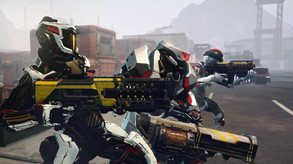
The acclaimed strategy game from the creator of X-COM. Fight tactical battles on procedural maps against a foe that adapts to your tactics. Manage diplomacy and economy on a global scale. Research, explore, overcome. Now includes Steam Workshop support for mods!
Modeled estimate, not a reported figure. How we estimate →
Prices
The United States storefront in every case, so this compares stores and not countries.
Prices
Each in the currency that store quoted — not converted: the gap between two rows is the publisher's pricing, not an exchange rate.
Every market we collect.
About
Add-ons
Each DLC is estimated with the same model as a game, then summed — a modeled figure, not reported DLC sales.
Sums Steam only; PlayStation publishes no volume signal, so the true total is higher by an unknown amount.
| Store | Price | Audience | Score | Chart | Est. revenue |
|---|---|---|---|---|---|
SteamYou are here | $24.99 | 7.2Kreviews | 73% | — | $3.5M |
| $29.99 | 990ratings | 74% | — | not modelled |
Matched by title — a reused name can pair the wrong games. * is a critic aggregate. Prices and positions are each store's United States storefront; Epic charts worldwide. Audience and Score too, except Steam's, which is worldwide.
Updates
Build ids and update times come straight from Steam's PICS — the same source SteamDB reads. Patch history grows as we record new builds.
Engagement
Reviews
Themes across 858 recent reviews and how positive each mention is. A keyword signal, not full sentiment analysis.
Reviews
THE BREAKDOWN +Some fascinating unit designs +Reticle-based hit system feels less random than a percentage system +Body part targeting is novel and helps add tactical depth +Story is pretty interesting and has some fun ideas +Troop upgrades feel meaningful -Class balancing feels completely nonexistent -DLCs are poorly implemented and throw off the already shaky resource management -Too much emphasis on the world map for how shallow it is; juggling multiple ships and squads becomes tedious, not tactically challenging -Vehicles and other supplementary tools feel tacked-on and not worth the trouble -Complete lack of vertical progression is excessive and leads to late game becoming a total slog** I hate Phoenix Point so much that it might have rewired my brain. I've always struggled with dropping games that I don't like. Whether through a tendency towards sunk cost fallacy or just wanting to be able to write a complete review, I have spent far too much time in my life finishing titles that I didn't enjoy, only to wonder why I bothered later. To leave them incomplete scratches at me; not because I think they'll get better, but because I feel like I gave up, surrendered to an inanimate object. Very healthy mindset to have about an entertainment product, right? If I have to give Phoenix Point one thing, it's that it may have helped break me of this mindset. It's the first game in a long time I simply had to stop playing because it felt like torture. I had high expectations, and to the game's credit, Phoenix Point comes out swinging. Introducing a world in which an oceanborne malignancy called the Pandoravirus has begun transforming its victims into horrifying, sea monster-esque abominations, Phoenix Point has a compelling aesthetic that it commits to. Instead of highly advanced alien bases, these Pandorans occupy grotesque nests. In place of gleaming sci-fi technology, they have organic mutations that evolve as the campaign progresses. It's all very gross in a pretty impressive way, and the post-apocalyptic status of humanity makes a lot of sense in the wake of such an overwhelming threat. In gameplay, too, I initially was having a great time. After a couple of optional tutorial missions, the player is walked through the obligatory tour of the systems at play, and initially, the drip feed is pretty manageable. In Phoenix Point, you aren't just managing one base or ship; building a global network is crucial to success. Recapturing abandoned facilities and equipping troops is just the start of it. There's also a diplomatic system in place; in the wake of the apocalypse, major factions have risen, and their competing philosophies are incapable of coexisting peacefully. One group of hard-liners wants to purge any sign of mutation, believing in a scorched earth policy. Another has already began to experiment with grafting themselves and built a religion around doing so, convinced that evolving humanity is the play. These factions are the primary source of new technology, but that doesn't always mean playing nice. If you want something from someone you don't idealistically align with, you can always raid them - which means spending as much time battling the remnants of humanity as it does facing the Pandoravirus when you hit the field. Instead of the percent-based system of XCOM and other titles, Phoenix Point uses targeting reticles that allow both automatic and manual aiming. The operative you're controlling's reticle varies based on the accuracy of their gun, their stats and perks, and more, with two circles representing their ability to land the shot. If both circles are on a target, it's a guaranteed hit, but there's still incentive to take risky shots due to an elaborate weakpoint system that brings to mind the V.A.T.S. from Fallout. Blast a mutant's bloodsucking limb off, and it can no longer steal health from your soldiers. Hit a creature's invisibility-generating gland and it can't cloak any longer. It's a system with nuance and control, and I respect it as one of Phoenix Point's better innovations in the genre. So if the story and gameplay made such a strong first impression, where did it go wrong? For me, it all started to fall apart around midgame. I'd been cruising through the missions, leveling up my best troops, but despite the hybridization system that allows some cross-class talents, I realized something: not all of the game's classes were created equally. With their low mobility and poor accuracy, the Heavy was quickly falling behind, their supposed destructive capability easily surpassed by my Snipers and Assaults. My test runs using the game's vehicles - which take the place of some squadmates in exchange for having mobile, armored firepower - were also disastrous, with the small tank I'd won in a mission getting stuck between buildings and only able to fire a few shots before being empty for the mission. And then the DLCs activated. Resources were already thin, but suddenly I had a cyborg supremacist invasion and enormous, flying alien kaiju to deal with - with no new sources of income to help contend with these threats. Worst of all, I brushed up against my single biggest problem with the game: a lack of vertical progression. Throughout my campaign, the enemies were getting stronger and stronger, and I wasn't getting the tools to keep up with them. My soldiers gained new abilities, yes, and this helped - but their gear? Sidegrades, constantly. A new assault rifle stolen from another faction might deal more damage, but it also had worse range and reloaded more often. My heavy finally got an immensely powerful cannon that could obliterate weaker targets - but he could barely move and fire it in the same turn and it still had terrible reach. This doesn't mean that things were hopeless, just that the game transformed into something I no longer enjoyed. The simulation layer clearly expected me to keep at least four ships traipsing all over the world to gather resources, deploy squads, etc, and in combat, I was no longer supposed to kill every enemy - disabling their weakpoints and rushing past them or forcing them to flee was the name of the game. But even if I tried to play this way, which I really did not enjoy, it felt like there were too many factors working against me to recover from the slightest mistake, which would have been all well and good if the randomization was better. In true XCOM spirit, I restarted a campaign, then another one, knowing I needed to improve on my mistakes - but it felt like such a terrible grind. The same missions, the same enemies, the same lack of meaningful progression. Do I think Phoenix Point is a bad game? Despite my complaints and score, not necessarily. I think for a specific kind of player - one who truly wants that simulation aspect, doesn't mind some jank, and loves having to micromanage every single turn - the positives might outweigh the negatives here. But even with that in mind, it feels like the execution is off and there's too many momentum-killing issues. Long load times, dull sound design, uninspired customization - these things all came together to kill my interest in playing any further, and I wound up dropping the game before I finished a run. Maybe Phoenix Point is a poorly made game, or maybe it's brilliant and I'm just the wrong kind of luddite. But for this tactics enthusiast looking to scratch that XCOM itch, the results were clear: Mission Failed.

Media

Related
Related
Price dynamics, follower growth, revenue and sales trajectories with interactive tooltips
This and every other Pro feature is free until October 20, 2026. A free account is all it takes.
Genres
Stats
All-time low is the lowest price we've recorded for this game since we started tracking it.
Languages: English*, French, Italian, German, Spanish - Spain, Polish, Russian, Simplified Chinese*languages with full audio support
Hours played at review time, across 859 reviews with recorded playtime.
positive critical· bar length = how often the theme comes up
I will give the game a negative review because of the developer greed. Short story of what they did: 1) Game was a kickstarter game, a lot of people supported them. They got a few million dollars. 2) The devs had a lot of closed betas for backers and promised the world to them. The devs pretended the game is very close to being finished 3)Game got infinite delays and a lot of features were cut from the game, gameplay was buggy. 4)Devs promised Steam keys to everyone BUT got an epic deal and released the game on Epic games. The backers did recive their money back but only in certain conditions and if they knew about the change. This was probably 3-4 years after kickstarter started. 5)A lot of the cut content never made it back into the game. The epic release was an epic failure and they never bothered to fix the game because epic doesn't have a review system so why should they fix the game? 6) The dlcs were horrible. There was a dlc simply with OP weapons and the other dlcs introduced game breaking bugs or just made the game harder for no reason. 7)At some point the devs managed to release all dlc(barely) and somewhat fixed the game but then they abandoned the game. 8) The game is only worth buying and playing if you have the Terror from the void mod. These devs are absolutley the worst, you should look at how they promised and pretended to care during the kickstarter period.
As a life long XCOM/UFO Defense fan, I backed this game back when all we had was a tech demo and lore snippits. Since release there were hiccups and valid criticisms of the game but today the dev team did something I haven’t seen before. They worked with and incorporated features/balancing from the most popular overhaul mod this game has. All I gotta say is: great work you guys. I’m proud to have been a kickstarter.
Phoenix Point is yet another candidate that desperately deserves a “Mixed” review. Unfortunately, Steam doesn’t do nuance, so this one ends up with a negative thumbs-down from me. That verdict comes after two full playthroughs and, especially, after a recently started one that reminded me why I stopped in the first place. TL;DR: Phoenix Point is a 6–7/10 game. On sale, it might scratch that XCOM 3 itch just enough to hold you over — while simultaneously reminding you why XCOM 2 is such a masterfully designed game. Pros: Phoenix Point is far more of a sandbox than XCOM 2 and allows for significantly more micromanagement across almost everything. Ammo for different guns must be manufactured individually, weapons and armor can be freely mixed across classes, you’ll quickly operate multiple bases, move multiple squads with multiple aircraft, etc. On level-up, soldiers get several upgrade options per class, and individual stats (like speed) can be improved separately. If you enjoy deep, hands-on control over systems and loadouts, this can be genuinely engaging. Combat introduces some fresh — or at least “new-old” — ideas. Instead of XCOM’s RNG-based hit chance system, Phoenix Point uses a free-aim system that lets you manually line up shots. Soldiers operate with four action points per turn, allowing for more granular decisions. At point-blank range, shots are effectively guaranteed, and in theory you can target any exposed body part sticking out of cover. On top of that, individual limbs can be disabled, weakening enemies (and, of course, they can do the same to you). On paper, this is a very cool idea. Cons: Phoenix Point’s biggest weakness is the lack of quality-of-life features needed to make turn-based combat feel smooth and enjoyable. The game frequently wastes your time. Unlike XCOM 2, soldiers can only be moved one at a time, and you can’t start another unit’s action until the current one has fully reached its destination. With squad sizes of up to 8, movement alone can take an absurd amount of time. This becomes even more noticeable during enemy turns. Enemies outside your line of sight often take ages to complete their actions. Multi-shot attacks (such as pistols firing several times) are played out individually, with pauses in between. The result is that you often spend minutes just waiting to get back to your own turn. The frustrating part is that the underlying combat mechanics could be genuinely cool — they’re simply dragged down by a turn structure that stretches everything to a painful degree. Bonus points for the highly repetitive mission structure: defend a location, clear an enemy base, then defend again. Everything takes an eternity, which only amplifies the pacing problems. Combat also feels oddly stiff. There’s no punchy soundtrack or satisfying sound design to give the firefights any real weight or excitement, making already slow encounters feel even more lifeless. Balance issues are most noticeable on the level of individual enemy types, not the overall difficulty. Phoenix Point is not too hard, even on higher difficulties. The problem is that certain enemies slow the game down and turn encounters into a slog rather than a challenge. The prime example are “sniper aliens” that can cripple your soldiers’ arms from outside your line of sight, hitting through cover thanks to the true-aim system. Once your healing resources are depleted or insufficient, affected soldiers are reduced to using one-handed weapons like pistols. This isn’t so much difficult as it is exhausting. There are very few proactive ways to deal with this, even if you already know where the sniper is positioned. These enemies don’t end runs — they stretch them out, drain momentum, and make otherwise manageable missions feel tedious. Finally, story and progression. Instead of classic aliens, you’re fighting what amounts to “aliens in blue” crawling up from the ocean floor, alongside three fairly generic post-invasion factions. Due to the sandbox-heavy structure, it’s often unclear how you’re actually supposed to progress toward the game’s end goal. Summary: Phoenix Point could have been a real XCOM competitor, but questionable design decisions ensure it falls short. The promise of fresh ideas in XCOM-style turn-based combat and a more open strategic layer is quickly overshadowed by the game’s flaws. The biggest offender is the agonizingly slow, drawn-out combat. Not because it lacks interesting mechanics, but because the way turns are handled turns potentially cool encounters into a test of patience. Combined with irritating enemy designs and weak pacing, Phoenix Point ultimately delivers something you could call well-maintained boredom.
I tried to like this game, but let's break it down [The Good] Really cool free aim mechanic, the selling point for me; Cool interacting factions, with different ideologies, tech and strategies for you to uncover and build from; Interesting enemies, with multiple behaviours; Flamethrowers! [The Bad] The complete edition presents like "more content! more everything!", but if you start a game with all enabled as a first playthrough, you are in for a bad time, since there is a lot of content, there is a LOT of mechanics to get used to, and no proper time or intro to that, so is overwhelming. Tried again, less DLCs this time, but with the feeling that I am missing some content that I paid for, still grindy and with weird progressions, where the enemies evolve but your tech and equipment does not, the skill trees are weird and sometimes conflicting, you cannot build experimenting too because there is no reset for your choices and skills The things always seem to be out of your reach sometimes, some enemies and threats spawn too far away so you cannot go everywhere with few squads, and to have more squads it will require far more resources, that are kinda grindy and limited If something is out of my reach is not an interesting choice to move there and do something, is just the game telling you that you lost another settlement or that your far away base was destroyed and now cost a bazzillion (already limited) resources to fix I really love tactics games, but this one, (sadly) I will say, it is not worth it
Compared to xcom2: this has better combat overall. i liked the limb targeting system and the accuracy is slightly less BS. but the enemies are a lot spongier, making later battles feel like endless slug fests instead of gun fights. The world map and factions were a good idea on paper. in reality, it felt like the devs wanted to annoy and hinder your gameplay by micro managing resources that make no fing sense... 200-600 riffle bullets are equivalent in cost to a 6 person jet fighter or 4-5 manufacturing facilities (that make the bullets!) And to add insult to injury, your characters throw away excess ammo when they reload! The horrible aerial combat mini-game is put to shame by some old ATARI games. It does offer more replay value. but i would rather regrow my wisdom teeth, just to have them torn out again, than play more of this tedious mess.
Although it can be unfair at times, it is inevitable that any games review must ultimately compare it in some way to its predecessors. Customers expect improvement, innovation, and changes from the original formula, especially when it is clear that a game is marketed as having been inspired by a previous game. Phoenix point exemplifies this fact as a successor the firaxis games legendary XCOM series. In terms of gameplay, Phoenix point clearly draws upon and improves on many of the gameplay expectations of its predecessor to provide far more quality of life components while coming up short on some potential avenues of customization. Hit ratio's, a long standing issue in the previous XCOM games, have been heavily improved using a clear spatial indicator and chance to hit relative to individual rounds rather than attacks. Likewise, the overmap and grand strategy components which were present in X-com 2 have also made a return and have been expanded on by adding individual settlements with individual interactions ranging from peaceful to hostile. However, while the games individual components and controls have been improved, its pacing and equipment availability have not. From the beginning of the intro cutscene, the player is introduced to the Phoenix Project, am international conglomerate of scientists and military personal long disgraced due to political interference and having only returned to power as a result of the worldwide outbreak of the pandora virus. Yet, throughout the entirety of the games developing campaign, vary little comes forward to suggest that the Phoenix Project has any real scientific merit or true achievements or technological achievements that set them apart from their piers. Synderion has energy weapons and stealth tech, while New Jericho has pioneered railgun tech, cybernetics, and turret tech. Even the disciples of Anu, which would seem the least likely of the three to achieve much in terms of technological breakthroughs, quickly surpass the phoenix project in bio-research and viral weapons research. Yet what few research projects truly originate from the phoenix project are disappointingly primitive. Grenade launchers, riot shields, classic pump-action shotguns. There is verry little in terms of gameplay that supports the idea the the Phoenix project are nearly the savants they claim to be. This issue also persists in the equipment sections of the game. Although weapon variety is plentiful throughout Pheonix Point, and equipment options range wildly on available tech, most armors lack true improvement over the course of the game. Almost every armor, with the exception of class specific armors unique to later appearing classes, are available at the begining of the game and show vary little, if any, deviation in terms of statistics or faction flavor. New Jericho heavy armor has nearly identical stats and abilities to Phoenix Project heavy armor, which has only slightly better stats than independent heavy armor despite independent heavy armor lacking a jetpack. This similarity in armor stats ultimately results in most armors appearing as side-grades or minor cosmetic changes at their best while forcing players to rely on individual solider leveling and stats to improve survivability, and heavily handicaps any true value of pursuing armor research from other factions being that most recruited soldiers will typically come pre-equipped with their own armor. The only exceptions to this rule are the cyborg and mutation armors, which I truly hesitate to call armor as much as permanent modifications. From a lore perspective, Phoenix point is game that follows a bolt premise combining a potent blend of zombie-survival overtones with the interesting twist of using marine life as a catalyst for its monsters. However, its heavy atmosphere and suggested horror overtones tend to be muted somewhat by its bright popping colors and somewhat cartoonish armor, vehicle, and weapon designs, lack of real defining visual horror scenes like scripted sync kills or complicated and disturbing mysteries, or even potential game mechanics such as viral infection rates and their impact on the players. Havens begging for help against invasions are not hailed by a terrified radio channel plea screaming for protection, but a dull computerized voice announcing the event with as much bravado as it would announce that a cup of coffee was ready, and scenes that describe visceral horror are sequestered into passive lore blurbs while investigating search zones while having virtually no impact on gameplay whatsoever. In honesty, I would have suggested that this game should be told from the perspective of an individual clan of survivors that found their way into a phoenix base while making a much larger component of the game to investigate the secrets of the long lost phoenix project. This would have opened far more doors into potential horror aspects while justifying some of the more hostile behaviors that exist in game such as raiding settlements and more primitive tech developments. I would also have expanded the phoenix base system in the game to act as its own haven with a functional population that the player must protect and add to as part of the games goal of protecting the human species from extinction. As stated before, it is inevitable that every game be compared in some way to its predecessor, and Phoenix point is no different. In some ways it is clear that the developers have learned from the gameplay aspects of their earlier successes in the XCOM series, but the variety and storytelling of Phoenix point fall woefully short of Firaxis's previous games. Phoenix point, like so many other games, has a promising foundation with many different avenues for storytelling and player exploration, but it is painfully held back by its lack of meaningful content, shock moments, available mystery, and lackluster faction diversity. It is an okay game, neither bad nor good. If you want to give it a shot, then go ahead during one of its sales periods. Otherwise, its nothing really to write home about.
I want to recommend Phoenix Point. I played it a lot. However, it has too many bugs and UI flaws to be worth the time. I don't regret the time I spent playing PP but I wish I'd spent my time on other games.
Despite putting in so many hours into the game, I just couldn't finish playing the base game (but am trying with the Terror from the Void overhaul mod instead). The base game simply isn't designed or balanced very well. Enemies get progressively hard fast, and your development tree/points system can't be reversed, so if you're just learning the game, you get stuck into a spot where you can't possibly win against enemies, forcing you to restart the game from zero. Later in the game you realize some of the soldier development points actually contradict each other, meaning you can have a tank solider build but accidentally assign some weird ability to him which takes away all his special abilities because he doesn't have enough will points due to a weird, unbalanced tech tree system. Also, the game is a super grind. The amount of hours you have to put into each map/level and continue playing the same thing over and over again makes it super repetitive. Some fun can be had with the game, but overall the XCOM series is superior.
Personal preference, about as good as xcom/xcom2. If you've liked those this is a safe bet towards enjoyment. it does have some new mechanics and the game tries to do stuff differently to be able to stand on it's on legs, but overall experience hits the same sweet spot. Negative things -borderless doesn't work as intended -trying to complete all achievements on steam on this version needs a lot of digging through internet forums -so very minor bugs when targeting through walls -AI is ♥♥♥♥♥♥♥♥ stupid regardless of difficulty level -enemy turns can take full minutes sometimes and you have to wait for enemies in fog of war to move even if u can't see them, -while i liked the pacing of the game, in any difficulty other than legendary you will hit a slow spot in the midgame -some class/item combos are absolutely broken and fights get really repetitive if u end up using 1-2 units to clear every fight Still, it's been worth the time and money, i had fun with this game. ---{ Graphics }--- ☐ You forget what reality is ☐ Beautiful ☑ Good ☐ Decent ☐ Bad ☐ Don‘t look too long at it ☐ MS-DOS ---{ Gameplay }--- ☐ Very good ☑ Good ☐ It's just gameplay ☐ Mehh ☐ Watch paint dry instead ☐ Just don't ---{ Audio }--- ☐ Eargasm ☑ Very good ☐ Good ☐ Not too bad ☐ Bad ☐ I'm now deaf ---{ PC Requirements }--- ☐ Check if you can run paint ☐ Potato ☑ Decent ☐ Fast ☐ Rich boi ☐ Ask NASA if they have a spare computer ---{ Difficulty }--- ☐ Just press 'W' ☐ Easy ☐ Easy to learn / Hard to master ☑ Significant brain usage ☐ Difficult ☐ Dark Souls ---{ Story }--- ☐ No Story ☐ Some lore ☐ Average ☑ Good ☐ Lovely ☐ It'll replace your life ---{ Game Time }--- ☐ Long enough for a cup of coffee ☐ Short ☐ Average ☑ Long ☐ To infinity and beyond ---{ Price }--- ☐ It's free! ☐ Worth the price ☑ If it's on sale ☐ If u have some spare money left ☐ Not recommended ☐ You could also just burn your money ---{ Bugs }--- ☐ Never heard of ☑ Minor bugs ☐ Can get annoying ☐ ARK: Survival Evolved ☐ The game itself is a big terrarium for bugs ---{ ? / 10 }--- ☐ 1 ☐ 2 ☐ 3 ☐ 4 ☐ 5 ☐ 6 ☐ 7 ☑ 8 ☐ 9 ☐ 10
Active players
Estimated daily and monthly active players (DAU/MAU) modeled from peak concurrency.
Players by region
Where this game's players are, estimated from review languages.
Players also reviewed
The games this title's players most often review too — audience affinity.
Related
| Game | Estimated lifetime revenue | Reviews | Review score | Price |
|---|---|---|---|---|
| $2.8M | 3.2K | 94% | $19.79 | |
| $45.5M | 109.6K | 85% | $19.99 | |
| $15.8M | 14.8K | 77% | $44.99 | |
| $4.3M | 4K | 87% | $29.99 | |
| $366.1K | 653 | 81% | $19.99 | |
| $229.8K | 603 | 81% | $17.99 |
Related
| Game | Estimated lifetime revenue | Reviews | Review score | Price |
|---|---|---|---|---|
| $3.5M | 4.1K | 92% | $39.99 | |
| $3.5M | 15.9K | 87% | $9.99 | |
| $3.5M | 6.5K | 58% | $29.99 | |
| $3.5M | 9.6K | 90% | $19.99 | |
| $3.5M | 4.5K | 87% | $19.99 | |
| $3.5M | 8.4K | 90% | $19.99 |