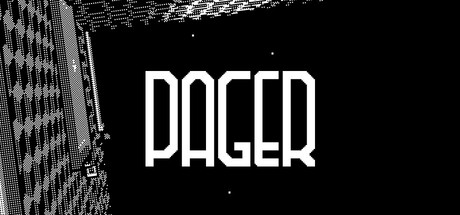
PAGER is an unusual first-person adventure that transforms the ordinary routine of office employment into a surreal journey through bureaucracy, isolation, obedience, and psychological uncertainty. Developed and published by bilge, the game places the player in the role of an employee whose existence appears to revolve around carrying out instructions delivered through a pager. Rather than presenting corporate advancement as something rewarding, PAGER turns the idea of climbing the company hierarchy into something mysterious and increasingly unsettling. Its combination of exploration, puzzles, psychological horror, dark comedy, and experimental storytelling creates an experience that is intentionally different from a conventional horror or adventure game.
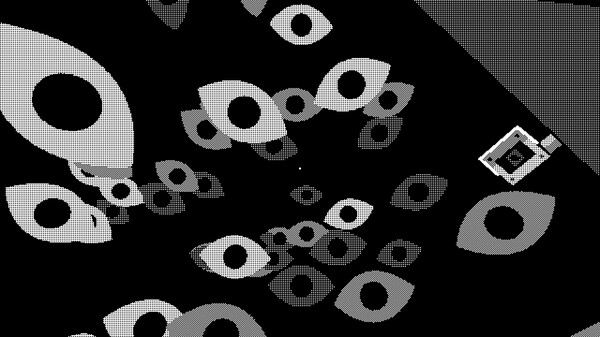
One of PAGER's strongest qualities is its distinctive visual direction. The game presents its strange corporate environment through extremely limited 1-bit 3D graphics, producing an immediately recognizable monochrome appearance. Offices, corridors, elevators, equipment, and other mundane surroundings become surprisingly intimidating when represented through such severe visual restrictions. Familiar spaces lose their comfortable qualities and instead resemble fragments of an artificial world built specifically to contain the player. The graphical simplicity also encourages imagination because objects and locations are not overwhelmed by realistic detail. Instead, shapes, contrast, architecture, and movement become central parts of the atmosphere.
The pager itself serves as the foundation of the experience. Instructions arrive through this device, leaving the player to understand what is expected and perform the necessary tasks. This apparently simple concept becomes increasingly significant because obedience is woven directly into the game's themes. The player is technically progressing through the workplace, but advancement does not necessarily provide greater freedom. Following instructions instead creates the sensation of becoming increasingly involved in a system whose true purpose remains difficult to understand. This makes the corporate setting more than decorative scenery because workplace hierarchy and repetitive responsibilities directly influence how the game is played.
PAGER contains 60 floors, with the developer presenting them as strange and beautiful environments rather than merely conventional stages that need to be completed. Exploration is consequently important. Reaching the end of a floor is not always the most meaningful part of the experience, since observing what happens along the way can be equally significant. Unexpected spaces, unusual situations, environmental details, and deliberately confusing encounters encourage players to pay attention instead of simply rushing toward the next objective. The structure gives PAGER an episodic quality in which each new area can introduce another strange interpretation of the corporate world.
Its horror is also unconventional. PAGER does not depend entirely on monsters, combat, or constant direct threats. Much of its discomfort emerges from atmosphere, uncertainty, strange architecture, unexplained instructions, and the player's limited understanding of the surrounding organization. There is always a sense that some larger system is operating beyond what can immediately be seen. The result is psychological tension created through confusion rather than straightforward danger. Dark humor provides an effective counterbalance, allowing bizarre concepts such as caffeine-addicted butterflies to exist alongside disturbing imagery and existential ideas. The absurdity makes the world unpredictable because humorous situations can quickly become unsettling.
Storytelling follows the same experimental philosophy. Instead of explaining every event through lengthy conversations or direct exposition, PAGER communicates much of its narrative indirectly. Players must examine environments, consider the meaning of instructions, remember unusual encounters, and form connections between seemingly unrelated events. This approach allows different interpretations of what the workplace, pager, protagonist, and surrounding world actually represent. The ambiguity should appeal strongly to players who enjoy thinking about a game's imagery and themes after finishing it, although people who prefer clearly explained plots may find the lack of straightforward answers frustrating.
The inspirations identified by the developer help explain this direction. PAGER draws influence from works including Severance, Franz Kafka, David Lynch, the 1967 television series The Prisoner, The Stanley Parable, Sonny Boy, and Serial Experiments Lain. These influences share recurring interests in identity, authority, bureaucracy, distorted reality, isolation, and systems that individuals struggle to understand. PAGER combines similar ideas into its own strange corporate setting. The Kafkaesque element is especially noticeable because the player repeatedly participates in procedures without necessarily receiving a satisfactory explanation for why those procedures matter.
Another fascinating aspect is the game's apparent resistance to conventional ideas about rewarding the player. PAGER openly embraces dissatisfaction as part of its artistic identity. Most games constantly reinforce progress with upgrades, stronger abilities, valuable items, victories, or obvious achievements. Here, performing tasks can instead resemble actual repetitive labor. That decision supports the corporate themes because the protagonist is effectively working for an organization rather than embarking on a traditional heroic adventure. However, this philosophy can also be challenging. A deliberately tedious or confusing sequence may serve the narrative perfectly while still testing the player's patience.
Mechanically, players expecting an elaborate action game should adjust their expectations. Exploration, observation, environmental interaction, and puzzles are more important than combat or complicated character progression. The walking-simulator qualities mean that atmosphere frequently becomes the main attraction. This slower style works because the visual design and environmental oddities give players reasons to examine their surroundings, but it also makes PAGER better suited to patient players who enjoy experimental experiences. Someone searching for continuous action or clearly defined rewards may struggle with its deliberately unconventional pacing.
The minimalist presentation also allows the game to maintain a remarkably focused identity. Instead of pursuing technical spectacle, bilge uses graphical limitations as part of the storytelling. The monochrome environments make the corporate world appear stripped of warmth and individuality, fitting naturally with themes of conformity and institutional control. Even when the surroundings become increasingly surreal, the consistent visual language keeps everything connected to the same unsettling universe. This demonstrates how carefully chosen artistic restrictions can create a stronger personality than raw graphical complexity.
PAGER is best recommended to players who appreciate experimental indie games, surreal psychological horror, environmental storytelling, unusual visual styles, and narratives that leave substantial room for personal interpretation. It takes something as ordinary as receiving workplace instructions and gradually transforms it into a disturbing exploration of authority and existence. It may intentionally deny some of the pleasures associated with conventional progression, but in exchange it provides a distinctive atmosphere and an identity that is difficult to confuse with anything else.
Rating: 8/10