Osteya is a small-scale indie platformer that leans heavily on retro sensibilities, offering a straightforward and quietly whimsical journey through a mysterious city said to exist between worlds. Developed and published by Volens Nolens Games, the title presents itself as a nostalgic throwback to classic 2D platformers, favoring simple mechanics, pixel art visuals, and a relaxed sense of pacing over complexity or spectacle. You take on the role of Seed, a lone traveler navigating the ancient structures of Osteya in an effort to uncover the truth behind its strange, suspended existence.
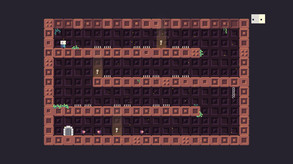
At its core, Osteya is built around familiar platforming fundamentals. Movement, jumping, and hazard avoidance form the backbone of the experience, with levels designed to be easily understood within moments of entry. Progression generally revolves around navigating obstacle-filled rooms, collecting keys, and reaching exits, making the overall structure intuitive even for players with limited experience in the genre. This accessibility is one of the game’s defining traits, as it rarely overwhelms the player with demanding mechanics or complex systems. Instead, it aims to provide a calm, almost meditative flow from one level to the next.
The game attempts to distinguish itself through a teleportation ability that allows Seed to phase through certain walls or obstacles. In theory, this mechanic introduces an additional layer of problem-solving and timing, encouraging players to think beyond simple jumps. In practice, it serves more as a light variation than a transformative feature. While teleportation occasionally adds interest to level layouts, it is used conservatively and can feel somewhat underdeveloped, rarely evolving into something that significantly alters how players approach challenges. As a result, much of the gameplay remains rooted in basic platforming patterns rather than experimentation.
Visually, Osteya embraces a colorful pixel art style that evokes the charm of older indie and retro games. Environments are clean and readable, with bright palettes and simple animations that prioritize clarity over detail. The city of Osteya feels dreamlike and abstract, reinforcing the idea of a place suspended outside normal time. However, as the game progresses, the lack of environmental variety becomes more noticeable. Backgrounds and visual themes change infrequently, which can make later levels blur together and reduce the sense of discovery that the setting initially promises.
Sound design and music take a similarly understated approach. The soundtrack is gentle and unobtrusive, designed to accompany gameplay rather than define it. While this suits the game’s calm tone, it also means that few tracks leave a lasting impression. Audio cues are functional, providing feedback for actions and hazards without drawing much attention to themselves. For some players, this restraint may feel appropriate; for others, it may contribute to the sense that the game lacks a strong identity beyond its visual nostalgia.
One of the most notable aspects of Osteya is its brevity. The full experience can be completed relatively quickly, especially for players comfortable with platforming conventions. This concise length prevents the game from becoming overly repetitive, but it also leaves little room for depth or escalation. Challenges remain fairly consistent throughout, and there is limited mechanical growth or surprise as you approach the end. For players seeking a longer or more demanding experience, this may feel unsatisfying, though others may appreciate the game’s ability to deliver a complete experience without unnecessary padding.
Osteya ultimately feels like a modest and earnest indie project that prioritizes simplicity and approachability over ambition. It does not attempt to reinvent the platformer genre, nor does it aim for high difficulty or narrative complexity. Instead, it offers a short, gentle adventure suited for players who enjoy relaxed platforming and retro aesthetics. While its limited scope, repetitive visuals, and underutilized mechanics may leave some wanting more, it can still serve as a pleasant diversion for those looking for a low-pressure, nostalgic experience that can be enjoyed in a single sitting.
Rating: 5/10