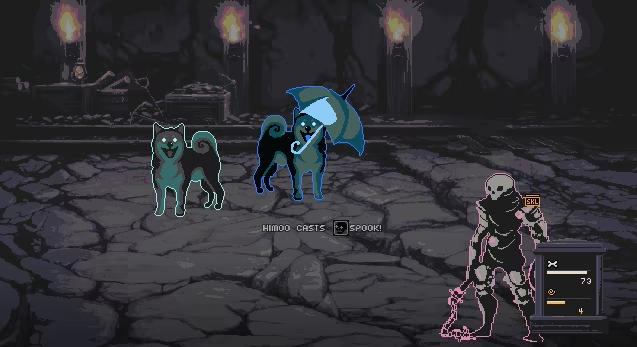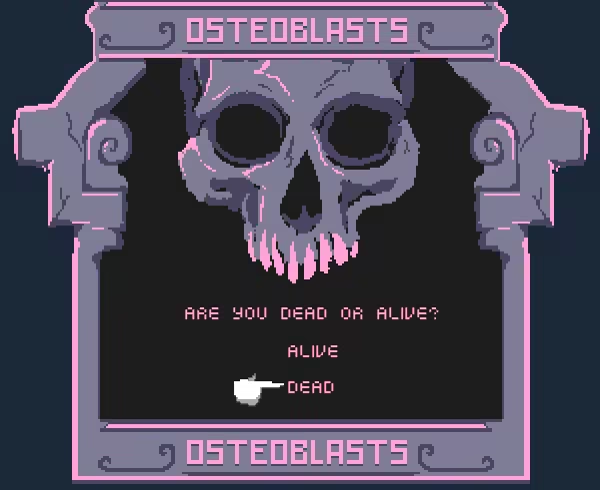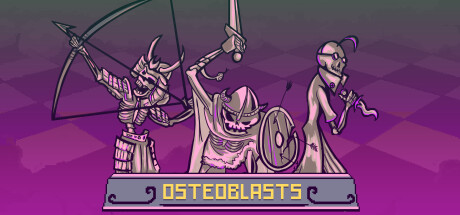
Osteoblasts is a dungeon crawler skeletal RPG about skeletons, by skeletons and for skeletons. If you are not undead leave this page immediately else you'll face the law of Skulls and Bones.
Modeled estimate, not a reported figure. How we estimate →
Media
About

Stats
All-time low is the lowest price we've recorded for this game since we started tracking it.
Languages: English, Korean, Portuguese - Brazil, Simplified Chinese, Japanese
Engagement
Hours played at review time, across 40 reviews with recorded playtime.
Reviews
Themes across 40 recent reviews and how positive each mention is. A keyword signal, not full sentiment analysis.
positive critical· bar length = how often the theme comes up
Reviews
Threw a rock at god and killed em. Peak.
Osteoblasts is a strange, atmospheric, and unapologetically idiosyncratic dungeon-crawling RPG that leans hard into its skeletal identity and offbeat tone. Developed and published by Moonana, the game immediately establishes itself as something different from conventional fantasy RPGs by casting the player as a reanimated skeleton pulled back into existence by a mysterious cat witch. From that moment onward, Osteoblasts commits fully to a world defined by dark humor, existential oddity, and a sense of melancholy that lurks beneath its playful exterior. Narratively, Osteoblasts operates more on mood and implication than on a tightly structured plot. The story unfolds through fragmented interactions, surreal encounters, and loosely connected objectives that often feel more symbolic than literal. Your skeletal protagonist is not driven by heroic destiny, but by a vague compulsion to exist, survive, and confront the strange forces that animate this undead world. While this approach gives the game a unique personality, it can also feel opaque, as important lore details and motivations are sometimes hinted at rather than clearly explained. Players willing to piece together meaning from tone and context will find this rewarding, while those expecting a clearly articulated narrative arc may find it elusive. Gameplay centers on classic dungeon-crawling exploration paired with turn-based combat that is far deeper than the game’s simple presentation initially suggests. Combat relies on managing resources such as bones and marrow, which function as health and ability fuel, and each class brings its own strengths, weaknesses, and strategic considerations. Elemental interactions, stat thresholds, and skill conditions all play significant roles in determining what actions are available in battle. This complexity gives encounters a strong tactical edge, encouraging players to think carefully about positioning, timing, and ability usage rather than relying on brute force. At the same time, this depth can be intimidating. Osteoblasts does not always clearly communicate how its systems interlock, especially early on, and players may find themselves punished for mistakes they don’t fully understand. Elemental affinities and stat interactions can feel cryptic, and the learning curve is steeper than many indie RPGs of similar scope. For some, this opacity adds to the sense of discovery and mastery; for others, it can feel frustrating or overly demanding, particularly during the early hours. Exploration reinforces the game’s dungeon-centric identity. Environments are interconnected, with keys, shortcuts, and optional paths encouraging backtracking and careful observation. The structure occasionally resembles a light Metroidvania, where progress is gated not only by items but also by knowledge of the world’s layout. NPCs populate these spaces with odd dialogue and peculiar side tasks, adding texture and personality even when their practical relevance is minimal. While this design promotes curiosity, it can also lead to moments of aimlessness when objectives are unclear or guidance is sparse. Visually, Osteoblasts embraces a pixel-art aesthetic that balances charm and morbidity. Skeletons, monsters, and environments are rendered with expressive simplicity, reinforcing the game’s whimsical yet unsettling tone. Animations are modest, especially in combat, but the consistency of the art style helps maintain immersion. The soundtrack plays a crucial role in shaping atmosphere, shifting between eerie, introspective tracks and more playful themes that underline the game’s tonal duality. Sound design complements this well, making exploration feel contemplative and battles tense without overwhelming the senses. Difficulty and balance fluctuate over the course of the game. Early sections can feel punishing as players struggle to grasp mechanics, while later segments may become more manageable once a strong build and strategy emerge. Randomized loot and class selection offer some replayability, and multiple endings provide incentive to revisit the game, though the lack of clearer progression systems means that repeat playthroughs may still feel structurally similar. Ultimately, Osteoblasts is a game that thrives on personality rather than polish. Its strengths lie in its commitment to a bizarre, skeletal world, its mechanically rich combat system, and its willingness to be strange without apology. Its weaknesses stem from unclear communication, uneven pacing, and systems that sometimes feel more complicated than necessary. For players who enjoy dungeon crawlers that reward patience, experimentation, and tolerance for ambiguity, Osteoblasts offers a memorable journey filled with dark humor and mechanical challenge. It may not appeal to everyone, but for those attuned to its wavelength, it stands as a distinctive and thoughtfully odd entry in the indie RPG landscape. Rating: 8/10
Мудрая игра про мальчика dimу, который при жизни смотрел много аниме и троллил в интернете, называя себя колодуном-скелетом Иосифом с длинными шелковистыми волосами. За это после смерти он стал безволосым скелетом-рабом крестьянской слободы. Теперь он вынужден искупить свои грешки и наказывать ШЕРСТЬ за интернет-троллинг, жить в мире без электричества и собирать помидоры на полях слободы. Игра весьма поучительна и основной ее посыл не троллить в интернете, иначе можно стать лысым.
Osteoblasts, foi um rpg que comprei em promoção sem muitas expectativas, mas ele tem aquele cheirinho, que qualquer amante de rpg reconheceria de longe. Sua variedade de classes, magias, equipamentos e livre arbitrio no mundo, é sensacional. A sensação de ser só um esqueleto em um mundo cheio de criaturas, deuses, ancestrrais, bruxas é simplesmente incrível o jogo tem uma história não linear (pelo que joguei até agora), ele tem uma vibe filósofica sobre a morte, questões existencialistas e mais, e partes do jogo vão se encaixando conforme voce vai avancando e dialogando com npcs (plano da bruxa, o que aconteceu com os humanos, e tudo mais) Só que é tudo vago, não é explicado a história de uma forma clara, do nada visitamos o passado e o futuro de um reino, uma pena que isso foi tudo cofuso pra mim, queria ter absorivdo mais das riquezas da história desse mundo. Simplesmente, um jogo incrível não reconhecido, vou platinar. (obs: se vc apertar esc quando for escolher a classe, voce pega a classe secreta, que tem outro final)
osso duro de roer esse
This is good, worth your time! More pple shoud try this...
Interesting concept, unfortunately I find the story a bit too wacky and the combat too unpredictable. At least in the early game, you will either win fast or die fast because of RNG.
Bones to ignite passion! Bones of fire! Bones to have fun and overthrow the tyrannical powers that be!
This a simple RPG Maker game with a somewhat original storyline and sprites. All the humans have died and only their bones are left. You play as one such assemblage of bones. On start, you get to choose between 6 different possible "classes" but their main difference is that they have slightly different equipment slots. Honestly, having played this with 2 different classes, i can't tell much difference between them. IOW, different classes do not get different skill trees or or special abilities. One reason for this is because of the design choice of making all skills item-dependent. As long as you have a particular item equiped and you have the necessary stats for a particular skill, you get to use the skill in combat. (There are no out-of-combat skills.) There are also about 20 passive/automatic abilities you can purchase at a shrine. Combat-wise, this is pretty bare bones configuration (excuse the pun), considering how many possible skills you can acquire. The use of different classes seems like a sort of window dressing for the lack of real differences between them aside from item slots. Still, some fights are challenging, and the magic system has enough variety that you don't feel it's superfluous nor overly complex. Combat rating 3 out of 5. The story here is mediocre. It's somewhat original (and philosophical), but there are not any real choices except maybe at the very end. Also, the story does not change if you play a different class. Story rating is 2 out of 5. Where this game shines is in the characters. The character writing here is pretty good and occasionally even funny. While there is no complex plotline or key hidden information, you do get a sense that every NPC has a personality, that they have stuff they do other than dispense advice or items to you. Considering that this is not a game in which guilds, factions, or mysteries drive the plot, the level of writing is surprisingly good. Story rating 4 out of 5. Overall rating 3 out of 5. There are better RPGs out there, but this one feels original and the humor will tickle your funny bone if you like your RPGs the way you like your gin: dry with a slightly rough finish.
+1 有中文 有成就 ⣿⣿⣿⣿⣿⣿⣿⣿⣿⣿⣿⠿⣿⣿⣿⣿⣿⣿⣿⣿⣿⣿⣿⣿ ⣿⣿⣿⣿⣿⣿⣿⢟⣽⣶⣿⣿⣶⣶⣮⣝⠿⣿⣿⣿⣿⣿⣿⣿ ⣿⣿⣿⣿⣿⠏⢷⣿⣿⡿⠛⠙⠛⢛⠛⡻⠿⢮⢻⣿⣿⣿⣿⣿ ⣿⣿⡛⢋⣭⡌⡠⠄⡀⠲⡟⡰⡠⠄⣘⣒⣶⣥⡄⣽⣻⠻⢿⣿ ⣿⡿⢦⠈⠙⠰⠁⢠⣹⣄⠄⠁⠄⣠⣿⣿⣿⣿⡧⣫⣿⣞⡃⣿ ⣿⣘⣧⣳⠤⢰⣶⣿⠁⠙⣿⣿⣿⣿⣿⣿⣽⣶⣿⣿⣿⡿⣱⣿ ⣿⣜⢿⣿⣿⣼⣿⣿⡀⠄⢸⣿⣿⣿⣿⣿⣿⠿⠟⢫⢱⣾⣿⣿ ⣿⣿⣿⣶⡅⣿⣿⣿⣿⣿⣿⣿⣿⣿⣿⣿⣿⣿⣿⢿⢸⣿⣿⣿ ⣿⣿⣿⣿⢳⣿⡏⣿⣿⣿⣿⣿⣿⣿⢻⣿⠉⣿⡟⢸⡾⣿⣿⣿ ⣿⣿⣿⡟⣾⣿⡇⣿⣿⣿⣿⣿⣿⣿⢸⣿⡀⣿⠁⡸⢇⢻⣿⣿ ⣿⣿⣿⠙⠋⠉⠃⡿⣿⣿⣿⡟⡿⠻⠸⠻⢇⠘⢈⣤⣤⣽⣿⣿ ⣿⣿⣿⣷⣶⣆⠄⣰⡁⠄⠈⠇⠃⠄⣀⣀⡀⠄⣸⣿⣿⣿⣿⣿
Related
Related
Trends
Concurrent players on Steam, sampled daily since tracking started.
Momentum
Pace estimated from the game's recent review growth (our daily snapshots) at its own sales-per-review ratio — a momentum signal, not booked sales.
Audience
Estimated from the language of this game's reviews — a proxy for where players are, not official Steam demographics.
Related
| Gladiator Manager | $26K | 116 | 78% | $7.99 |
| The Treasures of Montezuma 5 | $26K | 209 | 68% | $6.99 |
| Ballistic Tanks | $26K | 244 | 82% | $4.99 |
| Cargo Company | $26K | 67 | 58% | $9.99 |
| Pixel FX Designer | $26K | 148 | 80% | $9.99 |
| Demon's Rise - Lords of Chaos | $26K | 142 | 82% | $6.99 |