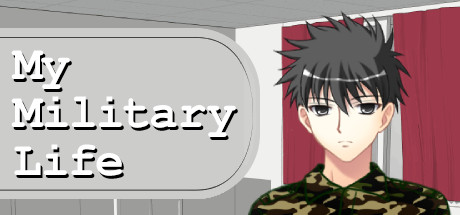
My Military Life is an introspective and quietly distinctive indie game that deliberately subverts expectations commonly associated with military-themed titles. Developed and published by Real Stone, the game is rooted in personal experience rather than spectacle, choosing to depict military service not as a series of heroic battles or tactical showdowns, but as a prolonged stretch of routine, bureaucracy, and human interaction. From the outset, it becomes clear that this is not a power fantasy, but a slice-of-life narrative that explores what it actually feels like to exist within a rigid system where small inconveniences can become overwhelming obstacles.
The story revolves around a deceptively mundane problem: the protagonist’s identification card has gone missing, and without it, discharge from military service becomes impossible. This simple premise drives the entire experience, turning an everyday administrative issue into the central mystery of the game. As players search for the missing card, they are drawn into conversations with fellow soldiers, superiors, and acquaintances, each interaction revealing fragments of military culture, hierarchy, and unspoken rules. The narrative unfolds gradually, emphasizing how progress in such an environment often depends not on skill or strength, but on patience, social navigation, and persistence.
Gameplay is centered on exploration, dialogue, and a series of small tasks that mirror daily life in a military setting. Rather than complex mechanics, the game relies on a steady rhythm of errands, investigations, and mini-games that reflect chores and duties such as cleaning, preparing food, physical training, or administrative work. These activities may seem trivial on the surface, but they are crucial to the game’s identity, reinforcing the idea that military life is defined more by repetition and obligation than by dramatic events. The pacing is intentionally unhurried, allowing players to absorb the environment and reflect on the cumulative weight of routine.
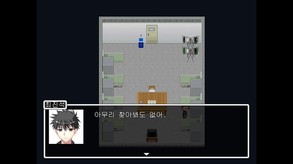
Visually, My Military Life employs a retro pixel-art style reminiscent of classic RPGMaker games. The top-down presentation is simple but effective, clearly conveying the layout of barracks, offices, training grounds, and communal spaces. While the visuals are modest and unpolished compared to modern indie titles with elaborate animations, they serve the narrative well by maintaining focus on interaction and atmosphere rather than visual flair. The restrained aesthetic reinforces the grounded tone, making the setting feel functional and lived-in rather than stylized or exaggerated.
The game’s tone is one of quiet sincerity, occasionally punctuated by dry humor and subtle absurdity. Conversations often highlight the frustrations, misunderstandings, and small moments of camaraderie that emerge in an environment governed by strict rules. For players who have experienced military service, many of these moments may feel uncomfortably familiar, while those without such experience gain insight into aspects of service that are rarely portrayed in games. The missing ID card functions not just as a plot device, but as a metaphor for how easily one’s future can be stalled by minor administrative failures.
Narrative delivery is understated, relying heavily on dialogue and environmental context rather than overt exposition. This approach allows players to piece together meaning through observation and interaction, making the experience feel personal and reflective. However, the lack of official English localization presents a significant barrier for non-Korean-speaking players, as much of the game’s emotional nuance and humor is conveyed through text. While community translations and external tools can help bridge the gap, full appreciation of the story is most accessible to those who understand the original language.
In terms of replayability, My Military Life is not designed for repeated playthroughs with branching outcomes or radically different paths. Instead, its value lies in the strength of its singular experience. The satisfaction comes from completion and understanding rather than mastery or optimization. This design choice aligns with the game’s themes, reinforcing the idea that military service is something to endure and reflect upon rather than perfect or exploit.
Overall, My Military Life stands as a rare and thoughtful example of how video games can explore overlooked aspects of real-world experiences. By focusing on bureaucracy, routine, and human interaction, it offers a grounded portrayal of military life that contrasts sharply with mainstream depictions. While its niche appeal, minimal mechanics, and language limitations mean it will not resonate with every player, those drawn to narrative-driven indie games and autobiographical storytelling will find it a quietly powerful and memorable experience.
Rating: 8/10