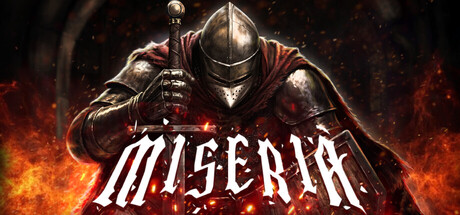
Miseria is a dark fantasy idle incremental game in which you lead a party of damned souls through the depths of the world.
Modeled estimate, not a reported figure. How we estimate →
About

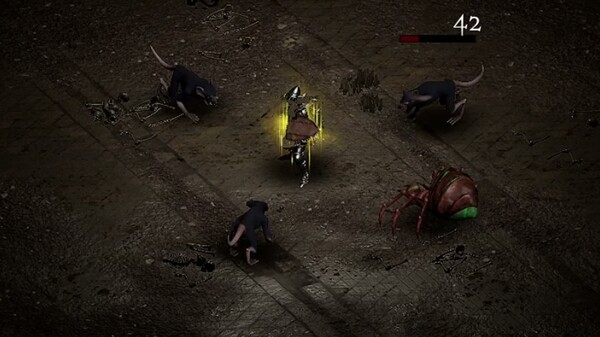
Venture deeper into a dark, ever descending abyss in search of your deepest desires. Your party fights automatically as you progress, striking down enemies with relentless attackscharging mana and unleashing powerful abilities. The deeper you go, the greater the danger… and the reward.

Your characters gain experience through combat, allowing you to level up their stats and increase their power. Defeat monsters to earn gold, then visit the blacksmith to upgrade and forge stronger equipment. Every decision shapes how far your team can push into the darkness.

Embrace the cycle of power through the Reborn system. Reset your progress to gain powerful permanent upgrades and push even further on your next descent. Master the prestige mechanics and break past your previous limits.
Genres
Stats
All-time low is the lowest price we've recorded for this game since we started tracking it.
Engagement
Reviews
Themes across 240 recent reviews and how positive each mention is. A keyword signal, not full sentiment analysis.
Reviews
Miseria is a dark fantasy incremental RPG that combines the steady progression of an idle game with the atmosphere and character development of a dungeon crawler. Developed and published by Somnambulist Games, it centers on a party of condemned souls descending into an ominous abyss in search of the things they desire most. The premise gives a suitably bleak context to mechanics that might otherwise feel purely numerical. Instead of simply accumulating resources for their own sake, players are gradually strengthening a group that must repeatedly confront increasingly dangerous enemies as it pushes farther into the darkness. Combat largely operates automatically, making Miseria considerably different from a conventional action-oriented dungeon crawler. Party members attack enemies without requiring the player to control every strike, and their actions generate mana that eventually allows them to unleash stronger abilities. The player's responsibility is therefore focused more heavily on preparation and progression than reflexes. This approach makes the game suitable for players who enjoy observing a build gradually become more efficient. Every improvement can potentially determine whether the party defeats an enemy comfortably or reaches another obstacle that requires additional development. Experience is one of the fundamental resources behind this progression. Characters gain experience through combat, and players can use it to improve their statistics. This creates a straightforward connection between fighting and becoming stronger while still giving the player some control over development. The important element is that automatic combat does not mean the entire experience is automatic. Decisions concerning upgrades remain significant because the effectiveness of the party ultimately depends on how well its accumulated resources have been invested. Gold introduces another important progression path. Defeated enemies provide currency that can be taken to the blacksmith, where equipment can be improved and more powerful gear forged. This equipment system gives Miseria more of a recognizable RPG identity than an incremental game built entirely around abstract multipliers. Upgrading weapons and other equipment provides a tangible representation of growing strength, while the blacksmith creates another destination for resources earned during expeditions. Character statistics and equipment consequently work together rather than forcing all progression through a single upgrade menu. The constant descent into the abyss provides an effective framework for escalating difficulty. Moving deeper means encountering greater resistance, naturally creating moments when the current party can no longer progress efficiently. These barriers are an important part of the design rather than simply frustrating interruptions. A difficult enemy tells the player that the current progression strategy has reached its temporary limit. The next step may involve improving statistics, investing additional gold into equipment or accepting that the current run has gone as far as it reasonably can. This is where Miseria's Reborn mechanic becomes especially important. Rebirth allows players to restart their progression while receiving permanent upgrades that carry into later attempts. It follows the prestige structure common to incremental games, but the mechanic fits the game's themes particularly well. The doomed party repeatedly ventures downward, reaches its limits and begins again with greater underlying power. Losing temporary progress becomes worthwhile because each reset contributes toward stronger future expeditions. A successful rebirth system also changes how earlier portions of the game feel over time. Encounters that once slowed progress can eventually be overcome with little difficulty, clearly demonstrating how much stronger the party has become. That sensation of turning former obstacles into trivial encounters is one of the central pleasures of incremental design. Miseria relies heavily on this loop, meaning players should expect repeated cycles of advancement, resistance, rebirth and faster advancement. Anyone who enjoys optimizing this type of progression can find considerable satisfaction in gradually extending the depth reached during each attempt. The dark medieval fantasy presentation gives this repetitive structure a stronger personality. Miseria uses a 3D visual approach rather than reducing the entire experience to menus and statistics. Seeing the party actually confront enemies helps connect numerical improvements to visible combat performance. The bleak environment and concept of an endless descent also reinforce the feeling that the characters are undertaking a dangerous journey rather than simply producing resources in the background. At the same time, expectations about interactivity are important. Although Miseria contains dungeon-crawling and RPG characteristics, it should primarily be approached as an idle incremental RPG and auto battler. Players seeking precise manual attacks, active dodging, complicated real-time positioning or constant direct control may find the automatic combat too detached. The attraction comes from making decisions outside individual attacks and then observing how successfully those choices perform. For the appropriate audience, this can make the game relaxing while still providing enough strategic involvement to prevent progression from feeling completely hands-off. The progression systems appear intentionally interconnected. Experience strengthens characters, gold contributes to equipment development, equipment improves combat performance, stronger combat allows deeper exploration, and greater progress ultimately feeds into rebirth and permanent upgrades. This creates a circular structure in which nearly every activity supports another part of the advancement process. The concept is simple enough to understand quickly, but the repeated optimization of these systems provides the longer-term motivation. Miseria is also relatively modest in its storage demands, requiring only around 900 MB of available space. Its minimum hardware requirements include 8 GB of memory and graphics hardware around the GeForce GTX 1050 Ti or Radeon RX 570 level, while the recommended configuration increases memory to 16 GB and suggests approximately GTX 1060 or RX 580 class graphics. Windows 10 or Windows 11 in 64-bit form and DirectX 12 are required. Steam Achievements and Steam Cloud support are welcome additions for a progression-focused game designed to encourage repeated sessions. Somnambulist Games also discloses that generative AI was used during development for concept artwork, references and promotional material, while stating that the final content used within the game was created by humans. This provides useful transparency regarding how those tools contributed to production without presenting them as a replacement for the game's finished assets and design. Ultimately, Miseria succeeds most clearly when viewed as an incremental progression experience wrapped in the appearance and atmosphere of a dark fantasy RPG. Its automatic combat will not satisfy everyone, particularly players expecting traditional action gameplay, but it supports the larger emphasis on optimization and long-term advancement. Improving statistics, forging better equipment, gathering resources and repeatedly using Reborn to gain permanent strength form a coherent gameplay cycle that complements the theme of an endless descent. The result is a focused experience for players who appreciate watching carefully developed characters grow from vulnerable adventurers into increasingly efficient conquerors of previously intimidating challenges. Rating: 6/10
Media

Related
Related
Price dynamics, follower growth, revenue and sales trajectories with interactive tooltips
This and every other Pro feature is free until October 20, 2026. A free account is all it takes.
Languages: English, French, Italian, German, Spanish - Spain, Japanese, Korean, Portuguese - Brazil, Russian, Simplified Chinese
Hours played at review time, across 241 reviews with recorded playtime.
positive critical· bar length = how often the theme comes up
세상에나 씨발! 이렇게 똥겜일 줄이야! 환불 시간 지나기 전에 빨리 도망쳐!
Leider absolut nicht zu empfehlen, 7h auch nur weil ich vor Langeweile eingeschlafen bin. So wenig Content und das obwohl man die Level eigentlich unendlich skalieren könnte, hier ist nach 2-3h Schluss und man kann nichts mehr machen.
I did not want this game to end. It was perfection. Now we need a sequel or an update. We have rebirths now it's time for ascentions and more classes and items like uniques and sets. and more areas and bosses. Let's go full idle Diablo. This is game is formula for fun and this feels like the start of something great.
слишком коротка за эти деньги
Pointless incremental, just press buttons and wait to grind a floor. No strategy, no skill/dps/power checks, just rince and repeat until you "beat it". Cash grab, through and through.
Solid couple of hours, small tip you can hold left click to quick buy upgrades etc.
The atmosphere in this incremental is pretty strong - it has the gritty gothic vibe similar to games like the original Diablo - very grim, claustrophobic and oppressive. The game mechanics are straightforward to the point of bluntness and if I had to complain about anything, then about the game's brevity. All in all, I had to prestige/rebirth five times to see all the game had to offer. It was a satisfying conclusion in the end but instead of skipping right to floor 666 for the final boss, I would have preferred an actual grind up to that point. Also, if you value your sanity, turn down SFX volume. The stat and gear upgrade sounds are of the ...not so pleasant variety and get very old very fast.
Game really isnt fun its stare at a screen auto attack simulator....
5h gry auto battler'a. Sam sobie odpowiedzcie na pytanie ile chcecie wydać za te 5h średnio wciągającej rozgrywki
Selling now
See how fast this game is selling right now — estimated copies and revenue per day from recent review growth.
Players by region
Where this game's players are, estimated from review languages.
Players also reviewed
The games this title's players most often review too — audience affinity.
Related
| Game | Estimated lifetime revenue | Reviews | Review score | Price |
|---|---|---|---|---|
| $107.6K | 1K | 77% | $5.99 | |
| $107.5K | 523 | 94% | $7.99 | |
| $107.5K | 308 | 74% | $9.99 | |
| $107.5K | 525 | 72% | $4.19 | |
| $107.6K | 340 | 84% | $14.99 | |
| $107.5K | 144 | 53% | $39.99 |
Related
| Game | Estimated lifetime revenue | Reviews | Review score | Price |
|---|---|---|---|---|
| $930.8K | 3K | 92% | $5.59 | |
| $3.1K | 24 | 62% | $3.74 | |
| $63.3K | 98 | 73% | $14.99 | |
| $5.3K | 31 | 32% | $4.99 | |
| $3.3K | 19 | 74% | $4.99 | |
| — | 0 | — | — |
