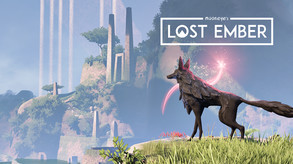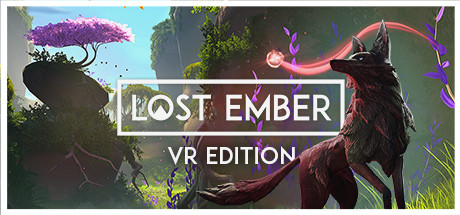
Explore the remains of a fallen world from fascinating perspectives! Slip into the role of different animals to uncover the fate of an ancient world. Dive into deep waters, fly at lofty heights, dig underground as a mole, climb steep cliffs with a mountain goat, and many more!
Modeled estimate, not a reported figure. How we estimate →
Media

About

Stats
All-time low is the lowest price we've recorded for this game since we started tracking it.
Languages: English*, French, German*, Spanish - Spain, Japanese*, Korean, Portuguese - Brazil, Russian, Simplified Chinese, Traditional Chinese, Turkish*languages with full audio support
Engagement
Hours played at review time, across 40 reviews with recorded playtime.
Reviews
Themes across 40 recent reviews and how positive each mention is. A keyword signal, not full sentiment analysis.
positive critical· bar length = how often the theme comes up
Reviews
10 TL'ye aldım 6 $ olmuş. ampul sayesinde...
VR version doesn't actually WORK on VR, unless you have an Index. Or you're a computer genius. Look at the rating of the VR version vs the regular version - it tells the story.
This post is specifically for VR (I'm using a Quest 3). Cinematic sequences are double vision. You can go off trail and the game will reset you off the map. Enjoy restarting the checkpoint over and over again. Ducks' animations don't look quite right (they will be mid flight and stop flapping their wings, almost T-pose like). The main game might be great, but the VR experience is frustrating at the least.
Received this game as a gift. The gameplay and story is amazing, but the VR port is awful. Of the many VR titles I've played, this is the only one that makes me nauseous to play. That seems to largely be from the fact that the perspective is third-person (the camera tries to auto-correct to always keep the wolf centered in your view, so the virtual camera orbits around that character), but also the VR port has head-tracked steering. This means if you've got the thumbstick "up" to move the wolf in a specific direction, and you turn your head slightly to the right, the wolf will start angling to the right (even with the thumbstick still straight "up"). But then the camera slides to the left to stay behind the wolf in this new line of motion. That end result means you rotate your head to the right, and it makes the camera rotate right AND move left. That motion translates to instant nausea for me. Secondarily, the scale of you as a human observer is often "off" for where the camera is. The third-person camera that follows the different animals tracks close to them, and since animals are rather short, the camera is pretty close to the ground. That means there's a constant sense that you as a human are buried up to your chest in the ground in order to get that perspective. Going through tunnels can also feel very claustrophobic, as it feels like your head shouldn't be able to fit through that space you're gliding through. Play the desktop version, not the VR version.
Bought this game (bundle) for the VR version. It is not a good port at all. I don't usually get motion sick in VR games, but this one was bad. The UI is off and the camera is not good. Don't buy if you're just going to play the VR version.
Lost ember is an amazing game that I will always recommend play. The VR port however is completely unplayable, at least on Meta Quest 3. I had to use computer controls to get the cutscene to start at all, cutscene was extremely glitchy, and when the cutscene was over I could not make my player character walk.
bad
i love the camera movement of the cutscene, it makes me feel funny while i'm standing but yeah, this game definitely wasn't made/ported for VR still, it's an unusual experience, which i like
Un jeu un peu creux: c'est très beau et agréable à parcourir et c'est tout. Pas vraiment de gameplay et l'histoire est un peu bidon. Version VR OK.
Lost Ember VR Edition transforms Mooneye Studios’ serene, nature-driven adventure into an immersive virtual reality experience, inviting players to step directly into a world reclaimed by wilderness long after humanity has fallen. At its core, the game tells a quiet, reflective story about a wolf guided by a mysterious glowing spirit. Together, they journey through sprawling landscapes—ruins, dense forests, deserts, mountains—and discover fragments of a forgotten civilization. The VR edition takes this emotional, atmospheric foundation and amplifies it by letting players experience its environments and animal transformations from a far more intimate perspective, turning exploration into something felt rather than simply observed. The game’s most striking quality is its audiovisual immersion. Lost Ember was already known for its painterly art direction, sweeping vistas, and calming soundtrack, but in VR these elements become enveloping. Running through tall grass as a wolf gives a real sense of momentum and presence; soaring through the sky as a bird becomes a breathtaking glide over towering cliffs; diving beneath rivers as a fish allows players to experience the cool hush of underwater caverns; digging through cramped tunnels as a mole shifts the sense of scale entirely. Every transformation offers a fresh way to interact with the landscape, and VR heightens that sensation of stepping into the skin of each creature. The world is gentle yet striking, projecting an almost meditative quiet that invites slow exploration instead of rushing forward. The narrative unfolds through memories scattered across the world, revealing the downfall of the Yanrana civilization and the personal connections between the spirit companion and the people who once lived there. Themes of guilt, redemption, and understanding guide the story, and encountering each memory in VR makes these moments feel more personal. The scenes play out in front of you like ephemeral illusions, and the ability to stand within them—rather than watch from a distance—creates a greater emotional closeness. Lost Ember’s storytelling has always been more subtle than explicit, favoring atmosphere over dialogue, and the VR perspective strengthens that design, encouraging players to absorb meaning through visual cues and environmental storytelling. However, the transition from a traditional third-person game to VR is imperfect. The original game’s movement system and camera design were not built with VR comfort in mind, and the adaptation does not fully solve the inherent challenges. Movement relies heavily on smooth locomotion, which can be disorienting for some players, especially during rapid transitions between animals with different speeds. Certain sequences—such as flying, sliding downhill, or tightly turning in tunnels—can induce motion sickness, particularly because the camera often attempts to reorient itself around the animal’s body. This automatic repositioning can feel jarring in VR, interrupting immersion and causing discomfort for players sensitive to motion. The controls, while functional, occasionally feel imprecise. Prompts and interactions that were intuitive in standard gameplay sometimes require awkward positioning in VR. This can lead to moments where players struggle with small actions that break the otherwise fluid sense of embodiment. Additionally, the lack of physical VR interactions—such as gesture-based controls or hand tracking—highlights the fact that the game is a port rather than a VR-first project. The experience often feels like a beautiful world viewed through a headset rather than one built from the ground up to take advantage of VR’s strengths. Despite the mechanical limitations, Lost Ember VR Edition retains the gentle pacing and relaxing structure that defined the original. There are no enemies, no fail states, and no time pressure. The focus is on wandering, absorbing the scenery, and uncovering story fragments at your own rhythm. This slow, contemplative approach fits well with VR’s immersive strengths. Even with its minimalistic mechanics, the sense of presence can make simple moments—like watching a sunset over ancient ruins or gliding above shimmering lakes—feel genuinely moving. It’s a reminder that gameplay depth isn’t always required when atmosphere and emotional tone carry the experience. Performance can vary depending on hardware, and frame drops or stutters are more noticeable in VR, occasionally disrupting the sense of smooth traversal. While the environments remain beautiful, not all textures or visual effects translate perfectly to the headset, and some areas reveal the original game’s technical limitations more starkly in virtual reality. These issues don’t overshadow the whole experience but do contribute to the impression of a port that didn’t receive full VR optimization. Lost Ember VR Edition ultimately thrives as a tranquil, emotionally warm journey made more intimate by the power of virtual reality. It gives players a chance to embody different creatures and explore a world suffused with beauty and melancholy, creating a sensory and emotional experience few games attempt. At the same time, its roots as a non-VR game show through in its awkward camera transitions, occasional control discomfort, and lack of VR-native interaction systems. For players who loved the original and want a deeper sense of presence in its world, the VR edition is a meaningful way to revisit it. For VR enthusiasts seeking highly polished design or mechanics crafted specifically for virtual reality, the shortcomings may be harder to ignore. As a whole, it remains a memorable and heartfelt experience—one defined not by challenge or complexity, but by the quiet wonder of seeing the world through many eyes, across a landscape where nature has reclaimed everything humanity left behind. Rating: 5/10
Related
Related
Trends
Modeled estimate over time, reconstructed from Steam's monthly review histogram.
Momentum
Pace estimated from the game's recent review growth (our daily snapshots) at its own sales-per-review ratio — a momentum signal, not booked sales.
Audience
Estimated from the language of this game's reviews — a proxy for where players are, not official Steam demographics.
Related
| Slash It | $57.3K | 1.3K | 85% | $1.99 |
| Little Witch Survivors | $57.3K | 574 | 89% | $3.99 |
| PAW Patrol: Grand Prix | $57.3K | 98 | 79% | $29.99 |
| Office Management 101 | $57.3K | 98 | 63% | $19.99 |
| The Kings' Crusade | $57.3K | 175 | 39% | $9.99 |
| Fallen Legion: Rise to Glory | $57.3K | 85 | 66% | $29.99 |
Related
| 7 Days to Die | $425.3M | 403.5K | 87% | $44.99 |
| Mount & Blade II: Bannerlord | $309.8M | 293.9K | 88% | $49.99 |
| Palworld | $279.6M | 445.8K | 94% | $20.99 |
| Clair Obscur: Expedition 33 | $263.7M | 178K | 95% | $47.99 |
| The Forest | $254.8M | 678.5K | 96% | $19.99 |
| Ready or Not | $238.1M | 338.9K | 78% | $49.99 |