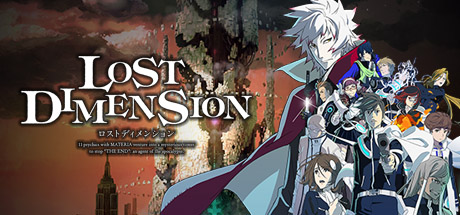
In the near future a terrorist mastermind, known only as ‘The End’, threatens humanity with nuclear armageddon. A special task force, the S.E.A.L.E.D team, are the only ones who can stop him: a group of young combatants with incredible abilities and each with a mysterious past.
Modeled estimate, not a reported figure. How we estimate →
Media

About
Stats
All-time low is the lowest price we've recorded for this game since we started tracking it.
Languages: English**languages with full audio support
Engagement
Hours played at review time, across 41 reviews with recorded playtime.
Reviews
Themes across 41 recent reviews and how positive each mention is. A keyword signal, not full sentiment analysis.
positive critical· bar length = how often the theme comes up
Reviews
good story
💋
Refunding because the game doesnt work very well :( No models will load this games looks cool af tho so if anyone knows of a fix for this Ill rebuy the game or try the emulate
Como JRPG me parece injugable. La historia pinta más o menos interesante pero el pacing de lo poco que he jugado es horrible, la música es genérica y se corta en momentos extraños dentro del combate sacándome por completo de la inmersión. Mejor vete a jugar un Metaphor Refantazio.
got this game because of a youtube video, and it happened to be on sale at the time. i really do enjoy it! i just finished my first playthrough, i really enjoy the content and the concept of the game in general. completely randomized traitors is pretty fun to figure out, and it's pretty engaging. however, there are a few key issues. one of the best strategies for this game is to not base your run on any one character or their skills, as every character has the potential to become a traitor. the issue with this however is that there's only one healer in the entire game. while you do get the skills if the healer does turn out to be a traitor, an issue arises where you shouldn't use them on your team to gain trust with other characters to make them more likely to vote them out. i was on stratum 3 when this happened to me, and it made about 4 battles absolute hell to get through thanks to not having a dedicated healer. especially on a floor with tough battles. this isn't a huge issue however, just a little bit annoying. i genuinely love this game, and i love the replayability factor a lot!
Games difficulty is very stupid. Requires a lot of grinding to not have the enemies in some stages just 6x combo one guy to death from max HP.
extremely low-effort port, this game has no graphics settings such as v-sync, and screen tearing is extremely jarring and occurs literally every 5 seconds or more. the visuals themselves are very underwhelming, with amateurish use of what looks like live2d or something similar. the tutorial is awful, there's no explanation for how to play, i had to restart because my character just wouldn't do anything. so only buy this game if you're headache-proof lol
I could not get this to play correctly on Steam deck, which is a shame because this is a great game that is fantastic to play through 2 or 3 times. Character customization is fun and deep, plus the randomization of your team as you climb the tower really pushes you to learn and play all the characters. If there are updates that make this game playable on Steam deck then I’ll happily switch my review but it has to be not recommended for now.
Lost Dimension is a tactical role-playing game developed by FURYU Corporation and published on PC by Ghostlight LTD that distinguishes itself through an unusual blend of squad-based strategy, psychological tension, and social deduction. While it borrows familiar foundations from classic strategy RPGs, it sets itself apart through a central mechanic built around mistrust and betrayal, transforming the traditional power fantasy of commanding a growing party into a more unsettling experience where allies can be just as dangerous as enemies. The game is set in a near-future world pushed to the brink of collapse by a mysterious terrorist known as The End, whose actions have plunged society into fear and devastation. Players take on the role of Sho Kasugai, a young soldier gifted with precognitive abilities, leading an elite unit tasked with ascending a massive structure called the Pillar. Each floor represents both a military objective and a psychological trial, as Sho and his team face not only increasingly powerful enemies but also the looming knowledge that traitors exist within their ranks. This narrative premise immediately injects tension into every interaction, making even casual dialogue feel layered with suspicion. Combat in Lost Dimension is built around turn-based tactical engagements in three-dimensional arenas rather than traditional grid-based maps. Positioning, movement ranges, and line-of-sight play a major role, encouraging players to think spatially rather than simply counting squares. Each character brings unique psychic abilities known as Gifts, which define their role in battle and allow for meaningful team synergies. Mechanics such as Assist attacks and the ability to delay or rearrange turn order reward coordination and foresight, giving combat a satisfying rhythm that balances accessibility with strategic depth. While the system is approachable, it offers enough nuance to remain engaging across long campaigns. Progression is tightly linked to both combat performance and character relationships. Characters grow stronger through use, unlocking new abilities and improving effectiveness over time, but their development can be abruptly cut short by narrative choices. At the end of each chapter, players must identify and vote to eliminate a traitor from the group. This decision permanently removes a character from the story and from future battles, meaning that emotional attachment and mechanical investment are constantly at risk. Choosing correctly strengthens the team and reveals more about the overarching mystery, while choosing poorly can cripple your roster and alter the story’s emotional tone. The traitor system is the game’s defining feature and its most ambitious idea. Traitors are randomized between playthroughs, ensuring that no two runs unfold in exactly the same way. Sho’s precognitive visions, conversations with teammates, and subtle behavioral clues must be pieced together to determine who can be trusted. This creates moments of genuine tension that few strategy RPGs attempt, as players are forced to weigh logic against intuition and emotional bias. The system encourages multiple playthroughs, as different traitor combinations lead to altered party compositions, dialogue outcomes, and narrative beats. Narratively, Lost Dimension blends apocalyptic stakes with intimate character drama. The cast is composed of distinct personalities, each grappling with fear, loyalty, and personal motivations as the mission progresses. While the writing occasionally leans on familiar anime tropes and exposition-heavy scenes, it succeeds in building a sense of claustrophobic unease. The story’s strength lies less in grand plot twists and more in the slow erosion of trust within the group, making player decisions feel morally uncomfortable rather than simply strategic. Visually, the game reflects its origins on earlier console hardware. Character models and environments are functional but modest, with limited animation and relatively simple textures. However, the anime-inspired art direction gives the cast a clear visual identity, and the restrained presentation helps keep the focus on gameplay systems rather than spectacle. On PC, the port is serviceable but lacks extensive graphical customization, which may disappoint players accustomed to more modern technical options. Sound design and music support the atmosphere without dominating it. The soundtrack leans toward moody, understated compositions that reinforce the sense of impending doom and uncertainty, while voice acting is used sparingly, leaving much of the emotional weight to text and player interpretation. This minimalist approach aligns well with the game’s psychological focus, even if it limits dramatic impact in key story moments. Over the course of a full playthrough, pacing can become uneven. Tactical battles, while enjoyable, follow a relatively consistent structure that may feel repetitive to some players, especially during longer sessions. However, the looming traitor decisions and branching narrative consequences help counterbalance this repetition by maintaining narrative tension and giving purpose to continued progression. Players who engage with the systems on their own terms often find the slow burn rewarding, while those seeking constant mechanical novelty may feel constrained. Taken as a whole, Lost Dimension is a thoughtful and unconventional tactical RPG that succeeds by challenging player expectations rather than overwhelming them with complexity or spectacle. Its blend of strategic combat and social deduction creates a rare sense of vulnerability within a genre usually defined by empowerment. While it shows its age in presentation and occasionally stumbles in pacing and writing, its core ideas remain compelling. For players who value experimentation, replayability, and narrative tension alongside solid tactical gameplay, Lost Dimension offers a distinctive experience that lingers long after the final vote is cast. Rating: 7/10
Great and unique narrative idea, but the game is severly undercooked. I can handle low budget janky gameplay. I can handle waiting until big robots slowly walk towards me because the game doesn't allow me to increase turn speed. I can handle sharp difficulty spikes and occasionally ridiculous map design. But when I finised a mission, the game crashed and I had to restart the chapter, I simply ragequit. Technically I can recommend it if you're extremely patient and understanding. Otherwise skip.
Related
Related
Trends
Modeled estimate over time, reconstructed from Steam's monthly review histogram.
Momentum
Pace estimated from the game's recent review growth (our daily snapshots) at its own sales-per-review ratio — a momentum signal, not booked sales.
Audience
Estimated from the language of this game's reviews — a proxy for where players are, not official Steam demographics.
Related
| Kaiju Cracking Corporation | $150.8K | 326 | 75% | $11.99 |
| The Promised Land | $150.7K | 778 | 87% | $6.99 |
| Radiation Island | $150.7K | 635 | 81% | $9.99 |
| Harem in Another World | $150.9K | 389 | 94% | $14.99 |
| Global ATC Simulator | $150.7K | 141 | 65% | $29.99 |
| Sore wa Maichiru Sakura no You ni -Re:BIRTH- | $150.7K | 232 | 83% | $39.99 |