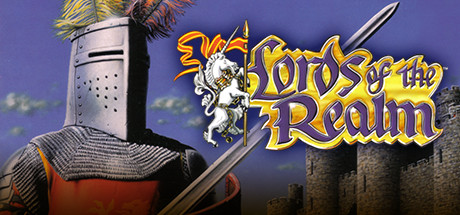
The year is 1268 and the English throne lies empty. Fight for the right to be King in this classic blend of turn-based and real-time strategy.
Modeled estimate, not a reported figure. How we estimate →
Media

About
Genres
Stats
All-time low is the lowest price we've recorded for this game since we started tracking it.
Languages: English
Engagement
Hours played at review time, across 97 reviews with recorded playtime.
Reviews
Themes across 97 recent reviews and how positive each mention is. A keyword signal, not full sentiment analysis.
positive critical· bar length = how often the theme comes up
Reviews
Took 7 hours to actually figure out this point and click game. It becomes fun and addicting once you do figure it out. The most confusing part is the world map on opening. Those side buttons are actually just toggles for map icons and not important. The color you chose on your crest is your flag color and you only get one piece of land at the start. You can only really choose your land in the begining on the world map nothing really going on elsewhere. clicking your land on the local map gives you management controls. Your Coat of Arms is the end turn button and the "i" button is the main pause menu with options placed in a weird spot. This game plays more like a board game mixed with a bit of town survival management mechanic. Low taxes, balanced resources means more people and happiness. People seem to be the main currency in this game. More people means better resources but too many people causes hunger and death to your population. Armies and castles tend to be late game mechanics. Too soon and it can cause problems. It also seems if you figure out a good way to get ahead, the AI puts you in your place. I found a good balance playthrough so the game dished me a ton of bad weather killing livestock and crops until I was broke and the population caved.
Lords of the Realm, developed by Impressions Games and published by Rebellion, stands as one of the defining strategy titles of the mid-1990s, a game that fused economic management, political intrigue, and real-time combat into a single, unified medieval experience. Set in 13th-century England, the player assumes the role of a noble vying for control of the kingdom following the death of the monarch. From the moment you begin, the tone is set: resources are limited, your peasants are hungry, neighboring lords are restless, and your dream of uniting England under your banner feels both daunting and exhilarating. It is a game that asks you to balance the competing demands of power and survival—to be both a calculating ruler and a capable general—and it does so with a degree of sophistication that was well ahead of its time. At its heart, Lords of the Realm is a game about management and balance. Every turn unfolds on a map of medieval England divided into shires, each representing a potential seat of your growing influence. You must allocate your population to farming, mining, or weapons production, all while maintaining the morale of your peasants and the efficiency of your laborers. Food, especially, is the lifeblood of your empire. Poor harvests or overtaxation can lead to famine, rebellion, and decline, forcing you to plan several seasons ahead. The interplay between prosperity and control is constant: feed your people well, and they will thrive; push them too hard, and your fledgling kingdom may collapse under its own weight. This meticulous resource management gives the strategic layer of the game a palpable sense of realism, as every decision carries long-term consequences that ripple across your realm. Diplomacy and politics add another dimension to this complex system. Rival lords compete for territory and power, and the relationships you form—or destroy—can determine your fate as much as your military might. You can strike alliances, send emissaries, or resort to underhanded tactics to gain the upper hand. The diplomatic system is not as deep as in later strategy games, but it introduces an essential human element to the otherwise mechanical rhythm of production and warfare. Enemies can become temporary allies, and betrayals can shift the tide of a campaign instantly. Each turn on the map feels like a chess move in a broader power game, where every county gained or lost inches you closer to—or farther from—the throne. When the peace inevitably breaks, Lords of the Realm shifts into its real-time battle mode, a system that, though simple by today’s standards, still carries weight and tension. Armies of archers, swordsmen, and cavalry clash on rolling fields or beneath the walls of imposing castles, with terrain and formation playing key roles in victory. The combat is less about individual unit precision and more about managing momentum and morale. Flanking maneuvers, well-timed charges, and terrain advantage often decide battles more than sheer numbers. While the interface can feel cumbersome and the pathfinding occasionally erratic, there’s a raw charm to the chaos of these encounters. Each victory feels earned, the culmination of strategic foresight and careful preparation rather than mere brute force. The game’s siege mechanics, where you can starve out enemy castles or storm their gates, further enhance the feeling of commanding a genuine medieval campaign. The aesthetic presentation of Lords of the Realm carries the unmistakable character of 1990s PC strategy games—functional, modest, and surprisingly evocative. The world map, with its parchment tones and detailed county divisions, gives the impression of studying a medieval manuscript. The interface is straightforward but information-rich, allowing you to see at a glance the health of your economy, the morale of your people, and the strength of your armies. While the visuals may appear dated to modern eyes, they effectively convey the tone of a medieval simulation grounded in realism. The music and sound design reinforce the atmosphere, with trumpets and drums marking the call to war and pastoral melodies accompanying moments of peace. Together, these elements create a sense of immersion that transcends the game’s technical simplicity. What makes Lords of the Realm endure is the coherence of its design. Every system feeds into another: the health of your peasants affects your economy, your economy sustains your armies, and your armies secure the lands that provide the resources you need to survive. Nothing exists in isolation, and this interconnectedness makes every choice meaningful. Even decades after its release, the game retains a satisfying rhythm—an ebb and flow of growth, conflict, and recovery that feels both challenging and rewarding. It’s not a game that relies on spectacle or complexity but rather on the satisfaction of mastering its cyclical systems. Each victory feels earned through careful stewardship rather than blind luck, and each defeat carries the sting of hindsight, teaching you to be a wiser ruler next time. Of course, the game is not without its limitations. The artificial intelligence of rival lords, while competent enough to provide a challenge, can sometimes behave predictably or fail to adapt to complex situations. The pace can be slow, especially for players accustomed to modern real-time strategy games, and the interface occasionally demands more clicks than necessary. However, these flaws are minor compared to the depth of experience the game provides. In many ways, its deliberate pace and focus on long-term planning are what make it distinctive. It encourages patience and foresight, asking players to think like medieval rulers rather than generals caught in the heat of the moment. Lords of the Realm remains a landmark in the history of strategy gaming—a title that successfully bridged the gap between economic simulation and tactical warfare long before the genre had clearly defined boundaries. It captures the essence of medieval rule not through bombast or spectacle but through the quiet tension of managing scarcity, loyalty, and ambition. Even today, its design feels purposeful and cohesive, offering a window into an era when strategy games were built around systems rather than presentation. For players who appreciate methodical planning, tough decisions, and the satisfaction of ruling through intellect rather than luck, Lords of the Realm still holds its crown as a true classic of its kind. Rating: 7/10
Hah, one of the childhood faves. Before Total War was a thing...
Launiges Ringen ums Königreich Hier geht's zu meinem Nostalgie-Waetsch's Play: https://youtu.be/ixfcVzcemBo Lords of the Realm aus dem Jahr 1994 ist schwer zu durchschauen und macht eine Menge Spaß. Die Grafik ist natürlich nur noch was für Nostalgiker, dennoch sind die einzelnen Grafschaften putzig gestaltet und hier und da stehen auch mal Schafe und Kühe herum. Das Lesen des Handbuchs sollte schon sein, da ein Tutorial fehlt. Es braucht auch eine gewisse Zeit, bis man hier durchblickt, aber es wird besser mit der Zeit. Zwar ist mir bislang nicht ganz klar, wie ich an Waffen komme und wie genau dieser Landwirtschaftsschirm funktioniert, aber Spaß macht es dennoch. Wer etwas mehr ausgeben möchte, ist vermutlich mit einem Knights of Honor II oder Total War: Medieval II besser aufgehoben. Dennoch lohnt sich ein Blick auf diesen alten Veteranen. Folgt mir auch gerne bei Steam: https://store.steampowered.com/curator/41912197-waetschs-play
Played this quite a bit in the 90s. Gave it a 6/10 when I was a teenager. Not sure I'd give it the same rating today. The nostalgia does not pull me back into this. But, by all accounts I enjoyed it when I played it in the 90s.
love the game but i know there are 2 playable worlds but can't find it on steam game
An Excellent Premiere game of Rick Goodman's great host of finely made games. I used to have the old Lords of the realm 2, albeit only recently picked up this one. More out of a sense of nostalgia, I realized the dynamics of this game however primitive as to the graphics actually function better in a number of ways than it's initial sequel. Whether you enjoy Rick Goodman's style of superb historic masterpieces, or simply have fun with old retro gaming, of which I must profess to be a fan of both, this is a wonderful addition to your repertoire.
New review, game not worth my original review. This is the WAREZ version with DOS Box. I just discovered Steam does do refunds. I applied but it was bought as a package for the series. Why is it Steam allows people to sell WAREZ on their site. WAREZ is piracy, piracy is illegal! If you have or find the original WAREZ release for this game, try it out. It will have the same missing content as this version Steam sells. Sorry Steam, this is not acceptable. BTW, I careless about a dollar refund, my disgust is your lack of concern selling WAREZ as a retail game from publisher. Buyer beware on your purchases. It may not be authentic.
classic
One of the greatest 16-Color/MidiSound/DosBox/480x240 resolution games ever. EVER
Related
Related
Trends
Modeled estimate over time, reconstructed from Steam's monthly review histogram.
Audience
Audience
Estimated from the language of this game's reviews — a proxy for where players are, not official Steam demographics.
Games most often reviewed by the same players — an audience-affinity signal from our review sample, not full ownership data.
Related
| Fall Again | $6.4K | 55 | 75% | $4.99 |
| Thorne - Death Merchants | $6.4K | 303 | 82% | $0.79 |
| Bite Size Terrors: Erobos Heaven | $6.4K | 91 | 88% | $4.99 |
| CUCCCHI | $6.4K | 126 | 96% | $3.99 |
| FIVE: Champions of Canaan | $6.4K | 70 | 67% | $3.99 |
| Achievement Lurker: We Give Up! | $6.4K | 158 | 82% | $1.99 |