Work together or die alone in this epic quest to turn the tides in the War of the Ring.
Modeled estimate, not a reported figure. How we estimate →
Media

About
Genres
Stats
Languages: English*, German*, French*, Italian*, Spanish - Spain*, Russian, Polish, Portuguese - Brazil*languages with full audio support
Engagement
Reviews
Themes across 42 recent reviews and how positive each mention is. A keyword signal, not full sentiment analysis.
Reviews
Muito bom.
Yea, i liked it.
Yıl 2026 olmuş ve hala zevk veren nostaljik bir oyun. LOTR evrenini düzgün kullanabilmiş nadir oyunlardandır.
Related
Related
Trends
Modeled estimate over time.
Hours played at review time, across 44 reviews with recorded playtime.
positive critical· bar length = how often the theme comes up
Donc j'ai acheté un jeu et il n'est plus disponible dans le catalogue et tout va bien ! C'est quoi ces voleurs putin
gutes spiel müsst ihr wissen
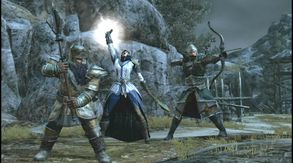
The Lord of the Rings: War in the North, developed by Snowblind Studios and published by Warner Bros. Interactive Entertainment, takes an interesting approach to adapting Tolkien’s world by stepping away from the familiar journey of the Fellowship and instead focusing on events unfolding in the northern reaches of Middle-earth. Rather than retelling a well-known story, it positions itself alongside it, following a separate group of heroes whose actions contribute to the broader war against Sauron. This parallel narrative gives the game a sense of freedom, allowing it to explore darker and less-traveled corners of the setting while still maintaining a connection to the larger mythos. At its core, the game is a cooperative action RPG built around a trio of distinct characters: a human ranger, a dwarf champion, and an elven lore-master. Each class offers a unique playstyle, encouraging players to experiment with different approaches to combat and progression. The ranger emphasizes agility and ranged attacks, the dwarf focuses on durability and melee strength, and the elf brings magical abilities into the mix. This class diversity becomes especially meaningful in cooperative play, where combining abilities and coordinating roles can make combat encounters more engaging and strategic than they initially appear. Combat itself is immediate and satisfying, built around a mix of melee strikes, ranged attacks, and special abilities. It leans toward accessibility rather than complexity, allowing players to quickly grasp the basics while still offering room for improvement through skill upgrades and timing. Encounters are often fast-paced and filled with large groups of enemies, reinforcing the sense of being part of a larger war effort. The inclusion of brutal finishing moves and visceral animations adds weight to each battle, giving the combat a slightly darker tone than many other games set in Middle-earth. However, while the system is enjoyable, it doesn’t evolve significantly over time, and repetition can begin to set in as players progress through similar encounter patterns. A significant portion of the game’s appeal comes from its loot and progression systems. Enemies frequently drop weapons, armor, and items that can be used to improve each character’s effectiveness, creating a steady sense of advancement. Skill trees allow players to tailor their abilities, adding a layer of customization that encourages experimentation. This constant flow of upgrades helps maintain engagement, even when the core gameplay loop remains relatively straightforward. That said, the balance between items is not always consistent, and over time the excitement of new gear can diminish as upgrades begin to feel incremental rather than transformative. The world design captures a harsher and more grounded side of Middle-earth, taking players through snow-covered landscapes, ancient ruins, and war-torn environments that reflect the scale of the conflict. The art direction successfully conveys a sense of danger and urgency, even if the technical execution occasionally falls short. Character models and environments can feel dated, and animations are not always as fluid as they could be, but the overall atmosphere remains effective in immersing players in its version of Tolkien’s world. Narratively, the game delivers a serviceable but somewhat underwhelming story. While the idea of exploring a parallel conflict is compelling, the execution doesn’t fully capitalize on its potential. Characters are functional rather than memorable, and the dialogue system offers limited impact on the unfolding events. The story often feels secondary to the action, serving more as a framework to move players from one battle to the next rather than a deeply engaging narrative in its own right. For a setting as rich as Middle-earth, this can feel like a missed opportunity. One of the game’s strongest elements is its cooperative focus. Playing with others enhances nearly every aspect of the experience, from combat to exploration to loot management. Teamwork adds a layer of strategy that is largely absent in solo play, making encounters feel more dynamic and less predictable. In contrast, playing alone can highlight some of the game’s limitations, particularly in AI behavior and the repetitive structure of its missions. There are also technical inconsistencies that affect the overall experience. Occasional bugs, uneven performance, and minor gameplay issues can disrupt immersion, reminding players of the game’s rough edges. While these problems are not constant, they contribute to a sense that the game lacks the polish needed to fully realize its ambitions. Ultimately, The Lord of the Rings: War in the North is a solid but unexceptional action RPG that finds its strength in cooperative gameplay and steady progression systems. It offers an enjoyable journey through a lesser-seen part of Middle-earth, supported by satisfying combat and a consistent sense of advancement. However, its repetitive structure, limited narrative depth, and technical shortcomings prevent it from reaching the level of excellence that its setting might suggest. It’s a game that delivers reliable entertainment, especially with friends, but stops short of becoming truly memorable. Rating: 7/10
dobra hra italsky dabing cestina Stop Killing Games
Not as good as LOTR TTA but pretty good
Best game.:)
Audience
Estimated from the language of this game's reviews — a proxy for where players are, not official Steam demographics.