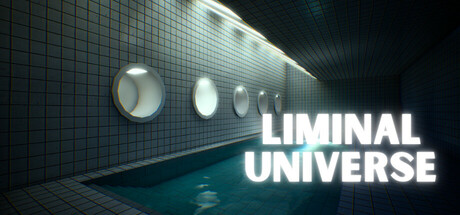
An exploration game that delves into the depths of loneliness. Wander through empty rooms, search for signs of an abandoned world, and listen to the sounds around you. No dangerous chases, just silence and an empty world to explore.
Modeled estimate, not a reported figure. How we estimate →
Media

About
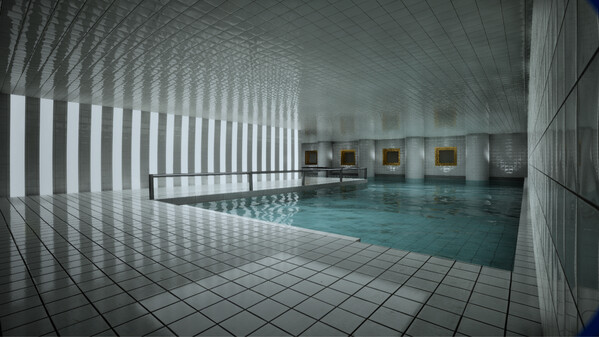
Liminal Universe is a solo first-person adventure game that takes you deep into Liminal Space. In this experience, you focus not on the story but on understanding the world around you and the atmosphere it creates. The game starts on an entirely empty snowy map, and then continues with a pool and ocean.
Although the game sometimes tells you what to do, it leaves it unclear what exactly you should do.
There are no creatures chasing you or complicated puzzles to solve in Liminal Universe. The aim is to discover the story of this forgotten place at your own pace. Sometimes it can be difficult to find your way through narrow corridors, dark corners and seemingly endless empty rooms. But these challenges deepen the game's atmosphere and your experience.
The game has no dialogue, user interface or music. Instead, you step into a world filled with realistic environmental sounds. The echo of your footsteps, the hum of the machines continuing to work, and the silence of game draw you into this strange world.
With each step, you will feel more and more the strange and mysterious nature of the liminal world. This is a place to discover, a mystery to understand, but most of all, an atmosphere that draws you in. Liminal Universe aims to offer you not just a game, but also an unforgettable experience.
Genres
Stats
All-time low is the lowest price we've recorded for this game since we started tracking it.
Languages: English, French, Italian, German, Simplified Chinese, Traditional Chinese, Japanese, Korean, Spanish - Latin America, Norwegian, Portuguese - Portugal, Russian +6 more
Engagement
Hours played at review time, across 41 reviews with recorded playtime.
Reviews
Themes across 41 recent reviews and how positive each mention is. A keyword signal, not full sentiment analysis.
positive critical· bar length = how often the theme comes up
Reviews
Game runs well on medium settings on an Xbox Ally. So far yet the game looks good and seems to be running decent at full hd. Haven’t played it much yet, but looks good so far.
The Liminal Universe, в игре есть страшилки и отдельная благодарность за уровень " Снежное забвение " Нигде пока его не увидел кроме как тут. Но верю что может быть кто-то о нем вспомнит. Игра хороша, постройками полюбоваться можно, детализации бы чуть больше и тогда вообще круто будет.
全体的に影の表現がそんなになく、リミナル系ゲームでよく感じる、「なにかいるかも...。」という精神的恐怖が感じられません。エリアは広く様々なレベルがありますが、輪郭がカクカクだったりするので没入感が低いです。そしてほぼ一本道なので、ただ単に長い長い通路を歩いているだけという感じです。正直、おススメはしません。
Нереально атмосферное приключение с мощной кинематографичностью. 10 лиминальных пространств из 10
Another game in the Liminal universe and mostly a walking simulator in a strange, surreal yet comfy environment. So this game does not ultimately deliver a very new liminal experience, but what it does it is doing quite well. Good graphics, cool environments and a creepy mood are put into one of the best liminal games out there.
The Liminal Universe is a deliberately minimalistic experience that positions itself closer to an interactive atmosphere piece than a traditional game, built around the concept of exploring “liminal spaces”—those strange, transitional environments that feel both familiar and unsettling. Developed by Gvn Games, it places you in a first-person perspective and removes nearly all conventional gameplay elements, asking you to simply move forward, observe, and absorb the environments around you. It’s an experience that relies almost entirely on mood and interpretation, offering something that feels more like a quiet, introspective journey than a structured interactive system. From the beginning, the game establishes a strong sense of isolation. You move through a series of environments that feel eerily empty—long corridors, vast open rooms, quiet outdoor spaces, and surreal architectural layouts that don’t quite follow normal logic. These areas are designed to evoke a sense of unease without relying on traditional horror elements. There are no enemies, no jump scares, and no direct threats. Instead, the discomfort comes from the emptiness itself, from the feeling that something is slightly off even when nothing is happening. The game leans heavily into this subtle tension, allowing the player’s imagination to fill in the gaps. The visual design is one of the game’s most compelling aspects, at least in its stronger moments. Some environments are genuinely striking, using lighting, scale, and color to create spaces that feel both surreal and oddly recognizable. Reflections in water, dimly lit hallways, and vast, open areas contribute to a sense of disorientation that fits the game’s theme. However, this quality is not entirely consistent. While certain sections feel carefully crafted, others come across as more basic or loosely assembled, which can break immersion and make the overall experience feel uneven. Sound design plays a crucial role in reinforcing the atmosphere. Instead of relying on a traditional soundtrack, the game uses ambient noise—echoing footsteps, distant hums, and environmental sounds—to create a sense of presence. The absence of music often makes the silence more noticeable, amplifying the feeling of isolation. This approach works well in moments where the environment and audio align, creating a subtle but effective tension. At other times, the lack of variation can make the experience feel flat, especially during longer stretches where little changes. In terms of gameplay, the experience is extremely limited. Movement is the primary interaction, with occasional moments where players trigger something in the environment to progress. There are no traditional puzzles, no inventory systems, and no meaningful choices to make. Progression is linear, guided loosely by environmental cues that are sometimes so subtle that players may find themselves wandering without a clear sense of direction. This design reinforces the game’s focus on exploration, but it also removes any sense of mechanical engagement. Over time, the lack of interaction becomes more noticeable, and the experience can begin to feel repetitive. Pacing is another area where the game can be divisive. Movement is slow, and the environments are often large, requiring players to spend extended periods simply walking from one point to another. For some, this contributes to the immersive quality of the experience, allowing time to absorb the atmosphere. For others, it can feel unnecessarily drawn out, especially when combined with moments of uncertainty about where to go next. The lack of clear objectives or guidance can lead to frustration, particularly in sections that feel more like mazes than intentional spaces. Narratively, the game is almost entirely abstract. There is no explicit story, no dialogue, and no clear explanation of what the player is experiencing. Instead, any sense of meaning is derived from interpretation, with the environments themselves serving as the primary source of context. This open-ended approach can be intriguing for players who enjoy piecing together their own understanding, but it can also feel empty for those looking for a more defined narrative. The game offers hints of something deeper, but it never fully commits to exploring those ideas. Replay value is minimal, as the experience is largely linear and does not offer alternative paths or outcomes. Once you have explored the environments and reached the end, there is little reason to return beyond revisiting specific areas for their atmosphere. This reinforces the idea that the game is meant to be experienced once, as a singular journey rather than a system to be mastered or replayed. Despite its limitations, The Liminal Universe succeeds in creating moments that are memorable in their quiet, unsettling way. It captures a specific feeling—the strange discomfort of empty, in-between spaces—and builds an experience around it with a clear sense of intent. However, that focus comes at the cost of depth and engagement. Without stronger mechanics, clearer structure, or more consistent design, the experience can feel more like a concept than a fully realized game. In the end, The Liminal Universe is best approached as an experimental piece rather than a traditional title. It offers a unique and sometimes effective exploration of atmosphere and mood, but its lack of gameplay systems and uneven execution limit its broader appeal. For players interested in slow, contemplative experiences and abstract environments, it can be worth exploring. For others, it may feel too minimal and directionless to sustain interest. Rating: 6/10
It's an okay game; unfortunately, it's dead, and I would not recommend buying it unless it's on sale. I thought it was going to be good, but it ended up just ehh, I did play through it all to get all the achievements though, so that is possible, but all in all, just skip this one.
Every time I opened settings, they would revert to fullscreen. Very disorienting, and I spent 23 of the 25 minutes played, fighting said settings. Also, there doesn't seem to be a setting for turning off the weird delay in camera movement. It seems to have a weird slow-in, slow-out thing going on that is, quite honestly, a bit nauseating. So I think a toggle to disable that would be good, and an increase to the maximum sensitivity of the mouse controls would also help. I look forward to updating my review once this game improves, as I woul really like to play this game once the controls no longer makes me queasy. It looks interesting!
liminal universe покупалась мной ради исследования, я не ожидал никаких монстров или пугалок, просто ходилку-бродилку. что же я получил в итоге? разочарование. игра ужасно отпимизированна и лагает в 1920x1080p на rx6600. большинство локаций пустые и ничего из себя не представляют, про последнюю локу вообще молчу, она полностью пустая и исследовать там вообще нечего. но не может же всё быть настолько однозначно плохо?.плюсы у игры есть, но их крайне мало. графика выглядит крайне приятно и детализированно. парочка реально красивых лок на всю игру, которые даже приятно исследовать. но на этом всё. по итогу за фулл прайс игру брать не стоит, по скидке в целом можно, но зачем? есть куча других красивых игр бродилок, в которые можно поиграть вместо liminal universe. и которые явно справились со своей задачей куда лучше. тот же escape the backrooms стоит слегка дороже, но лучше буквально во всем.
nice game
Related
Related
Trends
Modeled estimate over time, reconstructed from Steam's monthly review histogram.
Audience
Estimated from the language of this game's reviews — a proxy for where players are, not official Steam demographics.
Related
| Mini City: Mayhem | $24.2K | 113 | 88% | $5.99 |
| Sorry We're Open | $24.2K | 146 | 95% | $7.99 |
| Pain Pain Go Away! | $24.2K | 118 | 81% | $9.99 |
| Toy Tinker Simulator | $24.2K | 1.1K | 45% | $0.90 |
| Super Farming Boy | $24.2K | 98 | 94% | $12.99 |
| Date Z | $24.2K | 70 | 67% | $14.99 |