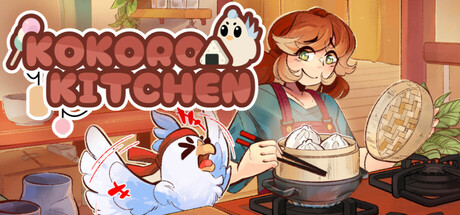
In this delightful farm-to-table cooking game, you’ll restore a cozy Japanese restaurant, cultivate a bountiful garden of fresh ingredients, and prepare mouth-watering Japanese dishes for hungry locals. Use your culinary skills to help bring a little life back to the spirit world!
Modeled estimate, not a reported figure. How we estimate →
Media

About
Welcome to the spirit world! You might not remember how you got here, but don’t worry—Alan, the cutest (and grumpiest) poultry-geist, has a plan! In this farm-to-table cooking game help Alan restore a rundown Japanese restaurant, serve delicious meals, harvest fresh crops, and prepare special ingredients to meet all your customers’ needs.
Manage Your Restaurant:
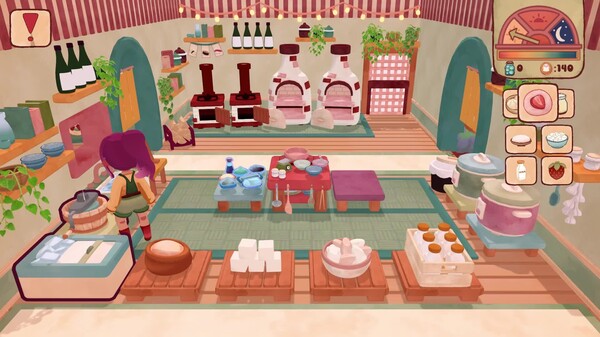
Choose the menu that you want to serve each day. Experiment with new recipes and cater to what you think your customers will enjoy the most!
Balance your time and quality of each dish to keep your customers happy and earn money for future upgrades!
Prepare meals to put on your takeaway tables and meet the needs of customers on the go!
Farm-to-Table Cooking:
Water and harvest ingredients from your very own garden! Use these ingredients to create the freshest meals for your ghostly friends.
Make sure to take special care of your cows and chickens so that you can have fresh milk and eggs everyday!
Play mini-games to prepare certain ingredients for your recipes. Ferment soybeans to make your own soy sauce, dry green tea leaves to create your own matcha powder, and more!
Purchase Items & Upgrades:
Make sure to manage your finances so that you have enough funds to make purchases for your shop and yourself. Purchase new plants for your farm, decorations for your bedroom, and more!
Spend points to purchase upgrades to restore your shop, add extra elements to your kitchen, and activate other elements that make running your restaurant even easier!
Explore the NPCs:
Something has been missing from this restaurant for a long time. Learn about Alan’s history with the restaurant and help him find his missing piece!
According to Alan, this restaurant used to have some regulars. When they come into the restaurant, complete their challenge to learn more about the history of your store!
Genres
Stats
All-time low is the lowest price we've recorded for this game since we started tracking it.
Languages: English, Japanese, Simplified Chinese
Engagement
Hours played at review time, across 40 reviews with recorded playtime.
Reviews
Themes across 40 recent reviews and how positive each mention is. A keyword signal, not full sentiment analysis.
positive critical· bar length = how often the theme comes up
Reviews
I couldn't even get through the tutorial of this game. Literally it had pop up instructions that blocked other instructions and thus I couldn't do the step needed to complete it. I love a good cozy game, but not one like this.
當初會買這款遊戲,是因為看起來很像《Lemon Cake》。實際玩起來確實也很像,但感覺只學到了《Lemon Cake》的缺點,優點卻沒有做出來。 我一直覺得《Lemon Cake》最大的缺點,就是角色手上不能同時拿兩樣東西,結果這款遊戲也一樣,操作起來很不方便。遊戲裡的各種升級也都很雞肋,升級前後幾乎感受不到明顯差異 另外,遊戲沒有自動點單功能,必須先跑出去幫客人點餐,再回到廚房做菜。點單的這段時間也很難順便處理其他餐點,整個流程被卡得剛剛好,玩起來很不流暢。即使解鎖了上菜助手,實際提供的幫助也不算大。 還有一個成就要求玩家親手洗碗,所以洗碗機不能太早解鎖
it is a very cute game but I wish there were more customisable options especially in regards to hair styles and outfits Edit: there really need to be improvements to the upgrades as a lot of them are actually kind of useless and frustrating such as the garden helpers who automatically add vegetable to recipes even when you are just taking the pot off the table. There are a few annoying glitches too like being able to grab things through walls when trying to pick up the water can but aside from that its a fun game
I played this game on the Steamdeck with no issues. Really fun and cute cooking game. I think the butcher shop door should be labeled a little better and the upgrade point count should include the up and down points, those were a little confusing. Would also be great if you could use money for more things once you unlock the recipes. Loved this though, thanks!
i really wanted to like this one, i couldn't even get past the tutorial because of the game being so buggy, would not recommend.
Kokoro Kitchen is a gentle, heartfelt simulation game that blends restaurant management, light farming, and time-management mechanics into a consistently cozy and emotionally warm experience. Developed and published by Mango Leaf Games, the game immediately distinguishes itself through tone rather than complexity, presenting a world where progress is measured less by efficiency and more by care, routine, and personal expression. Set in a spirit-filled realm inspired by Japanese aesthetics and folklore, the game frames its core loop around restoring a humble restaurant and nurturing both the space and the community that gathers within it. The structure of Kokoro Kitchen revolves around a calming daily rhythm that naturally guides the player without rigid enforcement. Each day begins with preparation, allowing you to decide which dishes to serve and how ambitious you want your workload to be. This sense of control is one of the game’s greatest strengths, as players are never forced into overwhelming scenarios unless they actively choose to expand their menu. Ingredient gathering forms the backbone of this preparation phase, with crops grown in your garden and produce collected from friendly farm animals like cows and chickens. The farm-to-table concept is not just thematic dressing; the quality and variety of ingredients directly influence your kitchen options, making even the simplest gardening tasks feel meaningful. Cooking and service introduce light time-management pressure, but the game intentionally avoids harsh punishment. Orders arrive steadily, and juggling preparation, plating, and delivery creates a satisfying sense of momentum, yet mistakes never result in failure or loss of progress. Burned dishes or missed customers simply pass without consequence, reinforcing the idea that Kokoro Kitchen is meant to be forgiving and approachable. This design philosophy makes experimentation feel safe, encouraging players to test new recipes, adjust menu complexity, and gradually refine their workflow without fear of setbacks. Beyond basic cooking, the game adds depth through ingredient processing mini-games that bring texture to the kitchen routine. Tasks such as fermenting soybeans, drying tea leaves, or preparing specialty components add a tactile layer to the experience, breaking up repetition and reinforcing the handmade feel of every dish. Progression is tied to both money and experience, with upgrades that improve efficiency, expand garden capacity, or unlock new cooking tools. These upgrades are paced thoughtfully, ensuring that growth feels earned rather than rushed and that the restaurant evolves organically alongside the player’s comfort level. Visually, Kokoro Kitchen leans heavily into a soft, inviting art style that complements its gameplay philosophy. Colors are warm, character designs are expressive, and environments feel intimate rather than expansive. The restaurant itself gradually transforms from a modest space into a lively, welcoming hub, which adds a strong sense of ownership and attachment. The animals are particularly charming, functioning as both resources and companions, and their presence reinforces the game’s nurturing atmosphere. Audio design remains subtle, relying on gentle music and ambient sound effects to create a soothing backdrop rather than demanding attention. Narrative elements are woven lightly into the experience, favoring emotional tone over plot complexity. As the restaurant gains popularity, spirit patrons return and share small pieces of history, hinting at past connections and personal stories tied to the space. Characters like Alan, the gruff but lovable poultry spirit, add personality and humor, grounding the supernatural setting with warmth and familiarity. These interactions never interrupt gameplay flow, instead acting as small rewards that deepen emotional investment without imposing narrative obligations. While Kokoro Kitchen is carefully designed to minimize stress, it does have moments where systems can feel slightly opaque, particularly early on. Some mechanics rely on experimentation rather than clear instruction, and as the restaurant becomes busier, multitasking can briefly feel overwhelming until upgrades are unlocked. However, the game’s forgiving structure ensures that these moments never escalate into frustration, and players are always free to slow down and simplify their approach. Ultimately, Kokoro Kitchen succeeds because it understands its purpose and audience. It is not a high-stakes management sim or a mechanically dense cooking challenge, but a comforting, player-driven experience built around routine, growth, and care. By emphasizing flexibility, warmth, and gradual progression, it creates a space where players can relax, express creativity, and enjoy the simple satisfaction of running a kitchen that feels alive. For fans of cozy simulations and gentle time-management games, Kokoro Kitchen offers a thoughtfully crafted experience that feels less like work and more like coming home. Rating: 7/10
cozy game
Je recommande ce jeu même s'il n'est pas extraordinaire. Le concept fonctionne, le jeu est beau pour ce qu'il propose et je trouve l'idée charmante. L'exécution quant à elle... Laisse un peu à désirer. Je suis quelqu'un qui joue à beaucoup de jeux indé, j'ai l'habitude de beaucoup pardonner à ces titres, mais malgré tout j'ai quelques critiques à adresser : - Le jeu manque d'un véritable objectif. On sait quoi faire, on a une vague raison de pourquoi, mais notre personnage n'a jamais de raison de rester dans ce restaurant. On le fait parce que c'est le jeu. - Les upgrades pour les plats sont... inconséquentes (?) à défaut de trouver un meilleur mot. Pour la boucle de gameplay, il vaut mieux des plats avec peu de préparation vu la vitesse où laquelle on doit les cuisiner et qui rapporte beaucoup d'exp. un mix des deux assez facile à atteindre dès la deuxième heure de jeu ne m'a jamais donné envie d'obtenir davantage de plats. La seule chose présente est les plats des fantômes qui viennent mais on ne sait jamais pourquoi on devrait les faire. Le marchand est tout de suite notre ami après le premier jour, mais rien n'est dit pour les autres qui n'ont pas un dialogue qui les différencierait (s'ils viennent, même). Malgré tout, le jeu est assez charmant pour me donner envie naturellement d'allers vers un 100%, seul véritable objectif. Il est mignon et me donne envie de le relancer encore quelques fois pour le finir.
Милая игрушка
走來走去的太麻煩了...
Related
Related
Trends
Concurrent players on Steam, sampled daily since tracking started.
Audience
Estimated from the language of this game's reviews — a proxy for where players are, not official Steam demographics.
Related
| Scrabdackle | $42.8K | 160 | 96% | $11.24 |
| Fireburst | $42.9K | 191 | 55% | $7.99 |
| ArkCraft: The Rebirth of the World | $42.8K | 180 | 74% | $10.99 |
| 深空七号 Deep Space 7 | $42.8K | 294 | 78% | $5.99 |
| VoidBound | $42.9K | 99 | 93% | $19.99 |
| Din's Champion | $42.9K | 99 | 94% | $19.99 |