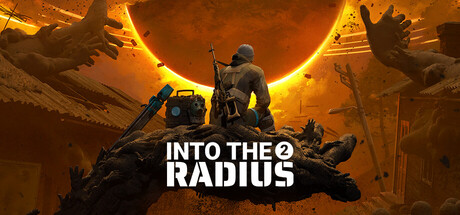
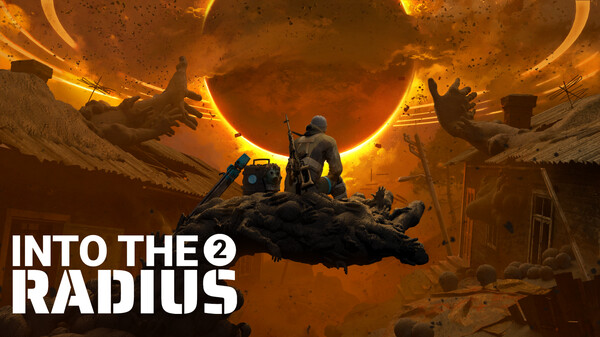
Into the Radius 2 is an immersive VR survival shooter, set in a realm of surreal landscapes and deadly entities known as Pechorsk Anomaly. Arm yourself with realistic weapons and venture deeper into the mysteries within. Featuring co‑op for up to four players.
Modeled estimate, not a reported figure. How we estimate →
Prices
Each in the currency that store quoted — not converted: the gap between two rows is the publisher's pricing, not an exchange rate.
Every market we collect.
Discounts
Every price cut of more than 20% we have observed, in each market that quoted one, with this game's chart position on either side of it. These are episodes, not a model: a sale is one event, and one event cannot tell you what the next one will do.
Reviews, worldwide (the counter carries no country): 4.14/day in the week to Aug 17 → 5.86/day in the week after.
About
Add-ons
Each DLC is estimated with the same model as a game, then summed — a modeled figure, not reported DLC sales.
Updates
Build ids and update times come straight from Steam's PICS — the same source SteamDB reads. Patch history grows as we record new builds.
Engagement
Reviews
Themes across 993 recent reviews and how positive each mention is. A keyword signal, not full sentiment analysis.
Reviews
一番気に入っているのは銃器へのこだわりです。装填やリロード、マガジン管理など細かい部分まで作り込まれていて、銃を触っているだけでも楽しいです。VRならではの操作感も非常に良く、戦闘中の緊張感や達成感は他のゲームではなかなか味わえません。 探索の雰囲気も素晴らしく、危険なエリアを慎重に進みながら物資を持ち帰る体験にはしっかり没入できます。 唯一の要望としては、日本語翻訳への対応です。現状でも遊べますが、ストーリーや細かな説明をもっと理解できるようになると、日本のプレイヤーもさらに楽しめると思います。 銃器が好きな人、サバイバル探索が好きな人にはおすすめできる作品です。
into my ass alter das verrückt muss ich sagen into the radius 1 war deutlich besser meine meinung nach aber trotzdem geiles game
Media

Related
Related
Price dynamics, follower growth, revenue and sales trajectories with interactive tooltips
This and every other Pro feature is free until October 20, 2026. A free account is all it takes.
For scale, across Steam · Top Sellers · Brazil over the last 30 days: the 23 chart moves that followed a price cut of more than 20% went a median of 14 places towards #1, and the 2,420 moves with no price cut behind them went 2 away. One store, one chart, one country — it is the only place we have enough observations to say even that.
Prices outside the United States have been collected since 6 August 2026 and chart positions since 19 July 2026, so a cut older than that has no market to compare and a market that joined later has no history yet. Nothing here is converted between currencies.
Genres
Stats
All-time low is the lowest price we've recorded for this game since we started tracking it.
Languages: English**languages with full audio support
Hours played at review time, across 994 reviews with recorded playtime.
positive critical· bar length = how often the theme comes up
Worst than the first in every aspect, except for the the weapon and gear modding, blury, frustrating, cring, dum. This game is worth 10€ max.
Very Gud
Into the Radius 2 is a huge step forward from the first game—so much so that it almost feels like a full reimagining rather than a sequel. The atmosphere is richer, the world feels more alive, and the gameplay loop is smoother and more rewarding. If you enjoyed the original, this one feels like the version the developers always wanted to make. The core gameplay is genuinely fun. Movement, gunplay, and exploration feel far more polished than in the first game, and the larger environments give you more room to experiment and get lost in the Zone. Even though there are only three maps, each one is surprisingly large and packed with detail, so the limited number doesn’t immediately feel restrictive. However, the game does have some notable issues—especially in co‑op. The final map, Pechorsk Outskirts, is extremely poorly optimized specifically in multiplayer. The single‑player experience on this map is actually very smooth, but co‑op is a different story. Even with strong hardware and a solid internet connection, performance tanks hard when hosting. I’ve had my FPS drop below 20 regularly, and my co‑op partner frequently disconnects or loses connection entirely, forcing them to reload back in. These problems make Pechorsk Outskirts feel more frustrating than challenging and significantly hurt the co‑op experience. Despite these issues, Into the Radius 2 still feels like a major step forward from the early access version. The foundation is strong, and the improvements over the first game are undeniable. But the developers really need to focus on future patches—especially optimization and co‑op stability—to make the experience as streamlined and polished as it deserves to be. Overall, it’s a fantastic evolution of the series with a ton of potential, but it needs more refinement to truly shine.
A few glitches here and there (mostly multiplayer related), and runs with some difficulty on my laptop, but great game overall.
I'm a big fan of ITR1 and a lot of folks have dwelled on ways in which ITR2 falls short of ITR1. But I don't think enough people are giving credit for the big gameplay improvements in ITR2 over ITR1. [b] IMPROVED [/b] - Loadout customization. One of the best features about ITR1 was weapon customization. ITR2 took that concept and made it the defining feature of the sequel. ITR2 expanded the variety of weapon customization by letting you build your own gun, customize weapon parts, attachments, attachment placement, and even paint your gun. ITR2 also made your loadout vest and backpack just as customizable as your weapon: you put your ammo pouches, emergency stims, and guns where you want them. What made ITR1 great was that your weapon felt like it was your own; ITR2 is great because it makes you feel like your loadout is your own. When the chips are down and you're cornered under gunfire, you create the loadout that makes you tick and get out of that scrape. - Stealth. ITR1 had virtually no stealth gameplay options. Enemies spotted you from miles away. They spotted you no matter what the conditions were: pitch black and you can't see the tip of your nose? ITR1 enemies could still see you as clear as day. The best ITR1 could do was gunfire sound reduction to minimize attracting enemies, but there was no such thing as visual stealth. ITR2 made stealth a viable combat strategy. Enemies now can't see you in the dark, but they can hear you. And you get access to night vision gear (so you can see them when they can't see you) as well as suppressors. I've had many satisfying stealth runs crouch-sneaking behind enemy lines, setting up a sniper position with my suppressor, and headshotting the enemies while they try to figure out where I am (or never hearing me take them one by one out at all). Enemies will spot you if you use light or laser beam attachments, but you can also get an IR laser that is only visible to you through night vision. - CQC. In ITR1, apart from a few mission-related hand-crafted interior combat areas, there were no real room-clearing type CQC experiences. Almost all combat took place outdoors. ITR1 enemies just did not know how to handle indoor combat. You could run away from enemies into a building and hide. The mimics wouldn't chase you; they didn't seem to know how doors worked. Even in the hand-crafted mission areas where mimics were placed indoors, they wouldn't hole up to ambush you and would usually run outside if they heard you. ITR2 has a more varied combat experience by blending outdoor combat with frequent room-clearing CQC combat. Enemies are often indoors and will crouch behind doors, corners, and wait in bathrooms with a shotgun ready to ambush you. If you run into a building to hide, mimics will chase you inside. There are multiple large apartment room-clearing type areas for your CQC kick. - AI. The mimics are just plain smarter in ITR2. They actively try to flank you. Try huddling for cover to reload and they start rushing you. - Maps. True, ITR1 had more maps. ITR2 has three maps and even then it feels like only two because the first one is a linear tutorial map you will rarely return to. But the ITR2 maps are huge and packed with more content than ITR1 maps. By the time I finish the game, there will be areas of the second and third maps that I have not yet explored because they are that big. - Coop. Haven't tried it yet myself but it's a no-brainer improvement. Couple this with the stealth and CQC gameplay and you have yourself a fantastic team-based tactical shooter. - Graphics. Obviously better than ITR1, although perhaps the foliage of ITR2 is a bit too plentiful.
i have the recommended pc specs and some components are better than the recommended and i cannot for the life of me, figure out why this game runs so horribly, i have nothing else open and im not streaming to anyone. if i have the graphics at anything above the lowest possible, it stutters like a mf and the frame drops are egregious. this game is out of early access too how and why is it running so horribly for seemingly just me
So, that was quite a trip. Into the Radius 2 is my new favorite VR game. No other game is as unique as this one. Some people say they like to see their character's body during gameplay. Well, Into the Radius turns the character's body into gameplay mechanics that were unimaginable before the existence of VR. The level of customization for your rig, equipment, and even your safe house goes far beyond the aesthetic customization most games provide. Every change you make to your weapons can be felt during gameplay. If you install a longer barrel for better bullet velocity, you can notice the difference right away. You can also feel how much harder it becomes to use your weapon in CQC. This is THE game for gun enthusiasts. Every weapon and every caliber, is deadly accurate. Even Half-Life: Alyx could be translated to a flat-screen experience by modders, but this game is simply impossible to convert properly. I am so glad this game exists. No other game is so unique in its mechanics, and no other game does what this one does. This is not just about realism. If you take Blade & Sorcery, for example, you'll see what I mean. The foundation is great, but the game itself is lacking in some areas. Sometimes it can feel janky, and other times the story mode isn't enough to properly experience all of its mechanics. Into the Radius, however, has an excellent progression system and gameplay loop. After 50 hours, I was still invested. This game has basically retired every other shooter I've played in my life, even on flat screen. This is the definitive shooter experience, and it's more than enough reason to buy a VR headset. The game also has some flaws, of course. It's quite noticeable that the studio is a small team. There are tons of bugs, rendering issues, FPS drops, and other technical problems. There is also a noticeable contrast between the extremely well-made core mechanics and the repetitive nature of the gameplay. I said before that the gameplay loop is good, and it is, but I can easily see someone getting bored after 30 or more hours. And yes, it can be janky at times, but most of the time it works great.
Great game
Selling now
See how fast this game is selling right now — estimated copies and revenue per day from recent review growth.
Active players
Estimated daily and monthly active players (DAU/MAU) modeled from peak concurrency.
Players by region
Where this game's players are, estimated from review languages.
Players also reviewed
The games this title's players most often review too — audience affinity.
Related
| Game | Estimated lifetime revenue | Reviews | Review score | Price |
|---|---|---|---|---|
| $6.1M | 11.3K | 94% | $29.99 | |
| $124.8K | 315 | 78% | $19.99 | |
| — | 0 | — | — | |
| $149.3M | 140.8K | 80% | $59.99 | |
| $15.4M | 20.3K | 78% | $24.99 | |
| $5.1M | 9.4K | 83% | $19.99 |
Related
| Game | Estimated lifetime revenue | Reviews | Review score | Price |
|---|---|---|---|---|
| $8.7M | 23.7K | 96% | $12.99 | |
| $8.8M | 11.6K | 86% | $19.99 | |
| $8.7M | 26.1K | 94% | $9.99 | |
| $8.8M | 10.4K | 88% | $24.99 | |
| $8.7M | 25.2K | 96% | $8.99 | |
| $8.8M | 25.4K | 92% | $14.99 |