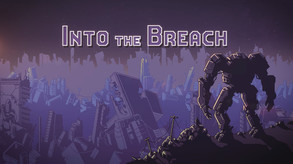
Control powerful mechs from the future to defeat an alien threat. Each attempt to save the world presents a new randomly generated challenge in this turn-based strategy game.
Modeled estimate, not a reported figure. How we estimate →
Prices
Each in the currency that store quoted — not converted: the gap between two rows is the publisher's pricing, not an exchange rate.
Discounts
Every price cut of more than 20% we have observed, in each market that quoted one, with this game's chart position on either side of it. These are episodes, not a model: a sale is one event, and one event cannot tell you what the next one will do.
Reviews, worldwide (the counter carries no country): 2.71/day in the week to Sep 4 → 8.14/day in the week after.
About
Genres
Add-ons
Each DLC is estimated with the same model as a game, then summed — a modeled figure, not reported DLC sales.
Sums Steam only; GOG, Xbox, Epic, Nintendo publish no volume signal, so the true total is higher by an unknown amount.
Updates
Build ids and update times come straight from Steam's PICS — the same source SteamDB reads. Patch history grows as we record new builds.
Engagement
Reviews
Themes across 1031 recent reviews and how positive each mention is. A keyword signal, not full sentiment analysis.
Reviews
Eh... not a fan. It's not really a turn based strategy combat game like advance wars. It's a half roguelike, too much random enemy spawning... puzzle game. Not what I wanted or expected. Not for me,
Great game
Media

Related
Related
Price dynamics, follower growth, revenue and sales trajectories with interactive tooltips
This and every other Pro feature is free until October 20, 2026. A free account is all it takes.
Every market we collect.
Reviews, worldwide (the counter carries no country): 480.71/day in the week to Jul 18 → 4.57/day in the week after.
For scale, across Steam · Top Sellers · Brazil over the last 30 days: the 24 chart moves that followed a price cut of more than 20% went a median of 9 places towards #1, and the 2,419 moves with no price cut behind them went 2 away. One store, one chart, one country — it is the only place we have enough observations to say even that.
Prices outside the United States have been collected since 6 August 2026 and chart positions since 19 July 2026, so a cut older than that has no market to compare and a market that joined later has no history yet. Nothing here is converted between currencies.
Stats
All-time low is the lowest price we've recorded for this game since we started tracking it.
Languages: English*, French*, Italian*, German*, Spanish - Spain*, Japanese*, Polish*, Portuguese - Brazil*, Russian*, Simplified Chinese*, Arabic*, Korean* +5 more
| $14.99 |
| 188ratings |
| 92% |
| — |
| not modelled |
| $14.99 | — | 96% | — | not modelled |
| $14.99 | — | — | — | not modelled |
Matched by title — a reused name can pair the wrong games. * is a critic aggregate. Prices and positions are each store's United States storefront; Epic charts worldwide. Audience and Score too, except Steam's, which is worldwide.
Hours played at review time, across 1K reviews with recorded playtime.
positive critical· bar length = how often the theme comes up
Great Combination of small scale Grid Strategy and on-the-fly 'Puzzle Solving' since positioning and survival can be just as important as beating enemies. Easy to pick up for short sessions, and Full Mouse, Controller and Touch support. Highly recommend. Good music, as well!
Into The Breach is another tactical RNG mess. You play a group of 3 Mech pilots whose only skill I've ever seen is repeating a turn in which you messed up, or carrying on their experience when you fail the game. Which is all the time. I haven't found any exception to this rule. Unless you hacked the RNG in some fashion, on my rig it always rolls the worst possible start with the stupidest handicap the designers could think of. The game is nothing more than handling handicapped maps with absolutely ZERO building or even long-term strategical worth. My experience with this mess: You have choices, they are almost always wrong and you always fail all games regardless of what they are. So what happens is instead of wasting time, like skill-less juveniles, you end up getting one bit of experience at a time, and then abandon the stupid timeline to just start stronger on the next garbage RNG game. A real save scum fest! If you love restarting continuously, THIS GAME IS FOR YOU. Noticed, how I don't even know what the dumb story is about. The game doesn't even let you discover it, and frankly nobody cares. The game doesn't let you know how you can upgrade Mechs either. The amount of work done on the UX is far too minimal. In the games I play that means the majority of controls are all annoying decorations. Bottom line is this is one of the most idiotic tactical games I've ever wasted my time on. Hey if there's actually some secret sauce to this mess, it's not the community that will help you understand anything out of it. Gitgud or, stop wasting your time, and play something else.
it's all the good parts of mewgenics without the bad parts of mewgenics and is also better than mewgenics
A roguelike game that feels like chess from the guys who made FTL. It is much more deep and fair from the gameplay POV than I thought before buying it. The 8x8 grid is totally enough given many unique mechs, weapons, pilots, skills, veks, goals, effects, etc. And the game is generally well made: no bugs, very intuitive UI, clear and thorough descriptions and hints.
It's a turn-based tactical mech vs giant monster game. You have to plan your attacks carefully as if you are playing chess. It's a lot of fun and I like that you can play an entire session in a few hours and walk away.
神作,目前玩到的最好的肉鸽战棋游戏。游戏设计非常精巧,玩法多样,优点众多。唯一的缺点可能就是游戏相对硬核,在高难度下或三四章部分关卡游玩体验像很像做题。
Não tem um história, você simplesmente entra e tenta salvar o mundo! Se não der certo, você tenta de novo em outra linha do tempo.
The chess variant is not a sideshow. The endless entries in the form are the truest history of chess, evolutionary building blocks collected over centuries. The variants become “games” unto themselves. In Xiangqi, a river divides the board. In Shogi, captured pieces switch sides and can be “dropped” on the board as your own troops, in Shantranj, the queen was a feeble vizier and the bishop was a slow elephant. Courier Chess was played on a 12x8 board, Tamerlane’s Chess was 10x11. In Fischer Random Chess, the back rank pieces are shuffled randomly, obliterating opening theory. In Three-Check Chess, the first player to check the opponent three times wins. In Horde Chess, Black gets a regular set of pieces, while White gets 36 pawns and no other pieces. In Atomic Chess, each capture explodes and destroys the surrounding pieces. Orthodox chess, the chess we know, is itself just another variant. [i]Into the Breach[/i] is part of this tradition. Extreme and complicated you might argue, but a collection of chess variants nonetheless. “Playing billiards on the chessboard” as one fellow reviewer, HAYUL, brilliantly put it. You have special pieces. They have special pieces. They move around the board and attack in different ways. “Chess was, in a sense, medieval presentation software—the PowerPoint of the Middle Ages. It was a customizable platform for poets, philosophers, and other intellectuals to explore and present a wide array of complex ideas in a visual and compelling way,” Adam Shenk writes in [i]The Immortal Game[/i]. So it is with [i]Into The Breach[/i], using this presentation software to invoke the mech and the kaiju, the robot and the monster, these two immanent icons of the second half of the 20th century, numinous and theophonic representations of nuclear neoliberalism’s fears and failures. These arguably reached a global apotheosis at the time the game was released, a sort of delayed acknowledgement of an East-West pop cultural order that would soon be mainstream in every sense. As with all of Subset’s work, the details are brilliant, but surgical. We are launched and launch our mechs in medias res. There are no great volumes of exposition about our world, just enough to provide context without any distraction from gameplay. Personalities are implied, shown not told. The shattered chronology makes the experience of playing multiple runs completely coherent with its story. Released in the age of “ludonarrative dissonance” discourse, [i]Into the Breach[/i] is one of those examples of ludonarrative harmony. Once, I forgot I had minimized a window running the NEW GAME selection screen for 48 hours. Each time I put on my headphones while working there was this gorgeous environmental ambient soundtrack from an unknown source, Enoesque and saturated with sonic nuance. If you look or listen closely to any element, you see the care with which it was made. The shadow cast by the Psion, the furrowed brows of the corporate overlords, the velocity of the final explosion, the sheer volume of verbs describing weapon effects (bash, blast, boost, burn, charge, dash, deploy, explode, fire, flip, freeze, grab, heal, inject, launch, leap, protect, pull, punch, push, shoot, shield, slam, smash, stab, swing, teleport, throw, and warp). It’s a game of movement and options, a universe, as it were, bounded by whatever ludicrous exponent might be necessary to describe the number of possible combinations. You can, if you want, keep finding new ways to play, even as you are damned in repetition for eternity, fighting the same battle over and over again in a neo-sisyphean representation of the utter futility of a multiple timeline life. And so the pieces abstract if you keep playing, losing all narrative significance and instead becoming a black hole of combinations of pieces on squares. In other words. A familiar game. As Shenk writes, chess, “in reality, was not invented all at once, in a fit of inspiration by a single king, general, philosopher, or court wizard. Rather, it was almost certainly (like the Bible and the Internet) the result of years of tinkering by a large, decentralized group, a slow achievement of collective intelligence.” No game is made in a vacuum. It’s all variants all the way down. Fragmented by time.
Active players
Estimated daily and monthly active players (DAU/MAU) modeled from peak concurrency.
Players by region
Where this game's players are, estimated from review languages.
Players also reviewed
The games this title's players most often review too — audience affinity.
Related
| Game | Estimated lifetime revenue | Reviews | Review score | Price |
|---|---|---|---|---|
| $10M | 22K | 93% | $19.99 | |
| $9.9M | 24K | 80% | $19.99 | |
| $9.9M | 9.8K | 97% | $39.99 | |
| $10M | 12.8K | 80% | $29.99 | |
| $9.9M | 14.7K | 54% | $29.99 | |
| $9.9M | 20.5K | 90% | $17.49 |
Related
| Game | Estimated lifetime revenue | Reviews | Review score | Price |
|---|---|---|---|---|
| — | 0 | — | — | |
| $366.1K | 699 | 81% | $19.99 | |
| $306.4K | 996 | 75% | $9.99 | |
| $10.6K | 111 | 92% | $4.19 | |
| $2.8K | 27 | 85% | $4.19 | |
| $6.2M | 8.3K | 83% | $24.99 |