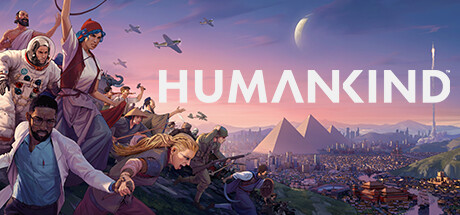
Rewrite history by shaping a civilization as unique as you are. Combine 60 cultures from the Ancient Era to the Modern Age to lead your empire to victory. Build thriving cities, outsmart rivals in epic battles, spread your influence and leave your mark on HUMANKIND™.
Modeled estimate, not a reported figure. How we estimate →
Media

About


Genres
Stats
All-time low is the lowest price we've recorded for this game since we started tracking it.
Updates
Build ids and update times come straight from Steam's PICS — the same source SteamDB reads. Patch history grows as we record new builds.
Engagement
Hours played at review time, across 606 reviews with recorded playtime.
Reviews
Themes across 604 recent reviews and how positive each mention is. A keyword signal, not full sentiment analysis.
positive critical· bar length = how often the theme comes up
Reviews
you can conquer world so pretty fun
<3
very funny if you like games that play just with 1 hand.
Przeznaczenie. Panowanie. Podstęp.
➤ Who This Game Is For I mostly recommend this game to players who enjoy the X4 genre, civilizations, turn-based combat, and strategy games in general. Humankind is visually appealing and has a decent variety of civilizations, even if many of them feel somewhat generic and not very distinct from one another. Most of the difference comes from their gameplay specialization, such as militarist, agricultural, expansionist, and similar archetypes. While this is not my most played genre, the game fulfills its purpose well as a casual strategy experience, and my review comes from that perspective. The turn-based battles are a good addition, and the custom avatar creation is also a nice feature. The game is overall simple and not overly demanding, making it enjoyable for casual sessions or playing with friends. It has its inconsistencies and flaws, but it can still be enjoyable in a straightforward way, even if it sometimes feels generic or lacking in depth. ➤ The Star System and Era Progression I think the implementation of the star system is one of the game's weakest aspects. You can advance technologically, but if you do not gain enough stars, you cannot progress to the next era. For a game focused on civilizations and historical ages, this feels contradictory and incoherent. You can be technologically in the Medieval Era while still officially remaining in the Classical Era due to a lack of stars, or reach the Medieval Era while still researching Classical technologies. In the end, stars matter more than technology itself when progressing through eras. The Fame system also contributes to this issue. Civilizations become generalized because players are rewarded for doing everything rather than focusing on what their civilization specializes in. The strongest civilization is usually the one that expands, conquers, builds districts everywhere, destroys units, and progresses in every category regardless of its intended specialization. That makes the game feel overly “generalist,” because most civilizations end up being played similarly if the player wants to remain competitive. This weakens the identity and uniqueness of each civilization. ➤ Civilization Identity and Replayability As a competitor to the Civilization VI series, I think Humankind fulfills its role reasonably well, but there is little emotional attachment or identity tied to the civilizations themselves. I think the game lacks more civilizations overall, and some are unlocked too late. For example, the United States appears in Era VI when it could reasonably fit into Era IV or V. I also do not see much replayability because many civilizations and mechanics feel too generic and lack deeper identity or unique mechanics. The soundtrack is functional but not memorable, and it can become repetitive if you remain in the same era for too long. Diplomacy is simple and serviceable. The AI can progress very quickly on higher difficulties even without using the most extreme settings, although I personally play more for the experience than for optimization or meta strategies. When games try to cover too much, they often become shallow, and that is noticeable here. ➤ Gameplay Systems and Mechanics The city interface is simple and accessible, as is the population management system. I also find it strange that you cannot build if there is a battle “nearby,” because in reality the scale of the map suggests the battle is actually far away from the city or construction area. I assume this exists as a gameplay limitation for PvP balance or anti-spam mechanics. Strategic resources are another issue. Units and infrastructure depend heavily on them, but they often feel either too scarce or too punishing. If you do not have them, progression can feel extremely restrictive, but even when you do possess them, the increasing costs can still become limiting. Combined with the star system and research pacing, this can create situations that feel like swords versus firearms. I think strategic resources should be slightly more common and accessible. ➤ Stability System Stability is another questionable mechanic. If each district gives around -10 stability, then forts or defensive structures giving only +5 stability feels conceptually strange. Fortresses are supposed to provide safety and order to a city, not simply exist as decoration. If districts reduce stability significantly, then forts, bastions, or defensive structures should logically provide a stronger counterbalance. Otherwise, there should be additional accessible ways to manage stability. From my perspective as a casual player, the issue is that some buildings feel designed more around gameplay balance than around the concept they are supposed to represent. Those are two different things. ➤ Final Thoughts Humankind works well enough as a casual strategy game, especially for players who enjoy experimenting with civilizations, turn-based battles, and relaxed progression. However, many of its systems feel too generalized, and that weakens both civilization identity and replayability. The game has enjoyable ideas and accessible mechanics, but it often feels more focused on covering many systems at once rather than deeply developing the uniqueness of each civilization or historical era.
El juego es tremendo, fácilmente puedes meterle cientos de horas y aún sentir que no sabes nada de él sin llegar a sentirte abrumado por sus mecánicas. El apartado gráfico también es tremendo, el mejor que he visto en juegos de estrategia, el mapa se ve muy bonito pero lo verdaderamente impresionante son las ilustraciones de cada cultura + los dibujos de sus unidades emblemáticas. Sin embargo el juego tiene un problema gigante que hace difícil recomendarlo, y ese es la cantidad de bugs que hay en él. Hay bugs tan destructivos y tan obvios que parece impresionante que lleven años sin ser arreglados; por ejemplo, hay ciertos personajes con el "trait" de "To the end" como por ejemplo Napoleón, el cual hace que literalmente no puedas ganar guerras contra ellos porque ¡¡¡¡simplemente no ser rinde!!!! no importa que hayas conquistado todas sus ciudades y matado a todas sus tropas, la IA simplemente no cede y no te permite forzar su rendición. Otro error que también ocurre en la guerra es que en ocasiones durante las batallas, la IA no realiza movimientos en su turno, lo cual literalmente puede estancar toda tu partida porque no puedes avanzar de turno si no se han realizado todos los turnos en las batallas, cuando esto ocurre tengo que cargar un archivo de guardado anterior y simplemente dejarme perder para que la IA si realice sus movimientos, esto arruina un poco la experiencia cuando ocurre. Más allá de los bugs, si te gustan los juegos casuales de estrategia, y no te importa mucho la precisión histórica (el juego no busca ser ni un poco realista, lo cual a mi opinión es interesante) recomiendo bastante este juego.
love it
Despite the fact my overall review is positive, I must preface it with this - this game is fundamentally flawed. It's biggest problem stems from it's balancing, from the way it's core mechanics interact with each other. A lot of reviewers would mention district costs as a prime example, but really, it's a lot of things. Costs of things, the way things interact - it's just... wrong. Janky. Eras and techs progress too quickly, exploration and expansion lags behind, adding territories and building punishes you, overall a lot of times something happens with one mechanic which feels wrong and out of time for other mechanics. A lot of things just don't work together right, or work opposite of the way you want them too, a lot of costs scale unevenly... and so on and so forth. It feels like it needs a lot of rebalancing and repolishing and remaking, which are sadly never coming beyong mods. Why is my review positive then? Because the game is gorgeous, first and foremost. It's style is not realistic and not cartoonish, it's subtly stylized and creates this weird, wistful atmosphere along with writing and art. UI is a bit of a novelty to get used to, but after you do it's clean and simple and nice to interact with. And just like I said about the game's style and UI, the games gameplay (as far as it works) has similar properties - it's atmospheric and inviting (while it's not frustrating you with bad interactions), it's familiar but subtly creative, trying new things and elements, When it works, it feels smooth and rich and thoughtful. I just wish it was fixed to be like that all the time. It can be compared with a beautiful jigsaw puzzle, which is actually missing pieces and contains elements of several different puzzles and a bit of a slog to get through - but halfway through pieces of it show so much promise and style.
trash
虽然第一局都没玩完,但我不想从游戏机制方面评价这个游戏。 系统什么的,策略什么的,各有所好。 原则上,我不想推荐这游戏,我给它的评价就是“缺乏常识” 什么常识?东亚文化的常识。 整个东亚区,中国只有周和明两个时代,DLC加了个汉,没了。 唐呢?这不是民粹的问题,唐在世界史上是绕不过去的文化好吧? 日韩地区也是缺少中世纪,不说早期,平安京和高丽王朝都被吃了? 真正的问题是,这些都砍掉以后,整个东亚,从远古到文艺复兴,加起来都没几个,这就是你们的人类史? 这是西方史吧? 而最搞笑的就是,这些最该有的没有,却做了个加勒比海盗进去? 它配吗?它算什么文明?什么文化?强盗文化吗?有国家吗?有民族吗? ------------------------------------------------- 然后我又翻了一下DLC包 资料片勉强补了一个汉,唯一的 但,大洋洲有单独包 完整时代链 非洲有单独包 至少各时代都有 美洲也有单独包 硬凑也凑满了6个时代 亚洲,继续晾着。 这是傲慢,西方人的傲慢,对整个东方文化的傲慢
Related
Related
Trends
Modeled estimate over time, reconstructed from Steam's monthly review histogram.
Engagement
DAU/MAU are modeled from peak concurrent players (≈×8 and ×28) — Steam publishes no active-user counts, so treat these as rough estimates, not reported figures.
Audience
Audience
Games most often reviewed by the same players — an audience-affinity signal from our review sample, not full ownership data.
Languages: English*, French, German, Spanish - Spain, Polish, Russian, Simplified Chinese, Traditional Chinese, Portuguese - Brazil, Korean, Italian, Turkish*languages with full audio support
Estimated from the language of this game's reviews — a proxy for where players are, not official Steam demographics.
Related
| Farming Simulator 22 | $39M | 92.1K | 93% | $19.99 |
| Nioh 2 – The Complete Edition | $39M | 50.3K | 87% | $49.99 |
| Ravenfield | $39M | 79.6K | 97% | $17.99 |
| Stray | $38.5M | 175.9K | 97% | $29.99 |
| Call of Duty®: Modern Warfare® 3 (2011) | $39.1M | 39.6K | 89% | $39.99 |
| CarX Drift Racing Online | $38.5M | 89K | 95% | $16.99 |