Gaia, developed and published by Eternal Stardust Studios, is an ambitious science-fiction survival game that attempts to merge exploration, colony building, resource management, and dynamic storytelling into a single open-ended experience. Set on a mysterious alien world filled with dangers and opportunities, the game challenges players to establish a foothold in an unfamiliar environment while dealing with environmental hazards, hostile creatures, resource shortages, and unpredictable events. Although it does not possess the polish or production values of larger survival titles, Gaia compensates with a considerable amount of depth and a strong emphasis on player-driven progression.
The story begins with a disaster. A treasure hunter searching for the legendary planet Gaia becomes stranded after a catastrophic accident leaves their spacecraft destroyed. Isolated on a distant world and cut off from civilization, survival becomes the immediate priority. Rather than relying heavily on scripted missions and cinematic storytelling, the game allows players to create their own journey. The narrative unfolds naturally through exploration, discovery, and the challenges encountered while adapting to life on an alien planet.
One of the game's defining strengths is the freedom it provides. From the earliest moments, players are encouraged to explore the surrounding environment, gather resources, and determine their own priorities. There is no single correct path toward progress. Some players may focus on constructing a secure settlement, while others may prioritize exploration or technological advancement. This flexibility allows each playthrough to develop differently and contributes significantly to the game's replay value.
Resource gathering forms the backbone of progression. Minerals, plants, and other materials are scattered throughout the world, requiring players to venture into unfamiliar territory in search of valuable supplies. Every expedition carries a sense of purpose because resources are needed for nearly every aspect of advancement. Whether constructing buildings, crafting equipment, or maintaining infrastructure, gathering materials remains a constant part of the gameplay loop. The variety of available resources encourages players to continually explore new areas rather than remaining in a single location.
The construction system is one of the most satisfying aspects of the experience. Players can build a wide range of structures that serve practical purposes while gradually transforming a small outpost into a thriving settlement. Walls, production facilities, power generators, storage buildings, and defensive structures all contribute to the growth of a colony. The building mechanics provide enough flexibility to encourage creativity without becoming excessively complicated. Watching a modest shelter evolve into a fully functioning base creates a strong sense of accomplishment.
Survival mechanics add another layer of complexity. Players must manage hunger, thirst, energy levels, and overall well-being while balancing exploration and construction tasks. These systems create constant pressure during the early stages of the game, where even simple mistakes can have serious consequences. As technology improves and infrastructure expands, survival becomes less about basic necessities and more about maintaining efficiency and preparing for larger threats.
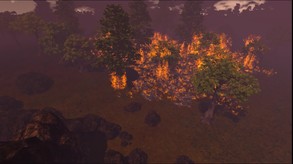
Environmental simulation is where Gaia becomes particularly interesting. The world is affected by changing weather conditions, seasonal cycles, and natural disasters that directly influence gameplay. Energy production, agriculture, and exploration can all be disrupted by environmental changes. Harsh winters may damage crops, storms can interfere with infrastructure, and hazardous atmospheric conditions force players to adapt their strategies. These systems make the planet feel alive and unpredictable, ensuring that no settlement remains completely secure.
The dynamic event system further reinforces this unpredictability. Random occurrences can dramatically alter the course of a playthrough. Hostile raiders may attack settlements, dangerous creatures may emerge unexpectedly, and large-scale disasters can threaten months of progress. These events create memorable moments and force players to remain vigilant even after establishing a stable colony. The constant possibility of unexpected challenges helps prevent the experience from becoming repetitive.
Another noteworthy feature is the storyteller system. Players can choose between different artificial intelligence directors that influence the overall tone and pacing of the game. Some storytellers focus on creating a balanced experience, while others generate more chaotic situations filled with frequent disasters and challenges. This system significantly impacts how each playthrough unfolds and provides additional replayability for those who enjoy experimenting with different styles of gameplay.
The alien ecosystem contributes greatly to immersion. Wildlife behaves according to its nature, with different creatures displaying varying levels of aggression and territorial behavior. Some species avoid conflict whenever possible, while others actively hunt or defend their territory. These behavioral differences make the world feel more believable and encourage players to observe their surroundings carefully rather than treating every encounter as a simple combat scenario.
Visually, Gaia presents a colorful and attractive science-fiction world. The environments feature a mixture of natural beauty and environmental hostility that reinforces the feeling of exploring an unknown planet. While the graphics occasionally reveal the limitations of an independent production, the overall artistic direction succeeds in creating an appealing setting that encourages exploration. The landscapes often provide a convincing sense of scale and discovery.
The game's ambition, however, can sometimes exceed its execution. Technical issues, balancing problems, and occasional rough edges prevent the experience from reaching its full potential. Certain mechanics feel more fully developed than others, and some systems require additional refinement to achieve the level of polish seen in larger survival games. New players may also find the learning curve somewhat intimidating due to the number of interconnected systems that must be understood and managed simultaneously.
Despite these shortcomings, Gaia remains an impressive project that demonstrates a genuine passion for survival and colony-building gameplay. The sheer number of systems working together creates a depth that many smaller titles fail to achieve. Its combination of exploration, environmental simulation, resource management, dynamic events, and settlement construction provides a rewarding experience for players willing to invest the time necessary to master its mechanics.
Ultimately, Gaia succeeds because it embraces player freedom and emergent storytelling. Rather than forcing a rigid narrative structure, it allows memorable moments to emerge naturally from the interaction between survival mechanics, environmental systems, and player decisions. Every settlement tells a different story, and every challenge overcome contributes to a personal journey of survival and adaptation.
For fans of science-fiction survival games, colony management simulators, and sandbox experiences driven by player choice, Gaia offers a rich and engaging adventure. While technical limitations occasionally prevent it from fully realizing its ambitious vision, the depth of its systems and the unpredictability of its world make it a worthwhile experience for players seeking a challenging and rewarding survival sandbox.
Rating: 6/10