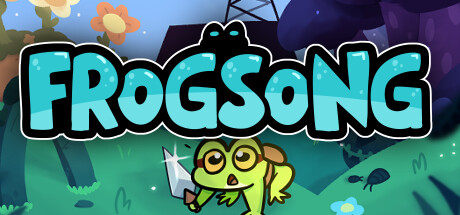
Frogsong, developed by Frogteam Games and Bee Braun and published by Frogteam Games, is a heartfelt and beautifully crafted indie adventure that combines the charm of hand-drawn animation with the emotional resonance of a story about belonging, courage, and self-discovery. It follows the journey of Chorus, a small tree frog with big dreams, who sets out to prove that even the smallest creatures can make a difference in a world on the brink of conflict. Set in the lush, amphibian-populated world of Salia, the game blends light action-RPG mechanics with narrative-driven exploration, delivering an experience that values heart and message over mechanical complexity. From its opening moments, Frogsong makes it clear that it isn’t about power or conquest—it’s about empathy, perseverance, and finding one’s place in a world that isn’t always kind to outsiders.
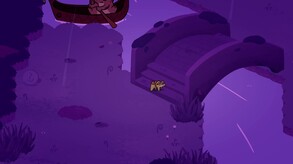
Visually, Frogsong is a delight. Every inch of the world feels alive, from the bustling frog villages to the serene marshlands and ominous caverns. The game’s hand-drawn art style gives it a storybook quality, filled with warm colors, expressive characters, and intricate environmental details. Each region of Salia has its own personality—lush green forests hum with life, sunlit ponds glimmer with reflections, and enemy territories pulse with tension. The art direction is complemented by a gentle, melodic soundtrack that enhances the game’s emotional tone. The music shifts fluidly between soothing background pieces during exploration and stirring orchestral cues during key moments of tension or revelation. Together, the visuals and sound design build an atmosphere that feels both cozy and meaningful, giving the world a sense of authenticity that draws the player in.
The narrative of Frogsong centers on Chorus’s quest to become a warrior in the Defense Guild, a position traditionally reserved for larger and more imposing frogs. Despite being told they’re too small and that their place should be in quiet religious study, Chorus refuses to be defined by others’ expectations. This simple premise evolves into a layered and deeply personal story about confronting prejudice, finding confidence, and redefining heroism. The looming threat of the Taural Empire, led by the sinister Lord Lithos, adds a backdrop of tension, but the real heart of the story lies in the relationships Chorus forms along the way. Every encounter—with friends, mentors, and skeptics alike—adds to the emotional texture of the narrative. Dialogue is well-written, often mixing light humor with moments of genuine vulnerability. It’s a story about courage in the face of doubt, but it’s also about kindness, resilience, and the importance of believing in oneself when others don’t.
Gameplay in Frogsong is simple but satisfying, focusing on light exploration and combat within semi-open environments. Players explore interconnected regions, complete small quests, and engage in combat using a sword that can be upgraded as the story progresses. Battles are straightforward—dodging, striking, and timing attacks form the core loop—but the simplicity makes it accessible to a wide range of players. Hidden throughout the world are collectibles called Lilystones that increase Chorus’s health pool, adding a sense of progression and rewarding exploration. While combat isn’t particularly deep or challenging, it serves its purpose in punctuating the narrative and providing moments of engagement between stretches of story and exploration. Enemies are designed to fit the game’s tone—bugs, beetles, and other small creatures become the primary threats, creating a sense of scale that reinforces the idea of a tiny hero in a big world.
Beyond its mechanics, Frogsong shines in how it approaches inclusivity and accessibility. The developers have gone out of their way to ensure that the experience is welcoming to everyone. The game offers adjustable difficulty settings, including options that allow players to make the adventure more relaxed or completely remove the threat of death. There are also accessibility options for text readability, color adjustments, and even a friendly companion called BeetleBud who can assist during gameplay. This design philosophy reflects the spirit of the story itself—a belief that games can be kind, approachable, and empowering without sacrificing meaning. It’s evident that Frogsong was made with care not just for its characters, but for the players experiencing their journey.
One of Frogsong’s greatest strengths is its emotional sincerity. The game explores themes of marginalization and identity in ways that feel natural rather than forced. Chorus’s struggle to be accepted as a small frog who dreams of heroism mirrors real-world experiences of being underestimated or judged for one’s differences. The story also touches subtly on themes of community, loss, and acceptance, with moments that are surprisingly moving. The writing never overplays its emotional beats; instead, it lets them emerge organically through interactions and world-building. This gentle storytelling approach gives Frogsong a tone of authenticity rare in games of its scale—it feels deeply human, even in a world populated entirely by frogs.
However, for all its charm, Frogsong isn’t without its limitations. The simplicity that makes it accessible can also lead to a sense of repetition, especially in combat and exploration. Enemy encounters can start to feel predictable after a while, and some players might find the overall difficulty too mild. The world, though beautifully drawn, sometimes feels more like a series of connected paths than a truly open landscape. There’s also the sense that certain narrative threads and side characters could have been developed further; while the story is touching, it occasionally leaves one wishing for more depth in its world-building. Yet, these shortcomings are minor when weighed against the sincerity and craftsmanship of the overall experience. Frogsong was never meant to be a sprawling epic—it’s a smaller, more personal story that finds strength in its restraint.
By the time the credits roll, Frogsong leaves a lasting impression not because of its mechanics or difficulty, but because of its heart. It’s a game that embraces kindness and empathy in a medium often dominated by conflict and power fantasies. Its colorful visuals, endearing characters, and hopeful tone make it a refreshing change of pace, and its message—that heroism comes in all shapes and sizes—resonates long after the journey ends. Frogsong doesn’t try to be a grand, cinematic experience; instead, it succeeds by being genuine, comforting, and full of soul. It’s a gentle reminder that courage doesn’t always roar—it can also croak softly in the rain, ready to leap forward even when the world says it can’t.
Rating: 9/10