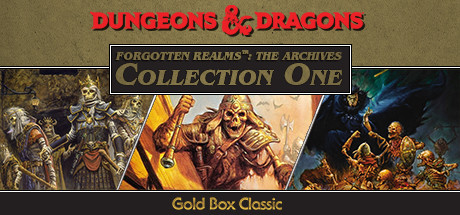
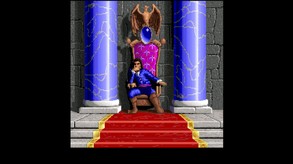
The Forgotten Realms Archive - Collection One allows you to journey through the set of adventures: the Eye of the Beholder trilogy, a collection of first-person, real-time role-playing games.
Modeled estimate, not a reported figure. How we estimate →
Media

About
Genres
Stats
All-time low is the lowest price we've recorded for this game since we started tracking it.
Languages: English
Engagement
Hours played at review time, across 41 reviews with recorded playtime.
Reviews
Themes across 41 recent reviews and how positive each mention is. A keyword signal, not full sentiment analysis.
positive critical· bar length = how often the theme comes up
Reviews
Forgotten Realms: The Archives – Collection One is the main event for me - three of the finest dungeon crawlers ever made. This set includes the full Eye of the Beholder trilogy, and saving it for last absolutely feels right. These are some of the best Wizardry-like games out there - arguably the best outside of Wizardry itself - blending real-time dungeon crawling with tight design, memorable environments, and that unmistakable D&D flavor. The atmosphere, from the depths beneath Waterdeep to the descent into the Underdark, still holds up, and the gameplay loop remains incredibly engaging. Having played some of these back in the day, it was a joy to revisit them. They’ve aged remarkably well for what they are. If you’re into classic CRPGs or dungeon crawlers.
It's fun. I'm a directionally challenged dummy so games like this really are my worst nightmare, but I'm also a DnD and RPG addicted ho so I can't help but torture myself playing.
Still the best dungeon crawler and for long that will be the case. 35 years later and even the puzzles are reused in newer tittles. It's pretty funny that in 1990 you could have multi level puzzles, NPCs, additional companions, dialogues and cutscenes, but in 2012 or yesterday all they can add is more flashy fireball and higher ceiling (the new ones are still fun and less of a pain in the ass to play, but cmon, we can do better) The day we will get a proper remake of EotB (and other gold box tittles) will be among the best days in human history, right after figuring out fire is helpful and lets you make good food and the day someone invented draże, the only thing that could take top 3 from it is anal but idk Beholder remake might lead to more and better orgasms
Played through EOB1, and got most of the way through EOB2. But if you don't find the crystal hammer, you're screwed and the game cannot be finished. There is no mention of this required loot at all, so basically I'd CAREFULLY read the walkthrough if you're going to try and play this game. It's a pity. The gameplay itself is fun, but I'm not going to start over to play this through. Good game ruined by pointless one way valve, leaving a bitter taste in my mouth.
Good time dungeon crawling. Wish the controls had been a bit more modernized.
Developed by Westwood Associates and Strategic Simulations and published by SNEG, Forgotten Realms: The Archives – Collection One is a compilation that preserves three of the most respected dungeon-crawling role-playing games from the early era of computer RPGs. Featuring Eye of the Beholder, Eye of the Beholder II: The Legend of Darkmoon, and Eye of the Beholder III: Assault on Myth Drannor, the collection serves as both a historical archive and a fully playable adventure series set within the iconic Forgotten Realms universe. While modern role-playing games often prioritize cinematic storytelling and visual presentation, these classics focus on exploration, tactical encounters, character development, and the sense of danger that comes from venturing into the unknown. The collection immediately stands out because of its connection to one of Dungeons & Dragons' most beloved settings. Forgotten Realms has been home to countless adventures across novels, tabletop campaigns, and video games, and the Eye of the Beholder trilogy captures the spirit of that world exceptionally well. From the bustling city of Waterdeep to ancient ruins and dangerous strongholds, the games immerse players in a setting rich with lore, history, and fantasy traditions. The world feels alive not because of advanced technology but because of the careful way its locations, enemies, and stories are presented. The first game introduces players to a threat lurking beneath Waterdeep. After assembling a party of adventurers, players descend into a sprawling dungeon filled with monsters, traps, secrets, and treasures. The setup is straightforward, yet it perfectly establishes the core appeal of the series. Every floor introduces new dangers, every battle carries risk, and every discovered item feels valuable. The game captures the sensation of participating in a tabletop dungeon expedition where survival depends on preparation and smart decision-making. One of the defining features of the trilogy is its first-person perspective. At the time of release, this viewpoint helped create a stronger sense of immersion than many competing role-playing games. Players navigate hallways, chambers, and labyrinthine environments directly through the eyes of their party, making exploration feel personal and often tense. Even today, this perspective remains effective at creating suspense, particularly when advancing through dark corridors where danger may be waiting just beyond sight. The Legend of Darkmoon expands upon the formula established by the original game. The adventure becomes larger in scope, introducing new locations, stronger enemies, and more elaborate challenges. The sequel demonstrates a greater level of confidence in its design, offering a richer journey that encourages exploration while increasing the strategic demands placed upon the player. Many fans continue to regard it as the strongest entry in the trilogy because of its excellent balance between storytelling, dungeon design, and character progression. Assault on Myth Drannor serves as the grand finale, transporting players to one of the most legendary locations within Forgotten Realms lore. The stakes become significantly higher, and the campaign feels appropriately epic for a concluding chapter. By this point, the party has likely developed into a powerful group of seasoned adventurers, and the final challenges provide a satisfying test of everything learned throughout the trilogy. The continuity between the games gives the conclusion additional impact because players have spent so much time building and guiding the same characters. Character progression remains one of the collection's greatest strengths. Unlike many standalone RPGs, the trilogy allows players to carry their party forward from one game to the next. Equipment, experience, and character growth persist throughout the adventure, creating a genuine sense of long-term investment. Watching heroes evolve from inexperienced adventurers into legendary champions enhances the feeling of participating in a single massive campaign rather than three separate games. Combat is deeply rooted in Advanced Dungeons & Dragons mechanics. Battles occur in real time but require constant tactical awareness. Players must carefully manage positioning, healing, spellcasting, and equipment while responding to enemy threats. Encounters can be challenging, particularly when facing powerful creatures or overwhelming numbers. Success depends heavily on understanding party composition and making intelligent use of available resources. The class system contributes significantly to the strategic depth. Fighters absorb damage and protect allies, clerics provide essential support, mages unleash devastating magical attacks, and thieves offer utility through their specialized abilities. Creating a balanced party becomes critical because every class fulfills an important role. The games reward thoughtful preparation and often punish careless decisions, reinforcing the feeling that every member of the group matters. Exploration is arguably the true star of the experience. The dungeons are packed with hidden passages, secret rooms, puzzles, magical treasures, and optional discoveries. Progress frequently requires observation and experimentation rather than simply following objective markers. This sense of discovery remains one of the most satisfying aspects of the trilogy. Players are constantly encouraged to search every corner and investigate every suspicious wall in hopes of uncovering valuable rewards. The atmosphere is another area where the collection excels. Despite the technological limitations of the era, the games successfully create feelings of mystery, tension, and adventure. The combination of dungeon exploration, dangerous encounters, and the rich Forgotten Realms setting ensures that the journey remains engaging throughout. The sense of venturing into hostile territory where every decision matters remains remarkably effective. Naturally, the age of the games introduces some challenges. The graphics are extremely dated compared to modern standards, with simple sprites, limited animations, and minimalist environments. Players unfamiliar with classic RPGs may initially struggle to appreciate the visual presentation. However, those willing to look beyond the technical limitations will discover gameplay systems that remain surprisingly compelling. The interface can also feel cumbersome. Inventory management, spell preparation, and party organization require patience, and many modern conveniences are absent. Learning the underlying rules can be intimidating as well, particularly for players unfamiliar with classic Dungeons & Dragons mechanics. Concepts such as armor class, saving throws, and spell memorization are not always explained in a beginner-friendly manner. Despite these obstacles, Forgotten Realms: The Archives – Collection One remains an outstanding example of classic role-playing game design. The trilogy emphasizes exploration, strategy, character growth, and player-driven discovery in ways that continue to feel rewarding decades after release. Its connection to the Forgotten Realms setting, combined with the strength of its dungeon-crawling gameplay, ensures that it remains relevant for enthusiasts of traditional RPGs. For players interested in the history of computer role-playing games, this collection offers an invaluable opportunity to experience three influential adventures that helped define the genre. While its old-fashioned design may require patience and adjustment, the depth, atmosphere, and sense of progression more than justify the effort. It remains a memorable journey through one of fantasy gaming's most celebrated worlds and a testament to the enduring appeal of classic dungeon-crawling adventures. Rating: 8/10
I was 20 when I first played this game {Eye of the Beholder} back in 1992.Today I turn 54 and as much into games as I was all my life. What a gem to find and takes me back to a simpler time in life. Its just as I remembered and maybe better. NOW if someone can remake PHANTASIE Series, not the current one on steam it looks terrible , Then I'd think im already in Heaven....Any who Thanks for This one !
going back to my younger years. love it. i finished it then, without help, can i do it again?
Petite retour de EOB1 : tttchrra ttttchrra tttchraaa stchiiin mince une araignée géante qui vient d'attaquer mon mage par derrière et le voila empoisonné By bad, fallait pas foncer au niveau 3 des égouts et tomber sur cette trappe qui s'est ouverte sous mes pieds juste 1 seconde devant moi Maintenant je vais devoir trouver l'escalier de sortie pour remonter au niveau supérieur et aussi des potions de cure poison (il y en a quelque part à ce palier c'est sur) mais pour y parvenir on va économiser les sorts de ralentissement du poison et surtout éviter le plus possible les araignées (tttchrrra tttchrrraa, elles sont tout proche derrière une porte/un mur) ou tout au moins les attaquer à distance. Du coup j'ai bien fait de collecter toutes ces flèches, mon voleur enfin va servir à quelque chose, et aussi toutes les dagues et même les pierres qui me prennent de la place dans l'inventaire comme ça ma petite partie de 4 persos va pouvoir faire un véritable festival à distance. Voila le style d'ambiance que l'on retrouve dans ce jeu L'anglais est basique, on comprend tout, les énigmes sont visuelles et tous les chemins mènent à Rome, pas d'inquiétude c'est plutôt simple (en tout cas il n'y a rien d'alambiqué ou de tiré par les cheveux) et les secrets sont là mais pas indiqués sur la carte; la preuve; après 5 ans de jeu on découvre cette hache +3 bien cachée derrière un pan de mur; mais comment ça se fait (en fait c'est parce que cette fois j'ai poussé les blocs de pierre dans un ordre bien précis juste avant de découvrir le nain blessé qui fait maintenant partie de l'équipe) Un jeu génial, vieux d'un point de vu technique (vue à la donjon master, déplacements case par case) mais intense, bien fait, immersif, jouable au Steam Deck (faut juste passer le petit bug d'affichage automatique de la carte lors du démarrage)
Makes me think
Related
Related
Trends
Modeled estimate over time, reconstructed from Steam's monthly review histogram.
Momentum
Pace estimated from the game's recent review growth (our daily snapshots) at its own sales-per-review ratio — a momentum signal, not booked sales.
Audience
Estimated from the language of this game's reviews — a proxy for where players are, not official Steam demographics.
Related
| The Wolf | $55.8K | 199 | 69% | $9.99 |
| HimeYoku: A Sacrifice of Lust and Grace | $55.8K | 191 | 92% | $19.99 |
| RaiOhGar: Asuka and the King of Steel | $55.8K | 353 | 83% | $8.99 |
| Cube Runner | $55.8K | 1.2K | 83% | $1.99 |
| Countess in Crimson | $55.8K | 850 | 84% | $4.99 |
| 7,62 High Calibre | $55.8K | 349 | 78% | $4.99 |